The Hindu Saṃskāras: A Guide to Sixteen Rites of Passage
Saṃskāras are Hindu rites of preparation, refinement, consecration, and lifecycle transition. They place turning points—conception, birth, learning, marriage, and death—within memory, responsibility, and worship. The familiar phrase “sixteen saṃskāras” is useful for navigating this rich tradition, but it is not a universal checklist. Texts count and group rites differently, communities inherit different ceremonies, and many families observe only a few.
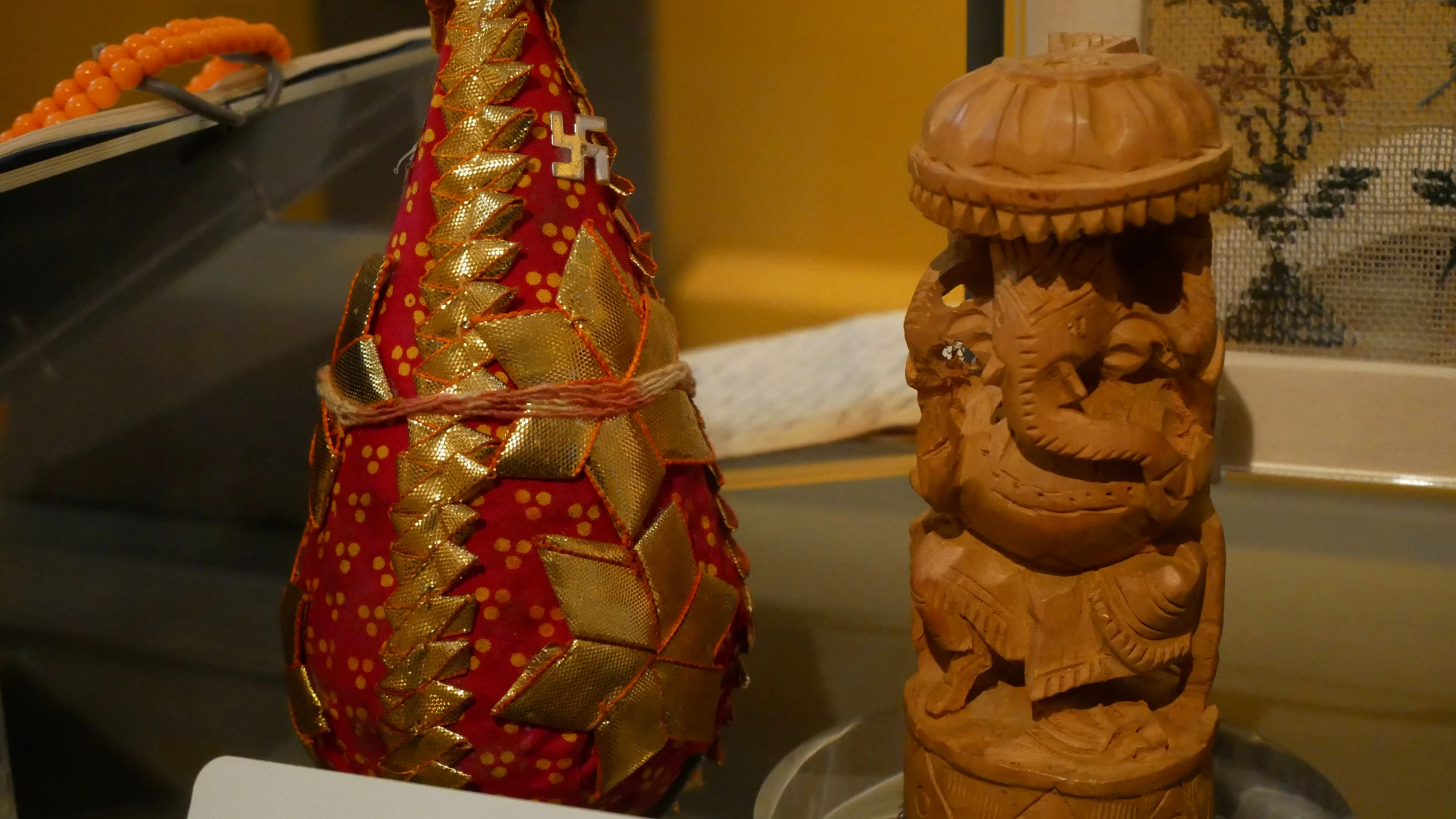

What is a saṃskāra?
The Sanskrit word saṃskāra carries several related senses: preparing, refining, forming, consecrating, and leaving an impression. In lifecycle practice, it names ceremonies that help a person and community recognize change. “Rite of passage” is often a helpful English phrase. “Sacrament” can be used cautiously, but it may import meanings from another religious tradition and should not be treated as an exact translation.
Theology: Hindu traditions may describe these rites as sanctifying life, nurturing dharma, expressing gratitude, or orienting a person toward liberation. Socially, they gather kin and transmit names, stories, duties, and belonging. Neither layer means that ritual completion mechanically guarantees virtue or salvation. Gautama Dharmasūtra itself places moral qualities above merely accumulating ceremonies.
Why there is no single universal list
Textual prescription: Gautama Dharmasūtra 8.14–21 famously counts forty saṃskāras. Its total includes early personal rites, four Vedic student vows, completion of studentship, marriage, five great sacrifices, seven domestic offerings, seven haviryajñas, and seven Soma sacrifices. This is not the modern list of sixteen.
The Gṛhya Sūtras—domestic ritual texts associated with different Vedic schools—present overlapping but non-identical sequences. Śāṅkhāyana, Āśvalāyana, Pāraskara, Gobhila, Khādira, Hiraṇyakeśin, and Āpastamba material differs in terminology, timing, order, and emphasis. Together they reveal a family of traditions rather than one standardized manual.
Manusmṛti 2.16 describes a ritual span beginning with Garbhādhāna and ending with Antyeṣṭi, but chapter 2 does not fix the exact popular sixteen-item chart used here. Its prescriptions also reflect a particular Brahmanical social hierarchy, including gender and varṇa restrictions that do not neutrally describe every Hindu community. Named attribution is therefore essential.
Later classificatory tradition: Modern lists commonly add Niṣkramaṇa, Karṇavedha, Vidyārambha, and Vedārambha, while combining or omitting rites counted separately elsewhere. Some end with Vivāha; others include Antyeṣṭi. The guide below uses one widely circulated synthesis so readers can compare pages without mistaking convenience for unanimity.
Mythology and reality: textual ideals and lived practice
Saṃskāra explanations sometimes weave together Vedic verses, domestic ritual rules, Dharmaśāstra ideals, Purāṇic stories, and a family’s remembered account of why a ceremony matters. All can be meaningful, but they are not interchangeable evidence. A story may illuminate the symbolism of learning, fertility, household life, or death without proving that every Hindu historically performed the same rite. Conversely, a procedure preserved in a Gṛhya Sūtra shows what one textual school prescribed; it does not prove uniform observance across India or through every century.
Lived practice is therefore not a defective copy of a single textual blueprint. Communities select, merge, rename, shorten, revive, or reinterpret rites as languages, occupations, migration, family structure, law, and access change. A hospital blessing for a newborn may carry the intent of welcome without reproducing a historical feeding act. A diaspora Vidyārambha may use an English alphabet alongside a heritage script. A contemporary Upanayana may preserve a lineage’s discipline, or a reform community may widen participation beyond older restrictions. These are specific choices that should be described honestly, not projected backward as timeless consensus.
When reading any claim, ask three questions: Which source says this? Which community follows it? Is the statement describing an ideal, a documented practice, or a modern interpretation? Those questions make room for devotion while preventing mythology, prescription, and prevalence from being blurred together.
A commonly cited sixteen-saṃskāra journey
Prenatal rites
1. Garbhādhāna
Consecrating the intention to conceive and begin prospective parenthood; mainly a textual and theological ideal today.
2. Puṃsavana
An early prenatal rite historically associated with seeking a son, now omitted or ethically reinterpreted by some families.
3. Sīmantonnayana
A pregnancy hair-parting and blessing rite, distinct from but sometimes combined with regional prenatal celebrations.
Birth and childhood rites
4. Jātakarma
Welcoming the newborn; any modern form must protect neonatal care and avoid historical feeding substances.
5. Nāmakaraṇa
Formally giving or announcing the child’s name and welcoming a new social identity.
6. Niṣkramaṇa
The child’s first ceremonial outing, sometimes associated with sun, moon, temple, or community.
7. Annaprāśana
The first ceremonial taste of solid food, adapted to pediatric readiness and safe feeding.
8. Cūḍākaraṇa (Caula)
A first ritual haircut or tonsure, performed differently across families and omitted by many.
9. Karṇavedha
Ceremonial ear piercing, common in some modern lists but not part of Gautama’s opening personal sequence.
Educational and coming-of-age rites
10. Vidyārambha
A regional and modern-list ceremony introducing a child to letters, writing, music, or learning.
11. Upanayana
Initiation into disciplined study, historically shaped by gender and varṇa rules and practiced diversely today.
12. Vedārambha
The formal beginning of Vedic study, sometimes separate from Upanayana and sometimes absorbed into it.
13. Keśānta (Godāna)
A historical adolescent hair or first-beard shaving rite associated with later studentship.
14. Samāvartana
Completion of traditional studentship and return from the teacher’s household, cautiously compared with graduation.
Adulthood and final rites
15. Vivāha
Marriage and the establishment of household life, expressed through markedly varied regional and sectarian forms.
16. Antyeṣṭi
Final rites surrounding death, body care, disposition, mourning, and remembrance; local law and family tradition govern practice.
How to use this guide responsibly
How to read these categories: “Textual prescription” reports what a named historical source describes; it is not an instruction for every reader. “Theology” explains a religious interpretation held in a tradition. “Regional custom” and “household practice” describe inherited ways of celebrating. “Modern adaptation” names a deliberate adjustment for present-day family life, healthcare, law, or diaspora conditions. These layers can overlap, but they should not be collapsed into a single universal rule.
No page in this series is a do-it-yourself ritual script. A named Gṛhya Sūtra describes one school’s prescription; a Dharmaśāstra records a normative social vision; a temple or organization speaks from its own lineage; and a family may preserve practices found nowhere in the most familiar lists. Consult a trusted priest, guru, elder, or community specialist for the form your household actually follows.
Medical and legal boundaries are equally important. Prenatal rites do not control conception, fetal sex, or pregnancy outcomes. Historical newborn substances are not safe feeding advice. First foods require developmental readiness; cutting or piercing requires appropriate professional care; and funerals require licensed providers and compliance with local law. Ritual timing never outranks consent, urgent healthcare, or safety.
Saṃskāras in contemporary family life
Selective observance is normal. Naming, first feeding, marriage, and funerals remain visible in many communities, while other rites may be private, merged, or remembered mainly in educational lists. Home, temple, hospital, community hall, school, and funeral home can all become ritual spaces. Each setting changes what is possible.
Regional custom: Families may know these transitions as sīmantam, godh bharāī, valaikāppu, muṇḍan, choroonu, mukhe bhat, akṣarābhyāsa, thread ceremony, or other local names. Similar purpose does not make all these forms identical. Household practice: inherited details often matter more than an online chart.
Modern adaptation: Weekend scheduling, translation, video participation, interregional ceremonies, gender-inclusive participation, and hospital-safe forms can be honest responses to present circumstances. They should be labeled as adaptations rather than retroactively called ancient requirements. A family can also decline a rite without forfeiting Hindu belonging.
Four ways the list changes across traditions
Childhood milestones may be counted separately or combined
Niṣkramaṇa, Karṇavedha, and Vidyārambha illustrate how later and regional priorities shape a sixteen-item chart. Niṣkramaṇa appears in some Gṛhya material but not as a named member of Gautama’s opening personal sequence. Karṇavedha is prominent in many communities and current summaries, yet it is not secured as one of Gautama’s first rites. Vidyārambha became a meaningful way to mark literacy and primary learning, while older ritual systems gave greater structural weight to Vedic initiation and study.
Education can be one complex or several rites
Upanayana, Vedārambha, Keśānta, and Samāvartana can look like four neat steps on a modern chart. Older sources are less tidy. Gautama counts four Vedic student vows separately. Gṛhya traditions connect initiation, teaching the Sāvitrī, opening periods of study, disciplines, beard cutting, and the concluding bath in different ways. A family that performs only a thread ceremony is not necessarily reenacting that entire historical educational system.
Gender-parallel charts are modern harmonizations
Some modern lists substitute a menarche celebration for Keśānta to create parallel milestones for girls and boys. Menarche rites are important in several regional cultures, but they are not a universally named equivalent in one pan-Hindu sixteen. Conversely, some reform movements extend Upanayana to girls and people outside groups historically authorized by Dharmaśāstra. Both examples show living religious change. They should be located in a community rather than presented as what Hinduism has always done everywhere.
The endpoint may be marriage or final rites
Some enumerations conclude with Vivāha, especially when saṃskāra is defined as refining the living body. Others include Antyeṣṭi as the final offering, supported by Manusmṛti’s language of a span ending there. Funeral practice itself is diverse: cremation is widespread but not universal, and age, renunciant status, sect, region, circumstance, and local law can change how a body is cared for. A cultural overview should never become an online funeral instruction sheet.
Mantra, transliteration, and meaning
Mantras belong to particular textual, recitational, and teaching settings. As a brief educational example connected with study and with some Upanayana traditions, the following is the Sāvitrī or Gāyatrī verse of the Ṛgveda 3.62.10. The Vedic verse proper is shown without the later prefatory formula often heard before it; accent marks are also omitted here for readability.
Sanskrit:
तत्सवितुर्वरेण्यं भर्गो देवस्य धीमहि ।
धियो यो नः प्रचोदयात् ॥
Scholarly transliteration (IAST): tat savitur vareṇyaṃ bhargo devasya dhīmahi | dhiyo yo naḥ pracodayāt ||
Simple phonetic reading: tut suh-VEE-toor vuh-REN-yum; BHUR-go DAY-vus-yuh DHEE-muh-hee; DHEE-yo yo nuh pruh-cho-duh-YAAT. This rough English guide cannot convey Vedic pitch accents, vowel length, or every sound accurately.
Meaning and intent: A concise sense is, “We meditate on the excellent radiance of the divine Savitṛ; may he inspire our thoughts.” Translations differ because words such as bhargas and dhī carry ranges including radiance, insight, thought, prayer, and inspired understanding. In an educational setting, the verse can point to clarity and disciplined attention rather than promise a mechanical result.
Primary-text citation: Ṛgveda 3.62.10, Sanskrit text. This citation identifies the verse; it does not supply a complete Upanayana procedure.
Initiation and lineage caution: In traditions where this mantra is formally transmitted during Upanayana, eligibility, preparation, pronunciation, Vedic accent, accompanying formulas, daily commitments, and teacher–student responsibility belong to the relevant lineage. Learn ritual recitation from a qualified guru, ācārya, or priest. Printing the verse here is for recognition, translation, and study—not initiation, a claim of ritual authorization, or a substitute for living instruction.
Ethical reading: tradition without false certainty
Historical honesty sometimes requires naming difficult material. Puṃsavana sources express preference for sons. Classical Upanayana rules often restrict access by gender and varṇa. Marriage texts assume patriarchal kinship structures. Newborn prescriptions include substances that modern medicine considers unsafe. These details belong in responsible history, but attribution is crucial: write “this text prescribes” rather than “Hinduism requires.” Description does not equal endorsement.
Just as importantly, modern inclusion should not be exaggerated into a new universal. A reform group that initiates girls demonstrates real contemporary diversity; it does not erase conservative lineages or prove that every community has changed. A family that reframes Puṃsavana as a gender-neutral prenatal blessing makes an ethical adaptation; it does not change what older male-child formulas said. Careful labels let readers appreciate both continuity and change.
Consent runs through the whole lifecycle. No person should be pressured into conception, pregnancy, bodily alteration, initiation, marriage, or a ceremony they do not accept. Babies and children require guardians to prioritize safety while allowing increasing participation as they mature. The dignity of people who remain unmarried, are child-free, experience infertility, do not receive initiation, or practice outside Sanskritic frameworks must not be measured against a checklist.
Planning a family observance
- Name the source of the custom: ask whether an element comes from a text, a regional community, a family inheritance, or a modern choice.
- Choose the right guide: priests and elders explain lineage practice; clinicians handle health; civil authorities handle registration, marriage, and funerary law.
- Explain rather than perform by rote: translations and short introductions help children and guests understand what the family intends.
- Protect consent and access: plan for disability, fatigue, dietary needs, language, postpartum recovery, and a participant’s right to decline.
- Prefer safety over timing: an auspicious date never justifies ignoring weather, infection risk, medical advice, or legal requirements.
- Accept a smaller ceremony: prayer, gratitude, and practical care can carry more meaning than an elaborate event performed under pressure.
Approached this way, the saṃskāras become a conversation between received tradition and responsible living. Their diversity is not a flaw to be solved. It is evidence that Hindu households have long interpreted life’s thresholds through particular texts, places, teachers, and relationships.
Frequently asked questions
Do all Hindus perform sixteen saṃskāras?
No. Textual lists vary, and contemporary observance is selective. The sixteen-page structure is a useful map, not a test of identity.
Which text gives the definitive list of sixteen?
No single early text fixes this exact modern sequence. Gautama counts forty; Gṛhya schools vary; Manusmṛti names Garbhādhāna and Antyeṣṭi as endpoints without establishing this chart.
Are saṃskāras mandatory?
Different lineages use different language about duty. In practice, family circumstances, access, conviction, health, and local custom shape observance. Avoid universal claims.
Can families adapt a rite?
Yes, and many do. Be transparent about what comes from text, region, household inheritance, or modern ethical and practical needs.
Sources and further reading
- Ṛgveda 3.62, Sanskrit text (verse 10 is the Sāvitrī example)
- Gautama Dharmasūtra, chapter 8 (Georg Bühler translation)
- The Gṛhya-Sūtras, Part I, translated by Hermann Oldenberg
- The Gṛhya-Sūtras, Part II, translated by Hermann Oldenberg
- BAPS, “The Sixteen Samskaras, Part 1”
- Queensland Health, Health Care Providers’ Handbook on Hindu Patients
- The Laws of Manu, translated by Georg Bühler
- Rajbali Pandey, Hindu Saṃskāras
- BAPS, “The Sixteen Samskaras, Part 2”
- BAPS, “The Sixteen Samskaras, Part 3”
- BAPS, “The Sixteen Samskaras, Part 4”