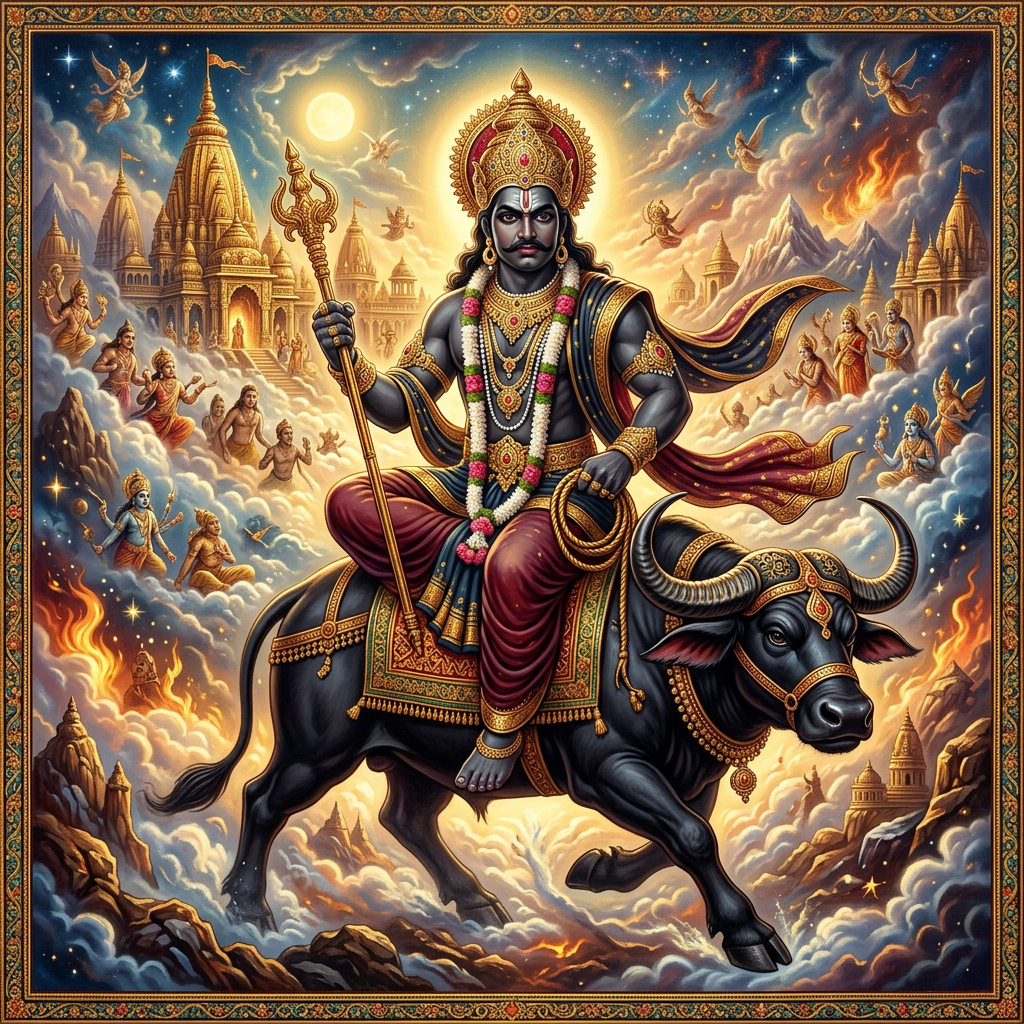
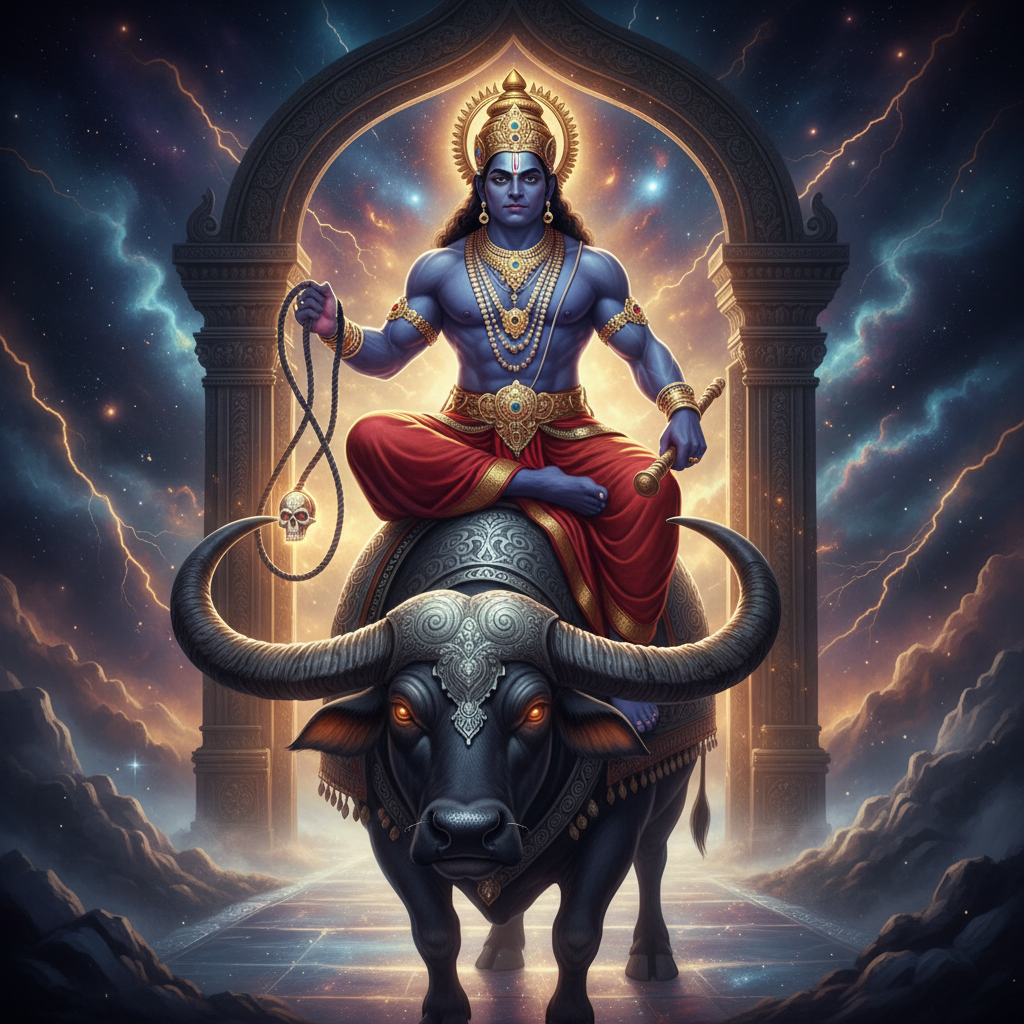
Who is Yamraj?
Yamraj, also known as Yama, is the Hindu deity of death and the king of ancestors. According to the Vedas, he was the first mortal who died and paved the way for others, eventually becoming the ruler of the departed. He is the son of Surya (the Sun God) and Saranyu (Cloud Goddess) and the twin brother of Yami (the river Yamuna).
What Does He Represent?
Yamraj is not merely a “grim reaper” but is often referred to as Dharmaraja, the King of Righteousness. He represents the cosmic order (Dharma) and the absolute impartiality of justice. He ensures that every soul faces the consequences of their actions (Karma) in their earthly life, maintaining the balance of the universe.
Symbolism of His Weapons
Yamraj is traditionally depicted with two primary symbolic implements that represent his authority and duty:
- The Danda (Staff): This symbolizes the power of punishment. It is used to discipline those who have strayed from the path of Dharma and to uphold the laws of the universe.
- The Pasha (Noose): The noose is used to bind and extract the soul from the physical body at the time of death. It represents the inescapable nature of time and the end of the physical journey.
Why Worship Yamraj?
While often feared, Yamraj is worshipped to seek protection from premature death (Akala Mrityu) and to ensure a peaceful transition for the soul. During festivals like Yama Dwitiya (Bhai Dooj) and Naraka Chaturdashi, devotees light lamps (Yama Deepam) to appease him, praying for the longevity of loved ones and the strength to live a righteous life.
Who is His Consort?
In various Puranic traditions, Yamraj is associated with his consort, Dhumorna. She represents the “smoke” that arises from the funeral pyre, signifying the transition of the physical body back to the elements. In other regional traditions, he is sometimes associated with Syamala or Vijaya.
His Role in the Puranas
In the Puranas, Yamraj serves as the supreme judge of the dead. Assisted by his scribe, Chitragupta, who maintains a meticulous record (the Agrasandhani) of every being’s deeds, Yamraj weighs the virtues and vices of each soul. Based on this audit, he assigns the soul to either Svarga (heaven), Naraka (purgatory/hell), or immediate reincarnation, ensuring that the cycle of Karma remains unbroken.
Mantras
The following mantras are traditionally associated with Yamraj. Pronunciation and ritual details can vary by lineage, so formal or intensive practice is best learned from a qualified teacher. The stated uses describe devotional intentions, not guaranteed medical, financial, romantic, or supernatural outcomes.
1. Yama Nama Mantra
Transliteration: Om Yamaya Namah.
Meaning: Salutations to Yama, guardian of moral order and lord associated with death, justice, and accountability.
Traditional use: Used for sober reflection on mortality, ethical responsibility, truthfulness, and the wise use of time—not to summon death or cause harm.
2. Yama Gayatri
Transliteration: Om Surya Putraya Vidmahe Mahakalaya Dhimahi; Tanno Yamah Prachodayat.
Meaning: May we know the son of Surya and meditate upon the great lord of time; may Yama inspire and guide us.
Traditional use: Traditionally used to contemplate justice, impermanence, and righteous conduct, and to seek courage when reflecting on death. Wording varies among traditions.
Practice note: Begin with a calm, respectful intention. A small, consistent number of repetitions is generally better than rushing. If you follow a family, temple, or guru tradition, use the pronunciation, count, and procedure taught in that lineage.
Sources and Further Reading
Source note: Vedic Yama, Katha Upanishad teacher, later judge-of-the-dead traditions, Chitragupta, buffalo iconography, afterlife claims, mantras, and ritual fear claims need historical separation.
- Cleveland Museum of Art — Yama as Dharma, Judge of the Deceased — Supports historical identification of Yama with Dharma and the role of judge of the deceased in the represented work.
- Sacred Books of the East, vol. 15: The Upanishads, Part II, trans. F. Max Muller — Contains the Katha Upanishad dialogue of Naciketas and Yama; supports text-specific teaching context, not all later afterlife claims.