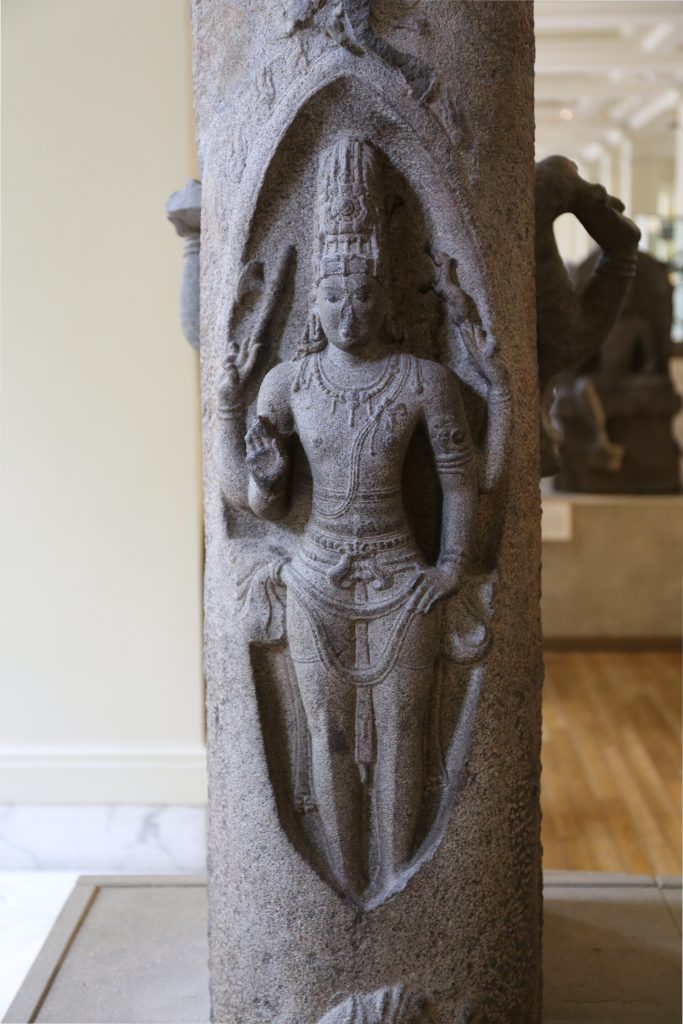
A Shiva Linga (Sanskrit: liṅga) is the sacred emblem through which Shiva is worshipped, especially in temples and Shaiva traditions. Its meanings include Shiva’s presence, the mark of the divine, the unmanifest made approachable, the cosmic axis, and generative power. When the upright linga is set within the surrounding yoni base, many traditions understand the whole as the interdependence of Shiva and Shakti—the still and dynamic dimensions of reality.
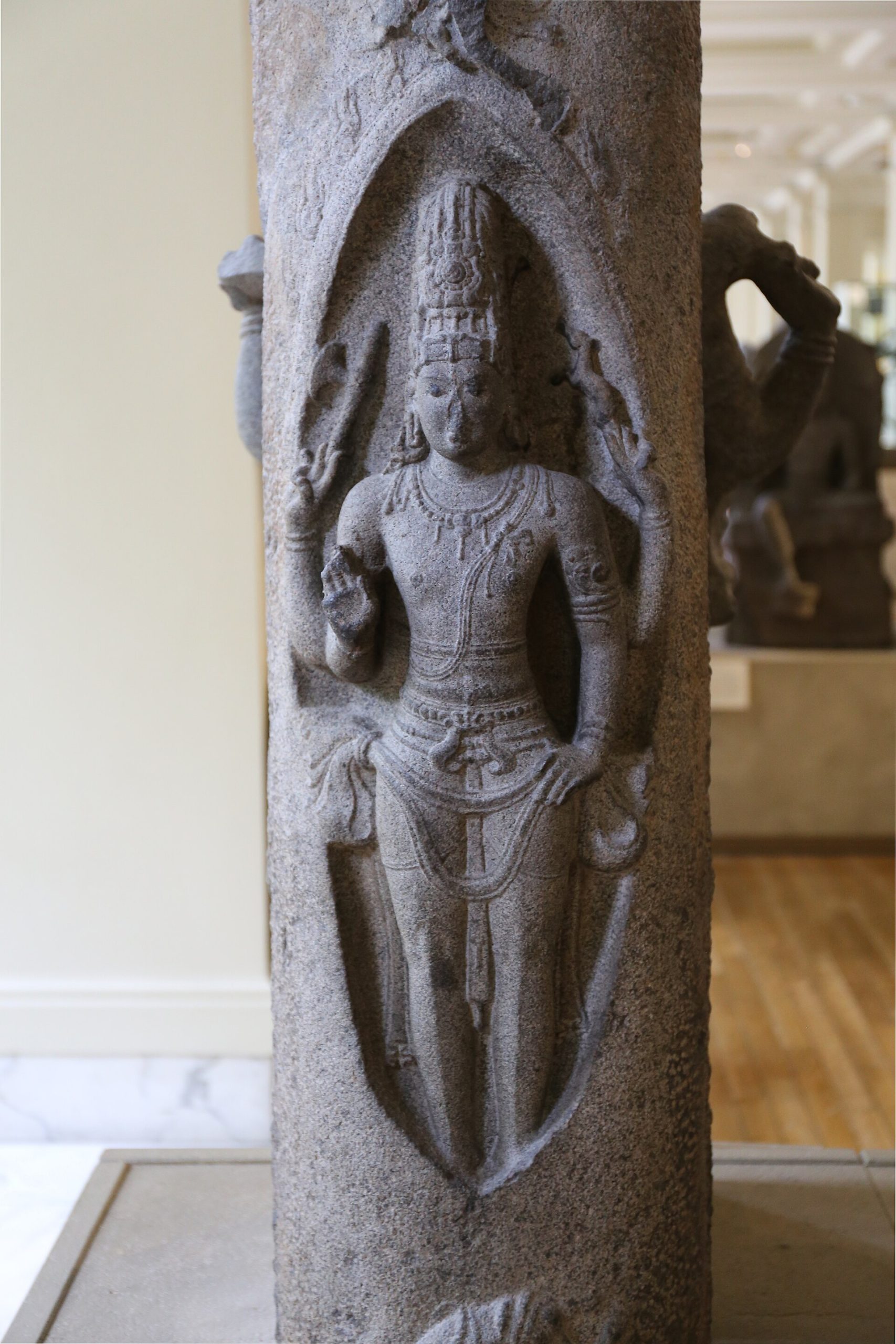
No single explanation covers every text, period, region, and form. Saying “it is only a phallic symbol” reduces a complex religious object to anatomy. Saying “it has absolutely nothing to do with generative or sexual symbolism” is also too sweeping. Sacred art can hold aniconic, cosmic, theological, and fertility meanings at once. Context is essential.
What does the word linga mean?
The Sanskrit noun liṅga can mean a mark, sign, characteristic, token, or emblem. In a Shaiva setting, Śiva-liṅga means the mark or emblem of Shiva. English sources also spell it lingam; “Shiva Linga,” “Shivalinga,” and “Sivalingam” are common modern forms.
That lexical meaning helps explain why the linga is often called an aniconic representation: it signifies Shiva without depicting him primarily as a human-shaped figure with face, arms, hair, and attributes. Britannica describes the linga as Shiva’s emblem and notes both its aniconic religious meaning and scholarly discussion of phallic symbolism.[1]
“Aniconic” does not mean blank, primitive, or devoid of form. It means that the form represents the deity without being a conventional anthropomorphic image. A linga can be highly finished, ritually installed, ornamented, given a face, or integrated into elaborate temple architecture.
What does a Shiva Linga look like?
A common installed form has a smooth vertical shaft with a rounded top. It rests in a wider pedestal or basin that has a projecting channel through which water and other offerings can drain. That surrounding element is commonly called the yoni, pīṭha, or pīṭhikā, with vocabulary varying by text and region.
Lingas range from small portable forms to monumental temple images. Materials include stone, metal, crystal, clay, earth, sand, and temporary substances prepared for a particular rite. Specialized Āgama and temple-architecture traditions classify their forms and proportions.
Core meanings of Shiva Linga symbolism
The sign of Shiva
At the most direct level, the linga marks Shiva’s presence. A devotee does not ordinarily approach it as an abstract museum shape but as the consecrated focus of darśana, offering, mantra, and relationship with Shiva. Once ritually installed, it belongs to a living temple world of care, awakening, bathing, clothing, food offerings, lamps, and festival processions.
Form that points beyond form
The linga’s non-anthropomorphic form makes it especially suited to expressing a theological paradox: the divine exceeds all limited forms yet becomes available through a particular form. It should not be described carelessly as “formless,” because the worshipper encounters a real, shaped object. A better formulation is that it can symbolize the unbounded or unmanifest divine taking an accessible emblematic form.
The cosmic pillar or axis
A famous Shaiva narrative tells of Brahma and Vishnu encountering an immeasurable pillar of fire. One seeks its top and the other its bottom, but neither can find the limit; Shiva’s supremacy is disclosed through the endless column. This liṅgodbhava, or “emergence of the linga,” is represented in South Indian temple sculpture and narrated in Purana traditions. It supports interpretations of the linga as an infinite axis that exceeds ordinary measurement.
Versions and details differ among texts, so the story should be attributed to Shaiva Purana and temple traditions rather than presented as the one original historical explanation of every linga.
Shiva and Shakti
The linga is commonly installed in the yoni base. In many theological interpretations, this union represents Shiva and Shakti: consciousness and power, stillness and manifestation, or the inseparability of transcendent divinity and creative energy. The symbolism is complementary, not a claim that “male is spiritual and female is merely material.” Shakta and Tantric traditions often understand Shakti as divine power itself, without which Shiva does not act.
The yoni also serves the practical ritual function of receiving and channeling liquids poured over the linga. Symbolic and functional meanings coexist.
Generation, fertility, and life
The vertical linga and yoni can carry generative symbolism, and some historical forms make the bodily analogy more explicit. Museum and art-historical sources therefore discuss fertility and sexuality as part of the form’s history, while also identifying the object as Shiva’s sacred emblem.[1] Historic lingas in museum collections also demonstrate wide variation in proportion, material, and iconography.[2]
But generative symbolism in a sacred context is not equivalent to obscenity or a modern anatomical diagram. It may concern the origin and renewal of life, cosmic creation, divine union, ascetic power, and the transformation of desire. Equally, not every worshipper foregrounds sexuality during daily puja. Lived meaning depends on temple teaching, family tradition, philosophical school, and personal devotion.
Is the Shiva Linga a phallic symbol?
The careful answer is: it can include phallic and generative symbolism, but it cannot be reduced to that alone. Colonial-era observers often treated Indian sacred forms through a narrow sexualizing lens, while some modern apologetic explanations react by denying any possible phallic dimension. Both extremes obscure the evidence.
Art historians examine shape, archaeological context, inscriptions, textual interpretation, and ritual use. Devotees encounter Shiva’s living presence, not just a formal resemblance. Some lingas are explicitly phallic; many are stylized and embedded in theological systems where “mark,” cosmic pillar, divine manifestation, and Shiva–Shakti unity are central. A responsible explanation can state all of this without ridicule or embarrassment.
The Metropolitan Museum of Art’s linga with one face of Shiva shows how an anthropomorphic image can emerge from the emblematic form.[3] Such mukha-liṅgas demonstrate that aniconic and iconic representation are not always strict opposites.
Major forms and sacred categories
A plain linga emphasizes the smooth emblematic form, while a mukha-liṅga bears one or more faces of Shiva.[3] A svayambhū linga is revered as self-manifest. Naturally smoothed bāṇa-liṅgas are associated with the Narmada River and often used in portable worship. The twelve jyotirliṅgas are major pilgrimage manifestations celebrated in later Shaiva tradition; “jyotirlinga” names a sacred manifestation and pilgrimage tradition, not merely a material type of stone. Details and origin narratives vary by site.
How a Shiva Linga is worshipped
A central act is abhiṣeka, the ritual bathing of the linga. Offerings may include clean water, milk, yogurt, honey, ghee, or other substances according to temple and household custom. Bilva leaves, flowers, sandal paste, incense, lamps, and food offerings may accompany the bathing. Oṃ Namaḥ Śivāya and hymns such as the Rudram are widely used, but ritual eligibility and recitation styles vary.
Do not copy every internet offering list indiscriminately. Temple rules differ, and some substances can damage a particular stone, metal, drainage system, or historic image. Food waste and local water scarcity also deserve consideration. At a temple, follow the priest’s and institution’s instructions; at home, a small amount of clean water and sincere prayer may be more appropriate than excessive materials.
The drainage projection of the yoni is treated respectfully and is not normally stepped over. Customs governing circumambulation vary: in some Shaiva temples worshippers do not cross the drainage channel and therefore make a partial circuit. Observe the local pattern rather than assuming one rule applies everywhere.
The linga in temples and sacred geography
The Shiva Linga is normally the principal image in a Shiva temple’s innermost sanctuary, with Nandi often facing it along the central axis. Pilgrimage networks include the twelve jyotirlingas and five South Indian elemental lingas associated with earth, water, fire, air, and space. Individual sites preserve distinct legends and histories, which should be researched separately rather than blended into one chronology.
How to approach a Shiva Linga respectfully
- Remove footwear where the temple requires it and dress according to local norms.
- Ask before touching, bathing, or photographing the linga; many sanctums restrict entry or photography.
- Do not climb on the base or step over the drainage channel.
- Offer only materials accepted by that temple.
- Avoid joking, erotic posing, or using sacred images as exotic props.
- Remember that access rules differ by temple, denomination, and region.
Common misconceptions
“All Shiva Lingas look the same”
They vary in material, size, proportion, iconography, origin story, ritual status, and whether faces or figures are carved into them.
“The linga is an idol of Shiva’s body part”
This wording is reductive. Some forms and interpretations include phallic symbolism, but the consecrated linga represents Shiva in a far wider theological and ritual sense.
“The linga has no connection to sexuality whatsoever”
That absolute claim also ignores historical forms and generative interpretations. The better question is which meanings a particular object, text, or community emphasizes.
“Aniconic means formless”
An aniconic object has a visible form but does not represent the deity primarily through a conventional human likeness.
Frequently asked questions
What is the difference between linga and lingam?
Liṅga is a standard Sanskrit transliteration. Lingam reflects the Sanskrit nominative form and common South Indian and English usage. Both refer to the same sacred emblem in this context.
Why is water poured over the Shiva Linga?
Ritual bathing is an act of honor, purification, cooling, offering, and devotion. Texts and temple traditions give further meanings, and the yoni base channels the liquid away.
Can a Shiva Linga be kept at home?
Many Hindus keep and worship a small linga at home. Expectations for daily care, installation, and offerings vary. Seek guidance if adopting a formal practice, and choose a manageable form rather than one you cannot maintain respectfully.
What does the tripundra on a linga mean?
Three horizontal ash lines may be applied as Shiva’s tripuṇḍra, often with a central dot. Interpretations include the burning away of impurities and various sacred triads; details vary by Shaiva lineage.
Is every upright sacred stone a Shiva Linga?
No. Identification depends on ritual context, tradition, archaeology, iconography, and sometimes inscription. Shape alone is not enough.
Related HinduClarity Guides
Sources
- Encyclopaedia Britannica, “Lingam” — reference overview of the linga as Shiva’s emblem and its interpretive history.
- Metropolitan Museum of Art, “Shiva Linga” — museum record for an early stone linga.
- Metropolitan Museum of Art, “Linga with Face of Shiva (Ekamukhalinga)” — museum record illustrating the union of emblematic and anthropomorphic representation.
- Smithsonian National Museum of Asian Art, “Mukhalinga” — comparative collection record for a faced linga.
- British Museum Collection, “linga” term records — comparative museum objects across periods and regions.