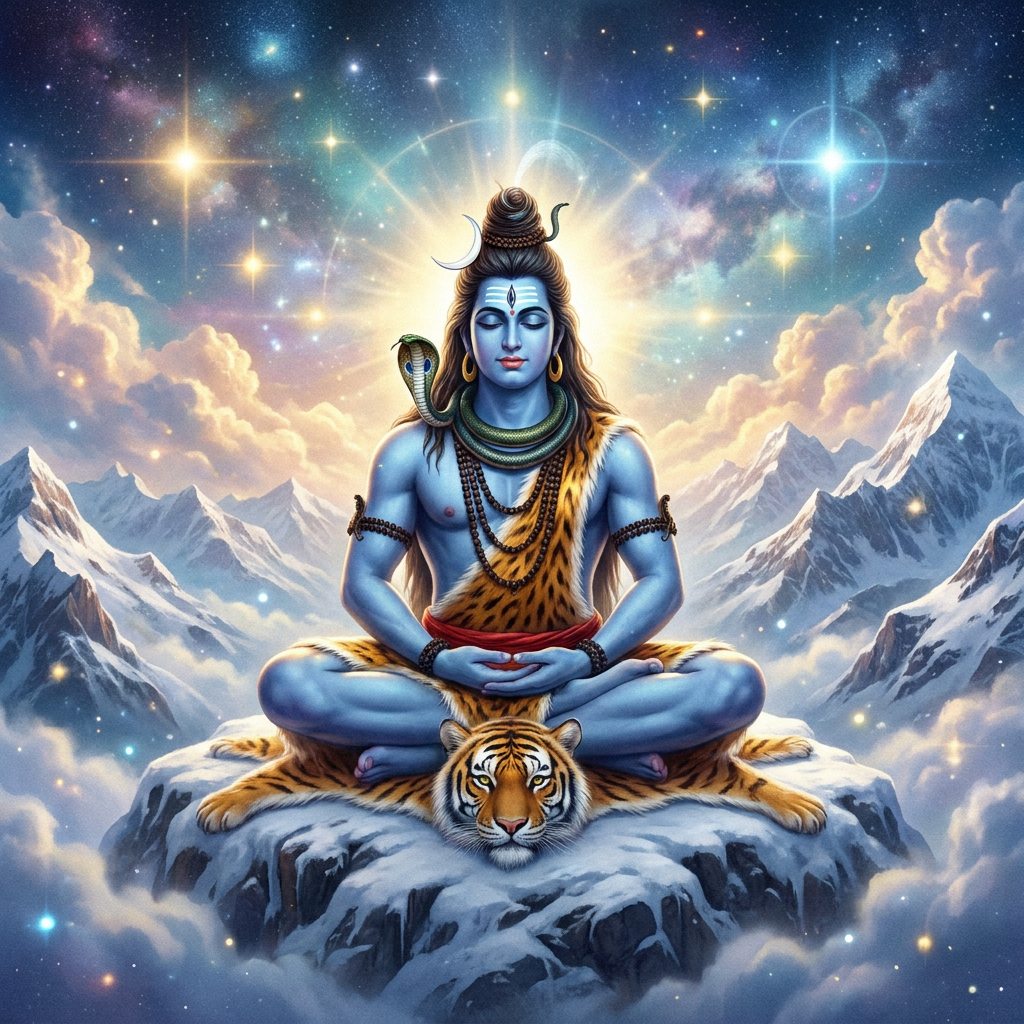
Lord Shiva, known as Mahadeva, is a principal Hindu deity representing transformation and dissolution. As part of the Trimurti, he facilitates renewal by ending cycles. He is considered self-manifested and formless consciousness, embodying both deep meditation as an ascetic and the cosmic dance that sustains the universe.
Shiva’s attributes, including the third eye, crescent moon, and trident, symbolize spiritual insight, mastery over time, and divine power. As Nataraja, his cosmic dance represents creation and liberation. Devotees follow his example of discipline and meditation to overcome the ego and achieve spiritual transformation within the divine reality.
Who Is Lord Shiva?
Lord Shiva is one of the principal deities of Hinduism. He is often called Mahadeva, meaning “the Great God,” and is especially revered in the Shaiva tradition.
What Does Lord Shiva Do?
Shiva is associated with transformation and dissolution. His role is not simply destruction in a negative sense. He brings cycles to completion so that renewal and new creation can begin. Devotees also worship Shiva as a compassionate protector, a source of wisdom, and the supreme yogi who embodies meditation, discipline, and inner stillness.
What Do His Symbols Mean?
Shiva’s third eye represents spiritual insight. The crescent moon symbolizes mastery over time and the mind. The River Ganga flowing from his hair signifies purifying grace, while his trident represents divine power and the overcoming of limitation. His sacred bull, Nandi, symbolizes strength, devotion, and righteousness.
For many Hindus, Lord Shiva teaches that genuine transformation begins within. Through devotion, meditation, and ethical living, worshippers seek to overcome ego and recognize the divine reality present in all life.
Lord Shiva: The Infinite Meditator and The Cosmic Destroyer
Lord Shiva, often referred to as Mahadeva (“Great God”), is one of the primary deities of Hinduism. He is a complex figure who embodies seemingly contradictory qualities: he is the supreme ascetic, lost in deep meditation atop Mount Kailash, yet he is also the cosmic dancer whose rhythm maintains the pulse of the universe.
The Eternal Origins: Svayambhu
Shiva is often described as Svayambhu, meaning self-manifested or self-existent. Unlike other deities who have a clear birth story, Shiva is considered to have no beginning and no end. In the highest philosophical sense, he is Sadashiva—the eternal, formless consciousness from which the entire universe emerges and into which it eventually dissolves. He is the stillness that exists before creation and remains after destruction.
The Great Destroyer in the Trimurti
Within the Hindu Trinity (Trimurti), Shiva occupies the role of the Destroyer. However, this destruction is not viewed as an end, but as a necessary precursor to rebirth. Just as a potter must break old clay to form new vessels, Shiva destroys the old, the ignorant, and the ego to make way for spiritual transformation and new creation. He is the lord of time (Mahakala) and the ultimate transition.
Divine Attributes and Symbolism
The Third Eye (Trinetra): Located on his forehead, it represents wisdom and the destruction of evil. When opened, its fire can reduce anything to ashes.
The Crescent Moon: Adorning his hair, the moon signifies the cycle of time and his control over the mind and its waxing/waning emotions.
The River Ganga: Flowing from his matted locks, the Ganga represents the purification of the soul and the divine flow of knowledge.
The Trishula (Trident): His primary weapon represents the three fundamental qualities of nature (Gunas): Sattva, Rajas, and Tamas.
Nataraja: The Lord of the Dance
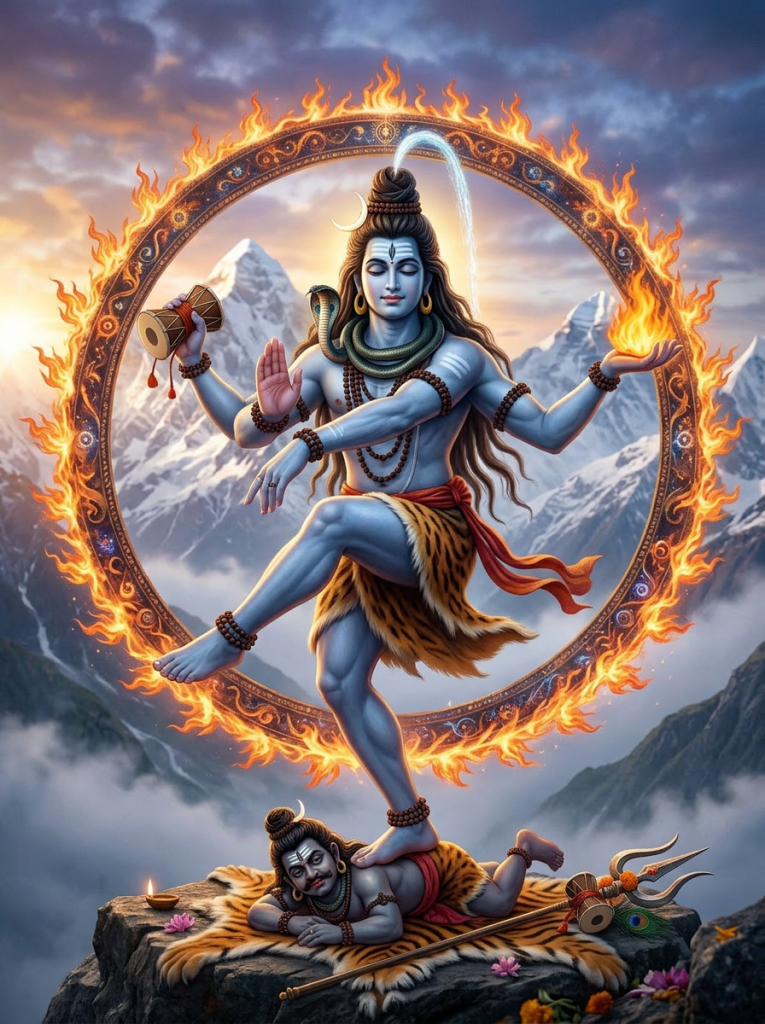
As Nataraja, Shiva performs the Tandava, a powerful and rhythmic dance that symbolizes the five cosmic functions: creation, preservation, destruction, illusion, and liberation. This dance reminds us that the universe is in constant motion, and that finding balance within this movement is the key to spiritual liberation.
Mantras
The following mantras are traditionally associated with Lord Shiva. Pronunciation and ritual details can vary by lineage, so formal or intensive practice is best learned from a qualified teacher. The stated uses describe devotional intentions, not guaranteed medical, financial, romantic, or supernatural outcomes.
1. Om Namah Shivaya
Transliteration: Om Namah Shivaya.
Meaning: A reverential salutation to Shiva—often understood as bowing to the auspicious divine presence and the inner Self.
Traditional use: Traditionally repeated during Shiva worship, meditation, or quiet japa to cultivate devotion, inward focus, humility, and remembrance of Shiva.
2. Mahamrityunjaya Mantra
Transliteration: Om Tryambakam Yajamahe Sugandhim Pushtivardhanam; Urvarukamiva Bandhanan Mrityor Mukshiya Maamritat.
Meaning: We worship the three-eyed Lord, fragrant and life-nourishing. May we be released from bondage and mortality, like a ripe cucumber released from its stem, but not from immortality.
Traditional use: Traditionally recited as a prayer for courage, healing, protection, and spiritual freedom during illness, fear, or major transitions. It should complement—not replace—medical care.
Practice note: Begin with a calm, respectful intention. A small, consistent number of repetitions is generally better than rushing. If you follow a family, temple, or guru tradition, use the pronunciation, count, and procedure taught in that lineage.
Sources and Further Reading
Source note: Shaiva theology, ascetic/householder forms, Ganga and moon imagery, third eye, linga, Nataraja, mantra provenance, and health/protection claims need claim-level sourcing.
- Metropolitan Museum of Art — Shiva — Supports historical Shiva identification and bounded iconographic description.
- J. L. Shastri (ed.), The Shiva Purana, Part 1 — Supports edition-specific Shaiva narratives and theology; claims must be tied to this received recension.