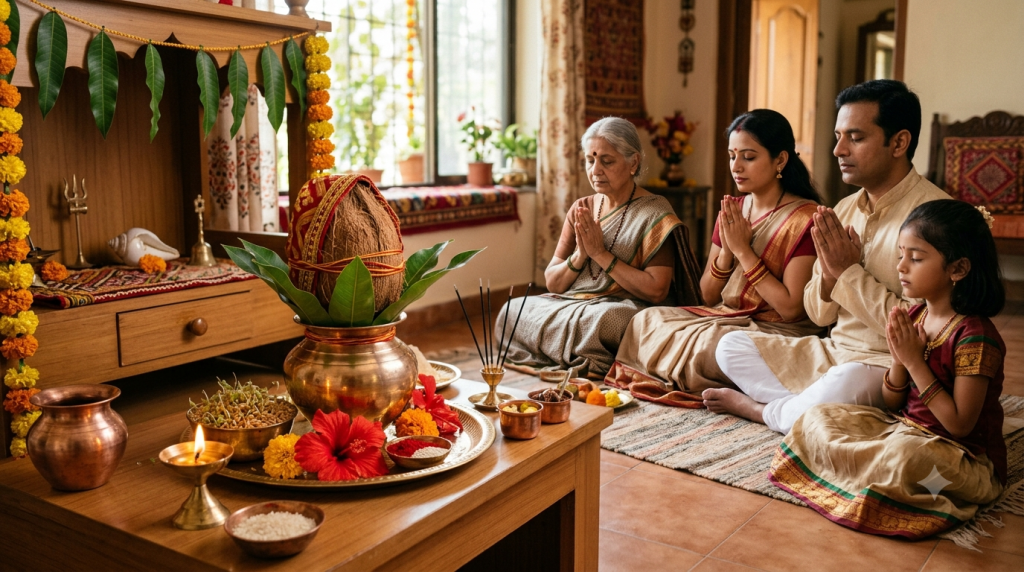
To perform a simple puja at home, clean yourself and the worship space, place a murti or sacred image respectfully, light a lamp only if it is safe, offer water, flowers or food, recite a prayer or the deity’s name, spend a few moments in quiet attention, perform arati if that is part of your tradition, and close by sharing or consuming the offered food as prasad. The sincerity of the offering matters more than owning an elaborate set of materials. A family or initiated practice may follow a more specific sequence, so treat this as a flexible beginner’s framework rather than a universal rule.
What does puja mean?
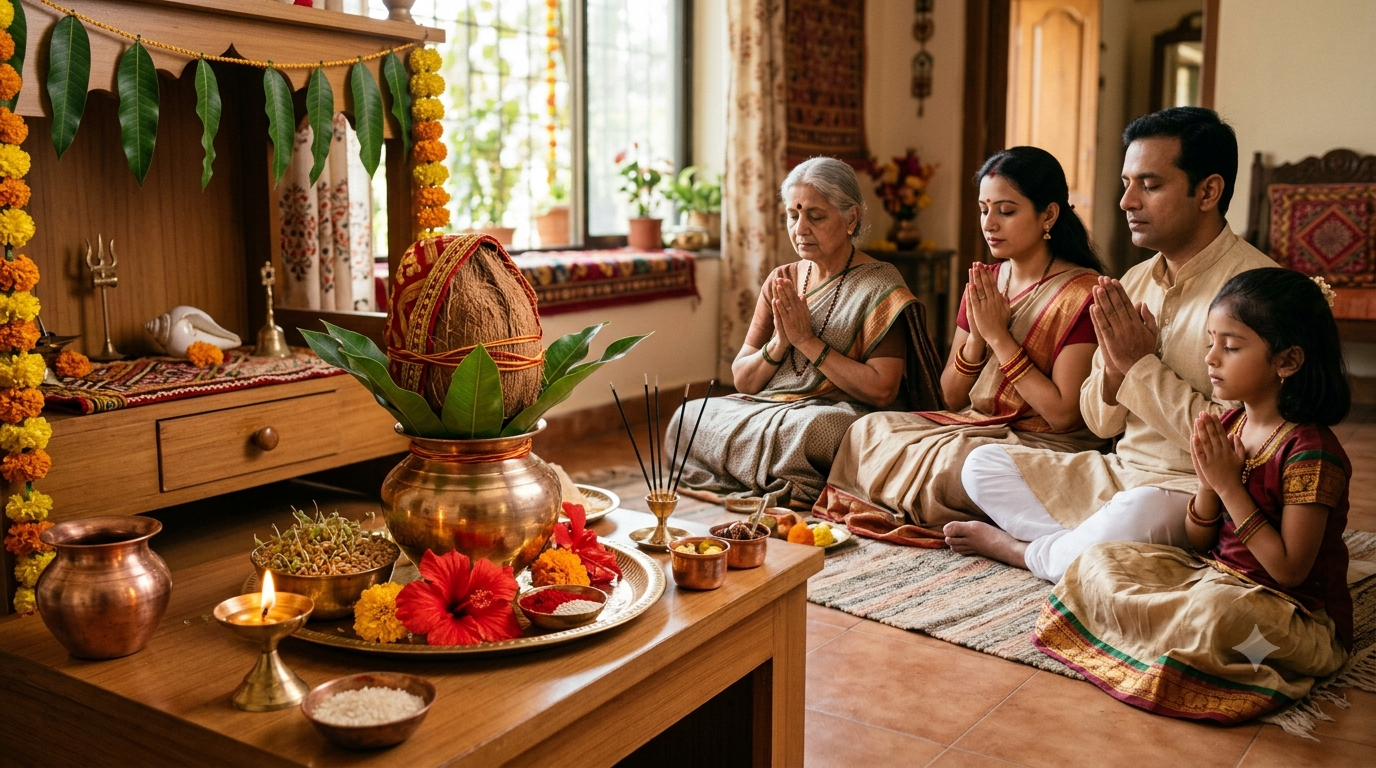
Puja is a form of reverential worship offered to a deity or an aspect of the divine through such acts as prayer, invocation, song and ritual. The Smithsonian’s educational guide describes an important aim as forming a spiritual connection, often with the help of an image, sculpture, vessel or natural object.[1] Puja may be performed at a home shrine, in a temple, outdoors or at a temporary festival altar.
There is no single puja performed identically by all Hindus. A short daily practice might last a few minutes and consist of lighting a lamp, offering a flower and remembering the divine. A festival or temple puja may involve a trained priest, Sanskrit mantras, bathing and dressing a murti, many offerings, music and a formal arati. Britannica likewise presents puja as ceremonial worship ranging from brief daily rites to elaborate temple observances.[2] Harvard’s Pluralism Project and the Hindu American Foundation provide complementary academic and contemporary Hindu accounts of this diversity.[3][4]
What you need for a simple home puja
Use clean items reserved for worship when possible. You do not need every item in this table. Water, a sincere prayer and one modest offering are enough for a simple practice when circumstances are limited.
| Item | How it is used | Simple or safer alternative |
|---|---|---|
| Murti, framed image or sacred symbol | Provides a respectful focus for worship; devotees differ in how they understand divine presence in an image. | A printed image, a symbol meaningful in your tradition, or quiet prayer without an image. |
| Clean cloth or tray | Defines and protects the worship area. | Any stable, clean surface kept free of clutter. |
| Small cup of clean water | May be offered symbolically for welcome, cleansing or refreshment. | One spoonful or a covered cup to avoid spills. |
| Fresh flower or leaves | Offered as beauty, fragrance and devotion. | A petal, a reusable decorative flower, or no flower. Do not pick protected plants. |
| Fruit or simple vegetarian food | Offered and later received as prasad. | A raisin, nut-free packaged item or other food compatible with household needs and the relevant tradition. |
| Diya or candle | Light commonly signifies illumination and auspicious presence. | An LED diya. Place any flame on a heatproof base. |
| Incense | Fragrance may accompany worship. | Omit it, especially around asthma, birds, babies or poor ventilation. |
| Bell | May mark the opening of worship or accompany arati. | Omit it in a quiet household or shared building. |
| Prayer text or mala | Supports recitation, remembrance or mantra repetition. | Recite one familiar divine name or offer a prayer in your own language. |
How to perform a simple puja step by step
- Prepare yourself. Bathe or wash your hands and face, put on clean clothing and settle your mind. Physical cleanliness supports attention; it is not a test of human worth.
- Prepare the space. Wipe the shrine or surface and arrange the image and offerings securely. Keep cloth, paper, hair, curtains and aerosol products away from flame.
- Sit or stand quietly. Take a few slow breaths. Form a sankalpa, or intention—for example, gratitude, remembrance, the wellbeing of others or devotion without asking for a result.
- Begin respectfully. Join your palms and bow. Many people first remember Ganesha, their chosen deity (ishta-devata), their guru or the divine in a form familiar to their family. There is no need to use a formula you do not understand.
- Invite the divine presence. Say a short invocation, chant “Om” if appropriate to your practice, or repeat the deity’s name. Formal traditions may call this avahana; a beginner may simply say, “Please accept this worship.”
- Offer water and other simple gifts. Present a flower, leaves, fruit or food one at a time. You may say the deity’s name with each offering. Formal pujas can include hospitality offerings such as a seat, water, bathing, clothing, fragrance, light and food; do not imitate complex consecration rites without guidance.
- Pray, chant or read. Recite a known mantra, sing a short bhajan, read a verse with an accurate translation, or speak honestly in your own language. Avoid downloading mantras solely because they promise guaranteed wealth, cures or supernatural results.
- Pause for darshan and reflection. Look toward the sacred image with attentive respect, then sit silently. In Hindu worship, seeing and being seen by the deity can carry religious importance; museum scholarship on Hindu art notes the central place of sacred images in worship and devotion.[5]
- Perform arati if customary and safe. Move the lamp in small clockwise circles before the image while singing or praying. Keep the lamp upright and at a safe distance. An LED light may be moved in the same devotional spirit when an open flame is unsuitable.
- Close the puja. Offer thanks, bow and ask forgiveness for mistakes. In a formal rite, dismissal prayers may be used; in a simple home practice, a sincere closing is sufficient.
- Receive prasad and clean up. After the offering, share the food respectfully if it is safe to eat. Extinguish flames fully, remove spoiled flowers or food promptly, and leave the shrine clean.
Why are offerings made?
Offerings express welcome, gratitude, devotion and reciprocity. A common way to understand the sequence is as hospitality shown to an honored presence: the deity may be invited, offered water, fragrance, light and food, praised, and respectfully thanked. The material is not a payment for divine favor. Offering something desirable can train the worshipper in attention, generosity and surrender.
After food has been offered, it may be received as prasad—grace or a blessed gift. Customs about who prepares it, which foods are suitable and how it is distributed vary. Check allergies, dietary restrictions and temple rules before sharing. Never offer or consume spoiled food, and do not assume that every ingredient acceptable in one tradition is acceptable in another.
How home and temple puja differ
Home puja
Home worship is often personal or family-led. It may follow inherited customs, use a local language and fit the household schedule. Some homes maintain a permanent shrine; others set out an image only when worshipping. A simple, consistent practice is generally better than an elaborate routine that cannot be performed safely or respectfully.
Temple puja
Temple worship is usually governed by that temple’s lineage, ritual manuals and schedule. Priests may perform services on behalf of the community, while devotees attend, offer flowers or sponsorship, receive darshan and prasad, and participate in arati. Do not enter restricted sanctuary areas, touch murtis or ritual vessels, take photographs, or copy priestly actions unless the temple permits it.
Common beginner concerns
- “My Sanskrit is imperfect.” Learn slowly from a reliable teacher or recording, but do not let anxiety replace devotion. A clear prayer in a language you understand is appropriate for a simple personal puja.
- “I do not have all the materials.” Offer fewer items without embarrassment. Do not buy sacred materials of uncertain origin or create waste to make the ritual look impressive.
- “Can I perform puja during menstruation, illness or after a bereavement?” Household and temple customs differ substantially. Ask your own family or tradition, and avoid presenting one community’s restrictions as universal Hindu doctrine.
- “Can a non-Hindu perform puja?” Visitors can usually participate respectfully in open forms of worship, but should follow the host or temple’s guidance. Do not reproduce private, initiated or restricted rites as performance or décor.
Frequently asked questions
What is the best time to perform puja?
Many households prefer morning or evening, but a sustainable time when you can be clean, attentive and unhurried is suitable for a simple daily practice. Festival and temple rites may have prescribed timings.
Which direction should a home shrine face?
Directional customs differ, and room safety matters. Rather than force an arrangement based on a generic internet rule, follow your family or temple guidance and choose a clean, stable location away from bathrooms, shoes, cooking splatter and fire hazards.
Can I do puja without a murti?
Yes. Hindus may worship with a framed image, yantra, natural emblem, flame, sacred text, or no material image. The appropriate focus depends on one’s theology and tradition.
How long should a simple puja take?
It may take five to fifteen minutes, but there is no universal minimum. A brief practice performed with care is preferable to rushing through a long sequence.
What should I do with old flowers or offerings?
Remove them before they decay. Compost untreated plant offerings where lawful, or dispose of them cleanly according to local rules and family custom. Do not place plastic, foil, oil, ash or non-biodegradable items in rivers or public spaces.
Sources and further reading
- Smithsonian National Museum of Asian Art, “Puja: Introduction” — supports the definition of puja and the role of objects in devotional connection.
- Encyclopaedia Britannica, “Puja” — supports the broad description of puja in home and temple contexts.
- Harvard University Pluralism Project, “Puja” — background on worship, offerings and devotional practice.
- Hindu American Foundation, “Hindu Puja Instructions” — a contemporary Hindu institutional example of a home-puja sequence.
- The Metropolitan Museum of Art, “Hinduism and Hindu Art” — supports discussion of sacred images and devotion while providing art-historical context.
Related internal-link suggestions
- Sacred Objects in Hindu Worship — link from the materials table and the discussion of murtis.
- Lord Ganesha: Meaning, Symbols and Worship — link from the opening invocation.