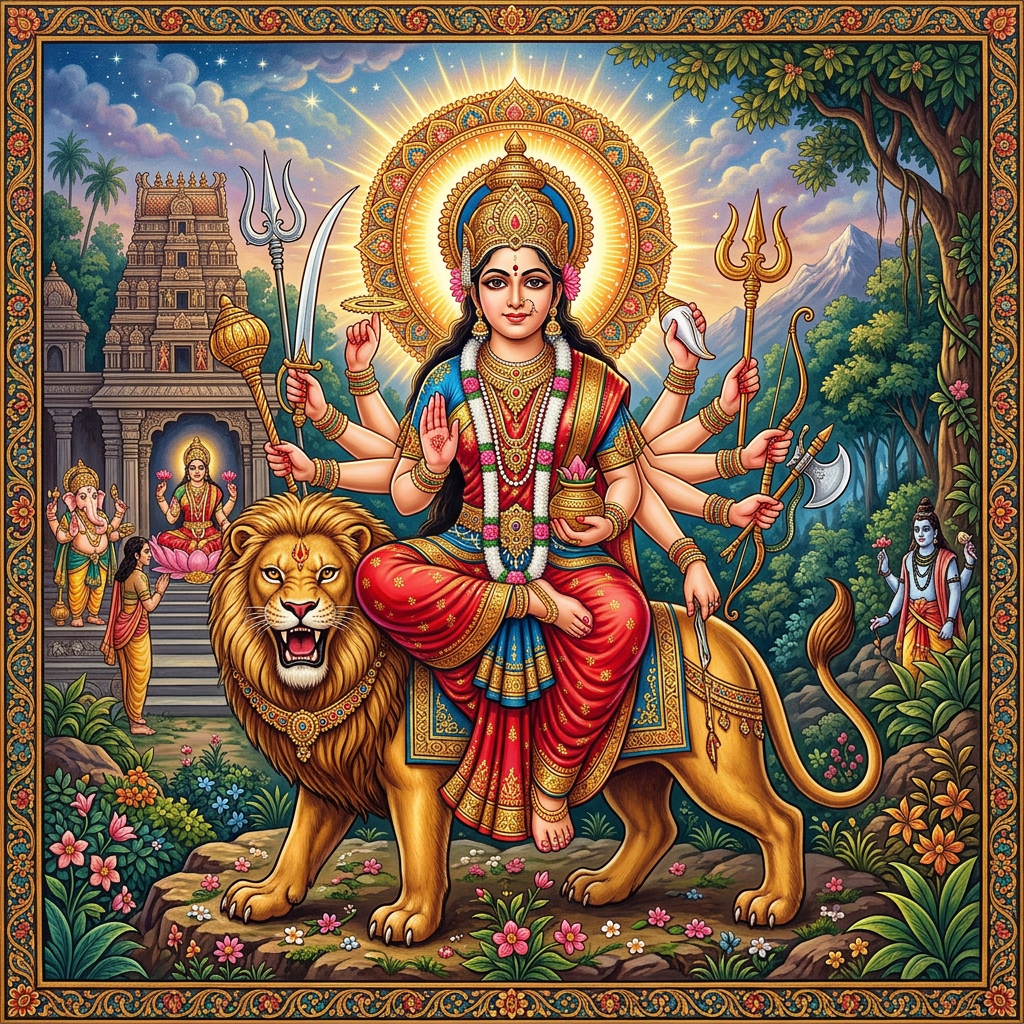
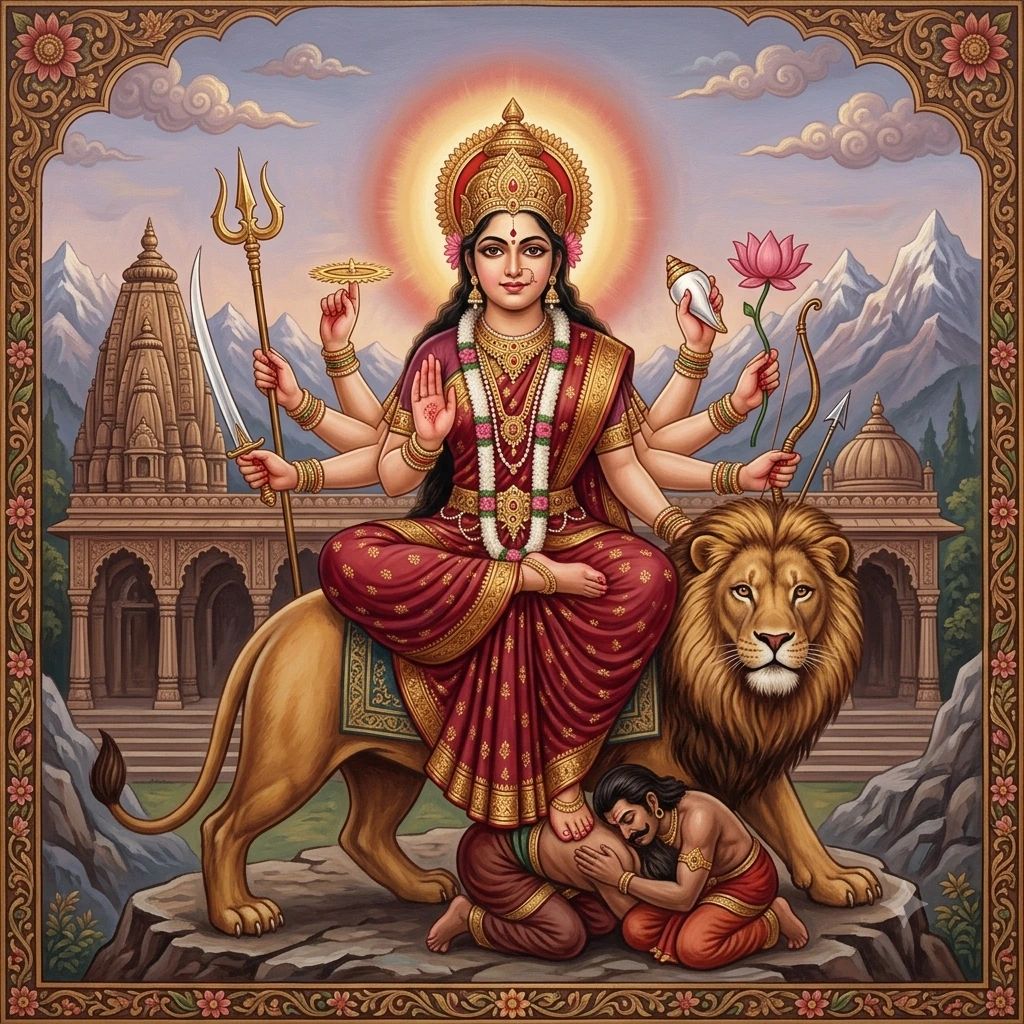
Mother Durga is one of Hinduism’s most beloved expressions of the Divine Feminine. Majestic yet compassionate, she represents sacred strength used to protect life, restore balance, and uphold dharma. Devotees address her as Durga Ma or Maa Durga, approaching her not only as a warrior but also as a mother who nourishes, guides, and gives courage.
Who Is Mother Durga?
The name Durga is commonly connected with difficulty, danger, or a place that is hard to approach. Devotional explanations therefore praise her as “the inaccessible one” and as the Goddess who carries devotees through hardship. Durga is worshiped as Devi and as a manifestation of Shakti, the dynamic divine power active throughout creation.
In Shakta traditions, Durga may be understood as the supreme Goddess from whom other divine forms arise. Other Hindu traditions honor her as a powerful form of Parvati or as the energy through which the gods act. These views coexist, and no short formula represents every scripture, lineage, or region.
Durga and the Victory Over Mahishasura
The best-known account of Durga appears in the Devi Mahatmya, a section of the Markandeya Purana. When Mahishasura, the buffalo demon, defeats the gods and disrupts the order of the worlds, their combined radiance manifests as the Goddess. The gods offer her weapons, and she confronts Mahishasura as he shifts among different forms. Durga finally defeats him and restores balance.
The scripture presents a cosmic defense of dharma. Devotional teachers also interpret Mahishasura inwardly as stubborn ignorance, uncontrolled power, or the ego’s changing disguises. This inner reading can guide reflection, but it is an interpretation of the sacred story rather than a replacement for its narrative setting.
Her Sacred Image and Symbols
- Multiple arms: express divine capacity and the many powers gathered in the Goddess. The number varies across texts and images.
- Trident, discus, sword, bow, and other weapons: recall the gifts of the gods and symbolize discernment, disciplined action, and protection.
- Conch and lotus: can suggest sacred sound, purity, beauty, and spiritual awakening.
- Lion or tiger: her vahana embodies courage, energy, and power brought under wise direction.
- Calm face amid battle: communicates decisive strength without hatred or loss of inner balance.
Specific objects and their meanings vary by scripture, temple, artist, and teaching lineage. Symbolic explanations are best offered as traditional interpretations, not as a single universal code.
Durga, Navadurga, and Related Forms
Durga’s identity is expressed through many names and forms. During Navaratri, many communities honor the Navadurga, nine forms beginning with Shailaputri and concluding with Siddhidatri. Bengali Durga Puja often presents Durga with Lakshmi, Saraswati, Ganesha, and Kartikeya in a family grouping. Elsewhere, traditions may emphasize Amba, Jagadamba, Bhavani, Chamundeshwari, or local protective forms of the Goddess.
These practices should not be flattened into one system. Festival sequence, fasting rules, food offerings, recitations, and understandings of the Goddess can differ substantially by region and family.
Navaratri and Durga Puja
Durga is honored especially during Navaratri, the nine-night festival of the Divine Feminine. Observances may include home or temple worship, recitation of the Devi Mahatmya, devotional singing, fasting, dancing, and service. Durga Puja is celebrated with particular grandeur in Bengal and many diaspora communities through crafted images, communal worship, cultural programs, shared meals, and immersion processions.
Not every Hindu observes the same Navaratri, and local calendars can differ. Anyone joining a temple or community celebration should follow the host tradition’s guidance regarding dress, photography, offerings, and participation.
A Respectful Daily Practice
A simple observance may begin with a clean, quiet space, a lamp or flower, and a sincere prayer. Om Dum Durgayai Namah is a widely recited salutation; Dum is a traditional seed syllable associated with Durga. Another beloved verse begins Sarva Mangala Mangalye and praises the Goddess as refuge and source of auspiciousness.
Pronunciation, repetition counts, and ritual details vary, and formal or intensive mantra practice is best learned from a qualified teacher. The purpose is reverence and disciplined devotion, not a guaranteed medical, financial, or supernatural result. Durga worship can also take practical form through courageous honesty, protection of vulnerable people, self-control, and compassionate service.
Frequently Asked Questions
Are Durga and Parvati the same?
Many traditions understand Durga as a powerful form of Parvati. Shakta traditions may instead begin with Devi as supreme and describe many goddesses as her manifestations. Both relationships are found in Hindu thought.
Why does Durga carry weapons?
They identify her as a defender of dharma in sacred narratives. Devotionally, they also represent the capacities needed to confront fear, confusion, and harmful conduct.
Can beginners pray to Mother Durga?
Yes. A simple, respectful prayer or offering is broadly accessible. Specialized ritual, fasting, or mantra disciplines should follow trustworthy temple, family, or teacher guidance.
Related Devi Guides
Explore the HinduClarity Devi guide collection, then continue with Mother Lakshmi and the wider family of Devi traditions.
Sources and Further Reading
Source note: Mahishasura narrative, multiple forms, weapons and lion symbolism, Navratri practice, mantras, and protection claims need primary and lived-practice sourcing.
- Metropolitan Museum of Art — The Goddess Durga Slaying Mahisha — Supports the Mahishasura-mardini identity and historical Durga iconography.
- Markandeya Purana Sanskrit e-text — GRETIL, University of Gottingen — Supports text-level checking of the Devi Mahatmya narratives, including Durga, Kali, Chanda-Munda, Raktabija, and Mahishasura.