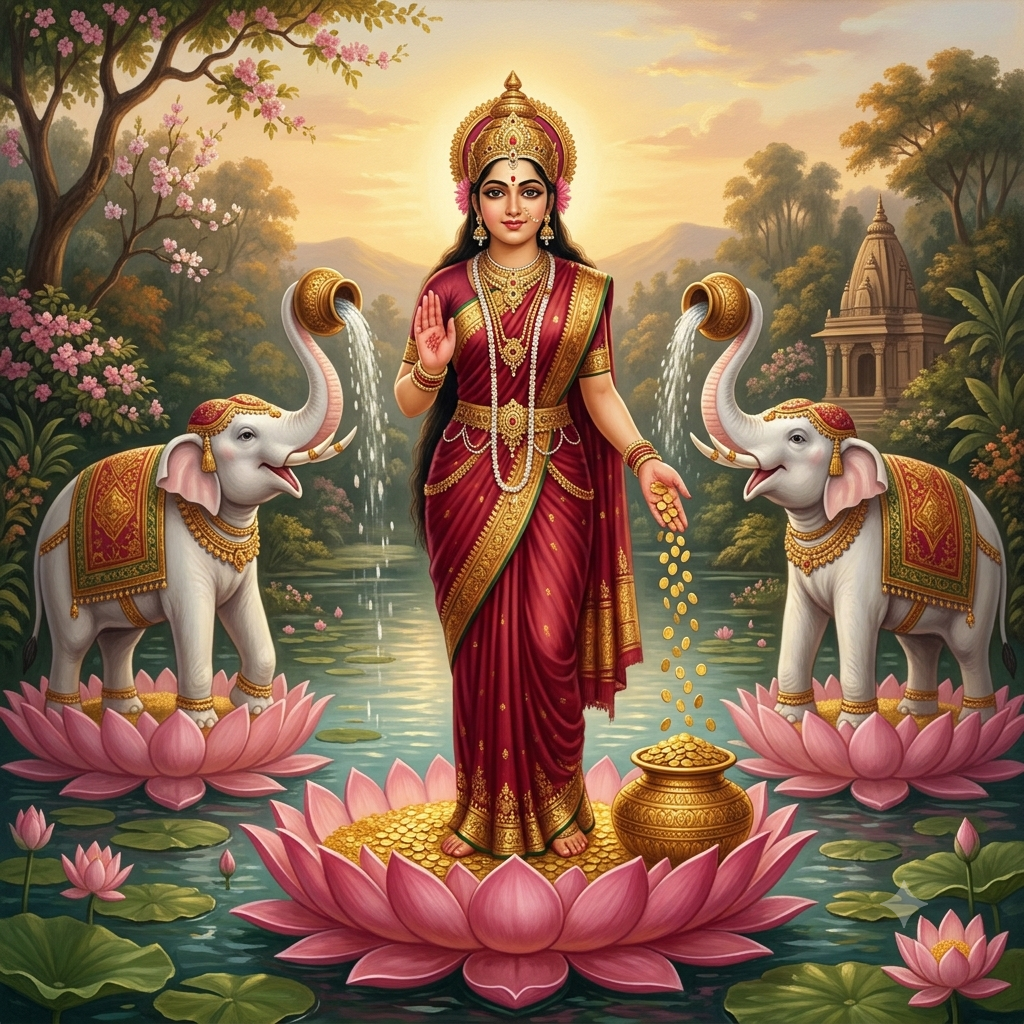
Mother Lakshmi is revered as the Hindu goddess of prosperity, auspiciousness, beauty, grace, and abundance. Her blessings are understood not only as wealth, but also as harmony, generosity, good fortune, and spiritual well-being.
Who Is Mother Lakshmi?
Lakshmi is widely worshiped as the divine power of prosperity and auspicious living. She is often honored with Lord Vishnu, and together they symbolize preservation, protection, and abundance guided by dharma.
Her presence is associated with cleanliness, kindness, gratitude, and responsible use of resources. In many homes, Lakshmi is welcomed through devotion, ethical living, and generosity.
Symbols and Iconography
Mother Lakshmi is commonly shown seated or standing on a lotus, holding lotuses, and blessing devotees with open hands. The lotus symbolizes purity and spiritual growth even in difficult conditions.
Gold coins flowing from her hand represent abundance, but also the importance of sharing blessings wisely. Elephants in Lakshmi imagery often suggest royal dignity, rain, fertility, and good fortune.
Lakshmi Puja and Diwali
Lakshmi Puja is central to Diwali for many Hindu families. Homes are cleaned, lamps are lit, and prayers are offered for prosperity, protection, and auspicious beginnings.
The deeper meaning is that light, order, gratitude, and dharma invite true prosperity. Wealth without wisdom is incomplete; Lakshmi is honored best when abundance supports good conduct and service.
Mantras and Worship
A common mantra is “Om Shreem Mahalakshmyai Namah.” Devotees may offer flowers, lamps, sweets, incense, and prayers with a clean and respectful heart.
Friday worship, Diwali observances, and regular gratitude practices are common ways devotees honor Lakshmi.
Lessons from Mother Lakshmi
Lakshmi teaches that prosperity is sacred when it is connected with generosity, responsibility, cleanliness, and compassion.
Her image reminds devotees to seek abundance without greed and beauty without vanity.
Frequently Asked Questions
Note: Hindu traditions are diverse. Details can vary by region, sampradaya, scripture, temple practice, and family custom. This guide is written for respectful learning and general clarity.
Mantras
The following mantras are traditionally associated with Mother Lakshmi. Pronunciation and ritual details can vary by lineage, so formal or intensive practice is best learned from a qualified teacher. The stated uses describe devotional intentions, not guaranteed medical, financial, romantic, or supernatural outcomes.
1. Mahalakshmi Nama Mantra
Transliteration: Om Shreem Mahalakshmyai Namah.
Meaning: Salutations to Mahalakshmi; Shreem is a traditional seed syllable associated with auspiciousness, beauty, nourishment, and abundance.
Traditional use: Traditionally used in Lakshmi puja and japa to cultivate gratitude, generosity, responsible prosperity, harmony, and reverence for the resources that sustain life.
2. Lakshmi Gayatri
Transliteration: Om Mahalakshmyai Cha Vidmahe Vishnu Patnyai Cha Dhimahi; Tanno Lakshmi Prachodayat.
Meaning: May we know Mahalakshmi and meditate upon the consort of Vishnu; may Lakshmi illuminate and guide us.
Traditional use: Recited for spiritual clarity about wealth, ethical livelihood, household well-being, and the wise use of prosperity. It is not a promise of financial gain.
Practice note: Begin with a calm, respectful intention. A small, consistent number of repetitions is generally better than rushing. If you follow a family, temple, or guru tradition, use the pronunciation, count, and procedure taught in that lineage.
Sources and Further Reading
Source note: Vedic and Purana development, ocean-churning narrative, lotus/elephant/coin imagery, Vishnu relationship, Diwali practice, mantras, and prosperity claims need matched sources.
- Metropolitan Museum of Art — Lakshmi — Supports historical identification and Lakshmi iconography.
- Vishnu Purana Sanskrit e-text — GRETIL, University of Gottingen — Supports checking Vishnu Purana cosmology, avatar, genealogy, Krishna, and liberation claims in the represented text.