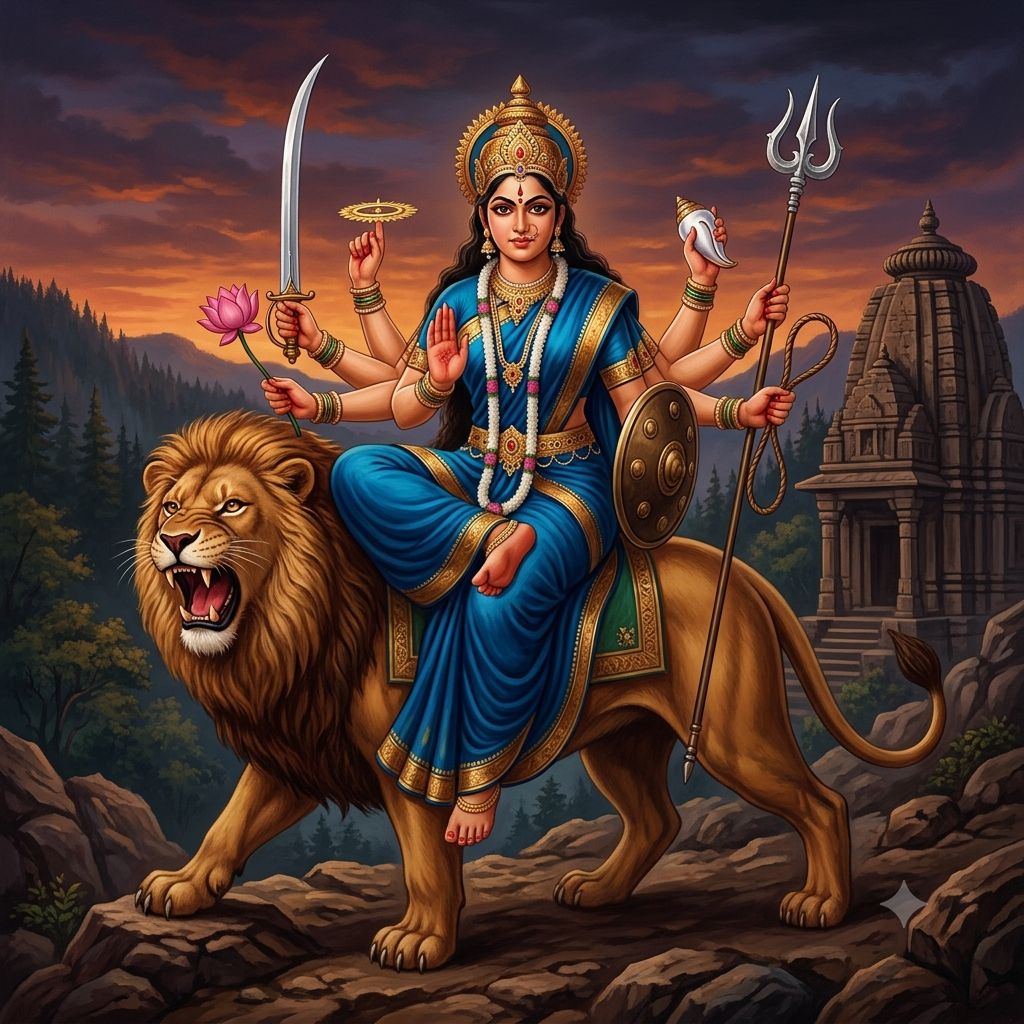
Mother Katyayani is a powerful form of Goddess Durga and one of the Navadurga worshiped during Navratri. She represents courage, protection, righteous strength, and the power to overcome negativity.
Who Is Mother Katyayani?
Katyayani is traditionally associated with the fierce protective energy of the Divine Mother. She is worshiped as a warrior goddess who destroys harmful forces and protects devotees.
In Navadurga worship, Katyayani is honored on the sixth day of Navratri. Her form reminds devotees that spiritual life sometimes requires discipline, courage, and firm commitment to dharma.
Symbols and Iconography
Mother Katyayani is often shown riding a lion, with multiple arms carrying weapons and blessings. The lion represents courage and the ability to face fear.
Her weapons symbolize the power to cut through injustice, ignorance, and inner weakness. Her blessing hand reminds devotees that divine strength is protective, not cruel.
Katyayani and Navratri
During Navratri, devotees worship different forms of Durga as expressions of the Divine Mother. Katyayani represents heroic devotion and the willingness to stand against adharma.
Her worship may include puja, chanting, fasting, reading Durga prayers, and offering flowers or lamps with devotion.
Mantras and Devotional Meaning
A common invocation is “Om Devi Katyayanyai Namah.” Devotees may chant with focus, asking for strength, protection, and clarity.
Katyayani worship is also connected in some traditions with sincere prayer for a worthy marriage, but her meaning is much wider: courage, purity, and divine protection.
Lessons from Mother Katyayani
Katyayani teaches that strength should serve righteousness. Courage is not anger; it is disciplined action rooted in truth.
Her form encourages devotees to overcome fear, protect what is sacred, and live with integrity.
Frequently Asked Questions
Note: Hindu traditions are diverse. Details can vary by region, sampradaya, scripture, temple practice, and family custom. This guide is written for respectful learning and general clarity.
Mantras
The following mantras are traditionally associated with Mother Katyayani. Pronunciation and ritual details can vary by lineage, so formal or intensive practice is best learned from a qualified teacher. The stated uses describe devotional intentions, not guaranteed medical, financial, romantic, or supernatural outcomes.
1. Katyayani Prayer from the Bhagavata Purana
Transliteration: Katyayani Mahamaye Mahayoginy Adhishvari; Nanda-gopa-sutam Devi Patim Me Kuru Te Namah.
Meaning: O Katyayani, great power of divine yoga and supreme goddess, please grant that the son of Nanda may become my beloved; I bow to you.
Traditional use: Traditionally associated with the young gopis' vow to Katyayani. Devotees may recite it while praying for a dharmic marriage, a compatible life partner, or purification of relationship intentions—not as a guarantee that a particular person will be obtained.
2. Katyayani Gayatri
Transliteration: Om Katyayanyai Vidmahe Kanyakumari Dhimahi; Tanno Durga Prachodayat.
Meaning: May we know Katyayani and meditate upon the virgin goddess; may Durga inspire and guide our understanding.
Traditional use: Used in Devi worship for courage, discernment, disciplined devotion, and contemplation of Katyayani as a protective form of the Divine Mother. Wording can vary by lineage.
Practice note: Begin with a calm, respectful intention. A small, consistent number of repetitions is generally better than rushing. If you follow a family, temple, or guru tradition, use the pronunciation, count, and procedure taught in that lineage.
Sources and Further Reading
Source note: Navadurga identity, birth narratives, Bhagavata Katyayani-vrata, iconography, mantra wording, marriage-related practice, and outcome claims must not be blended.
- Bhaktivedanta VedaBase — Srimad-Bhagavatam 10.22.4 — Supports one Vaishnava Purana account of the Vraja girls worshipping Katyayani and records the mantra in that translation.
- Metropolitan Museum of Art — The Goddess Durga Slaying Mahisha — Supports the Mahishasura-mardini identity and historical Durga iconography.
- Markandeya Purana Sanskrit e-text — GRETIL, University of Gottingen — Supports text-level checking of the Devi Mahatmya narratives, including Durga, Kali, Chanda-Munda, Raktabija, and Mahishasura.