Hindu festival guide
Sharad Navratri
Sharad Navratri is the autumn nine-night festival devoted to Devi. This guide gives Port of Spain dates for 2026 and 2027, introduces the Navadurga sequence, and explains how observance differs across Durga Puja, garba, Golu, Ram Lila, temple, and household traditions.
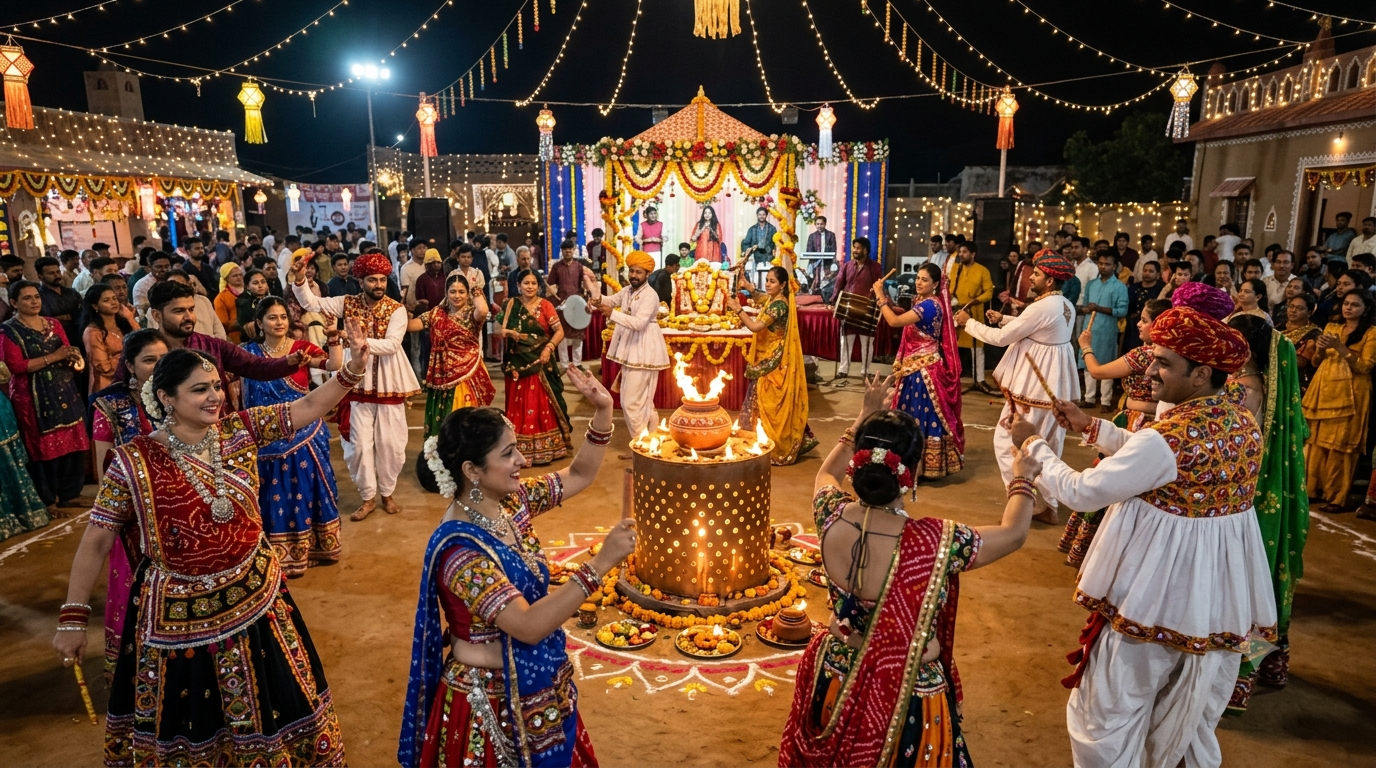
Sharad Navratri dates for 2026 and 2027
| Year | Port of Spain dates | Planning note |
|---|---|---|
| 2026 | Begins Sunday, October 11; Durga Ashtami October 18; Maha Navami October 19; Vijayadashami October 20 | Use these dates for Port of Spain, Trinidad and Tobago. |
| 2027 | Begins about Thursday, September 30; Durga Ashtami October 7; Maha Navami October 8; Vijayadashami October 9 | Recheck with a local panchanga before planning worship or events. |
Calendar note: Festival observance dates are selected using tithi boundaries together with the local sunrise and other applicable calendar rules. Therefore, the civil date and Ghatasthapana timing may differ by location. Follow your temple or a location-specific panchanga. Calendar pages checked October 10, 2026: 2026 and 2027.
What Sharad Navratri means
Sharad Navratri is a major autumn observance devoted to Devi. Across nine nights, worship may emphasize courage, wisdom, protection, abundance, disciplined prayer, music, dance, and community life.
Many devotees follow the Navadurga sequence. Other communities foreground Durga Puja, worship centered in turn on Durga, Lakshmi and Saraswati, Golu, Saraswati and Ayudha Puja, Ram Lila, garba, or local Devi traditions. These related practices should not be flattened into one universal script.
Devi’s victory
The Devī Māhātmya, within the Mārkaṇḍeya Purāṇa, tells of Durga overcoming Mahishasura and other forces that threaten cosmic order.
Nine nights of attention
Some families recite scripture or keep a vrata, while public observance may include nightly worship, music, or dance. The form changes by region and community.
Vijayadashami
The conclusion celebrates the victory of dharma and may mark learning, arts, tools, and new undertakings.
Nine days, nine names: the Navadurga
A clear, beginner-friendly way to mark each day is to offer a flower, fold your hands, and recite the short salutation for that day’s form of Devi. The Devī Kavaca preserves the familiar sequence of nine names. The complete lines below are contemporary public name-salutations built with the name of each Goddess and namaḥ, “salutations”; they are not presented as quotations from that scripture, bīja mantras, or lineage-restricted formulas.
Household and temple customs vary. Follow your family, temple, sampradāya, or teacher where you have one. No fixed repetition count is required by this guide.
The images in this section are contemporary editorial illustrations created for HinduClarity. They follow widely recognized attributes; iconography varies across regions and devotional traditions.
Offering customs vary by region, temple, and family. These foods reflect one widely circulated Navadurga tradition, not universal requirements. Their meanings are devotional associations rather than promised results; follow your family or community practice where it differs.
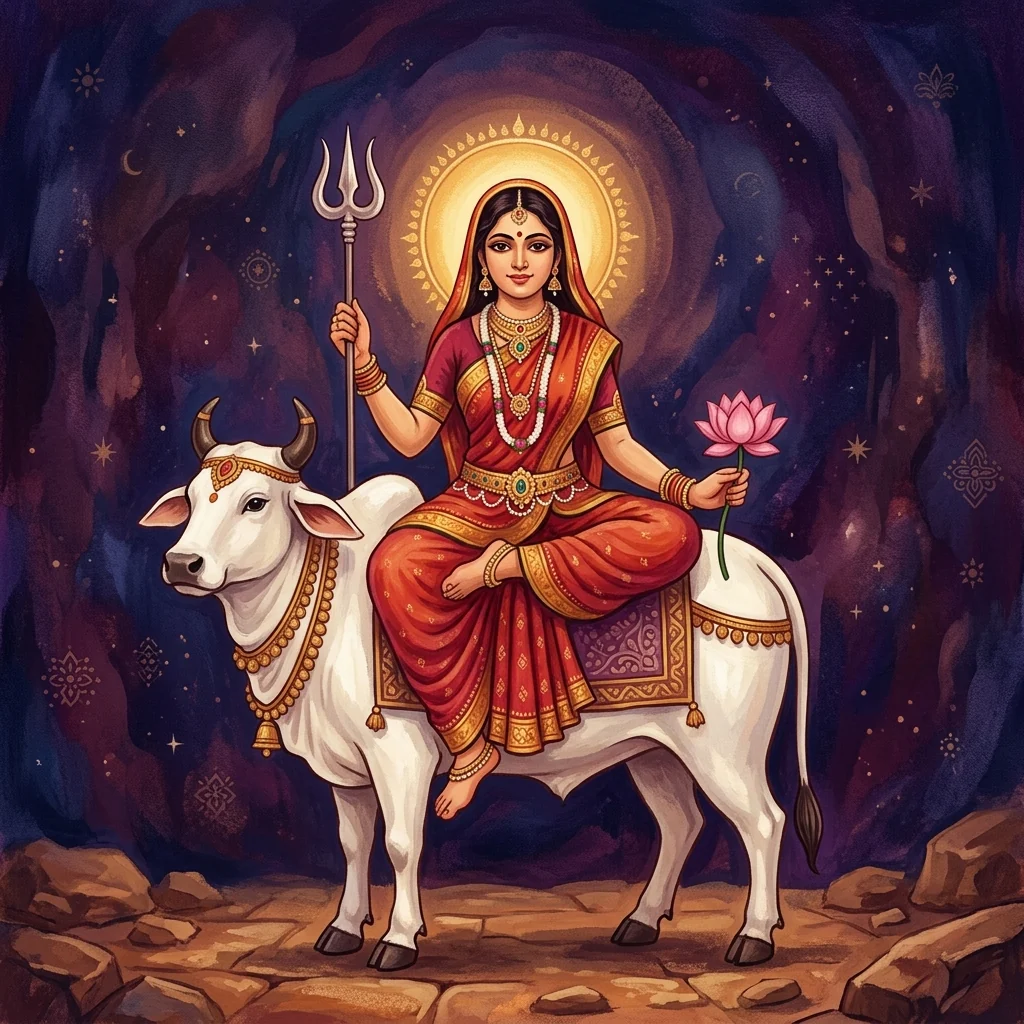
शैलपुत्री — Śailaputrī
Daughter of the mountain.
Customary offering: Ghee. Often associated with purity and prayers for strength.
Devotional salutation
ॐ देवी शैलपुत्र्यै नमः।
oṃ devī śailaputryai namaḥ
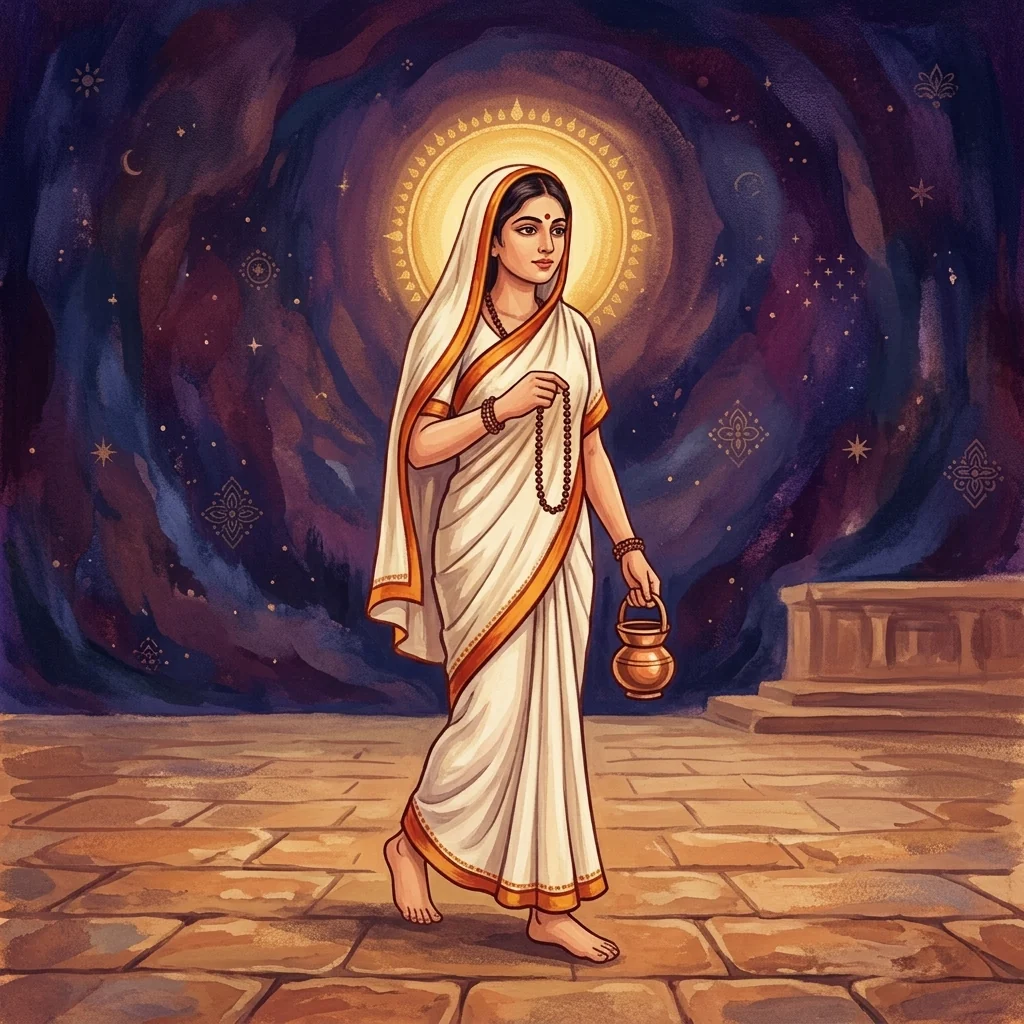
ब्रह्मचारिणी — Brahmacāriṇī
The devoted ascetic and practitioner of brahmacarya.
Customary offering: White sugar or mishri. Symbolizes sweetness, simplicity, and grace.
Devotional salutation
ॐ देवी ब्रह्मचारिण्यै नमः।
oṃ devī brahmacāriṇyai namaḥ
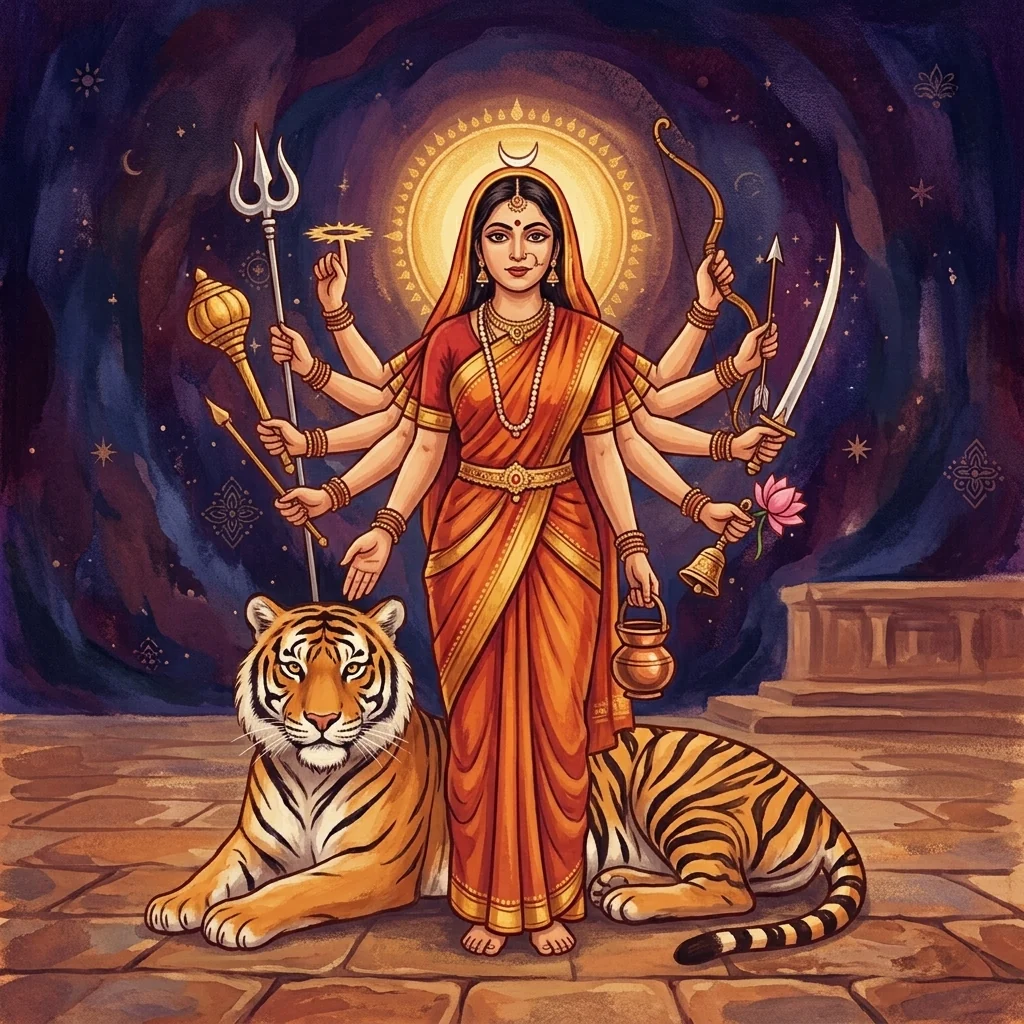
चन्द्रघण्टा — Candraghaṇṭā
Her name joins “moon” and “bell,” often understood through her crescent ornament.
Customary offering: Kheer. Offered with prayers for peace and prosperity.
Devotional salutation
ॐ देवी चन्द्रघण्टायै नमः।
oṃ devī candraghaṇṭāyai namaḥ
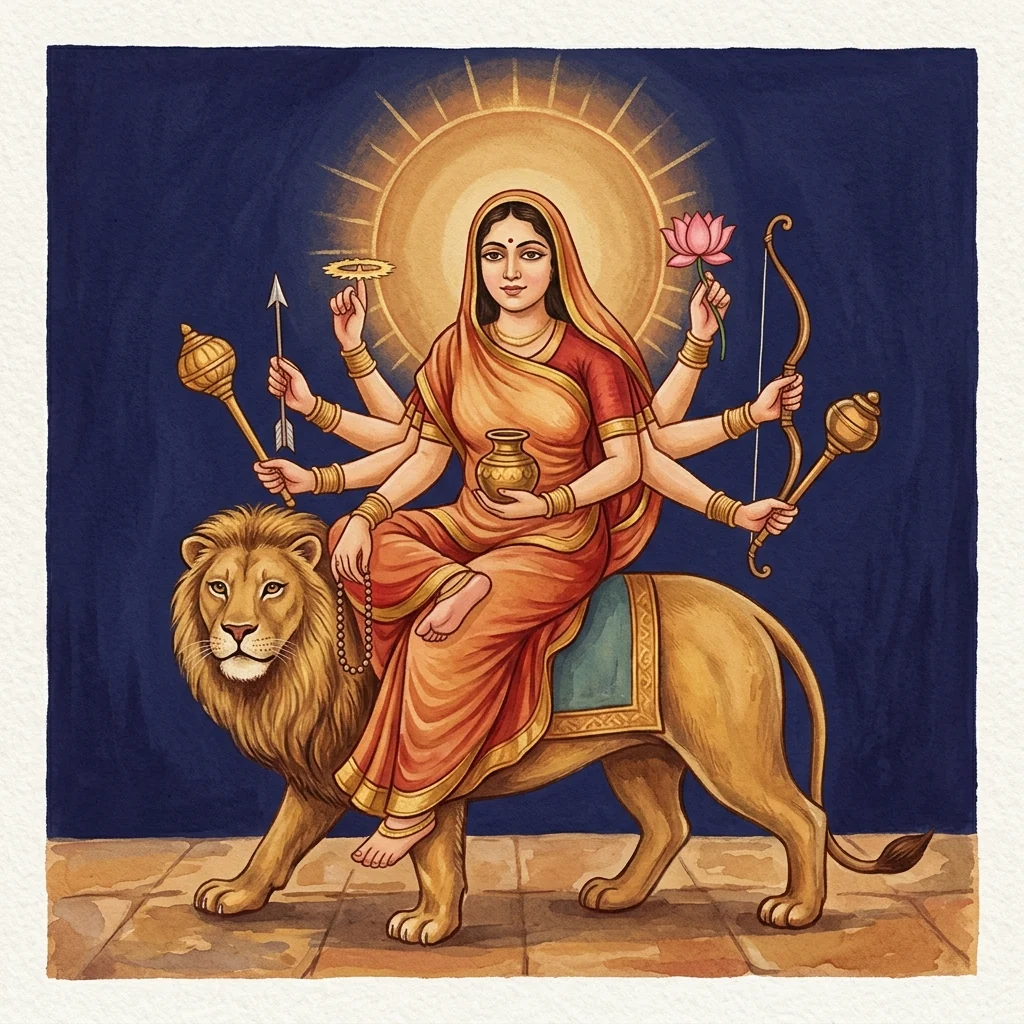
कूष्माण्डा — Kūṣmāṇḍā
A revered deity-name. “Cosmic egg” is a popular devotional interpretation, not a certain etymology.
Customary offering: Malpua or, in some families, a regional sweet such as athirasam. Associated with clarity, creativity, and abundant energy.
Devotional salutation
ॐ देवी कूष्माण्डायै नमः।
oṃ devī kūṣmāṇḍāyai namaḥ
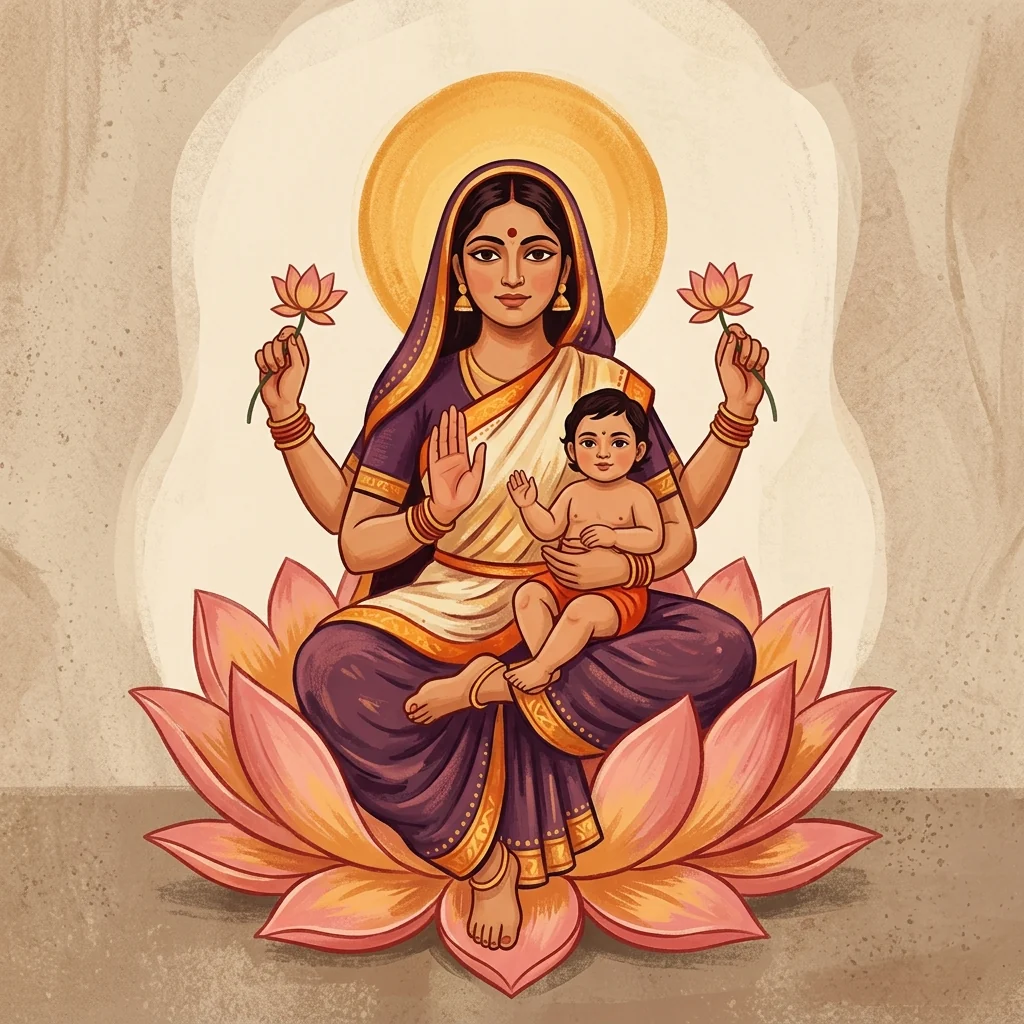
स्कन्दमाता — Skandamātā
Mother of Skanda.
Customary offering: Bananas. Associated with wellbeing, nourishment, and maternal care.
Devotional salutation
ॐ देवी स्कन्दमात्रे नमः।
oṃ devī skandamātre namaḥ
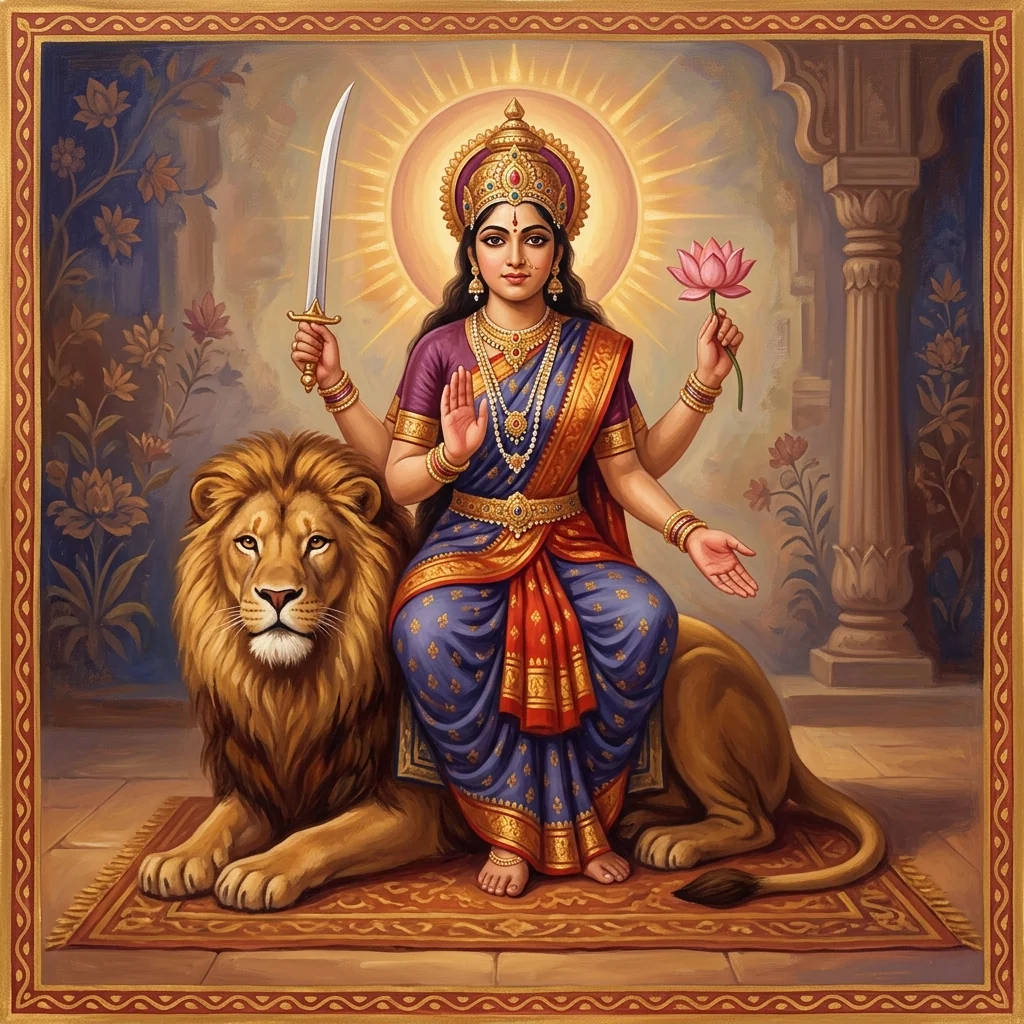
कात्यायनी — Kātyāyanī
A name associated with Kātyāyana; tradition remembers her as a powerful warrior form.
Customary offering: Honey. Symbolizes sweetness in speech, harmony, and courage.
Devotional salutation
ॐ देवी कात्यायन्यै नमः।
oṃ devī kātyāyanyai namaḥ
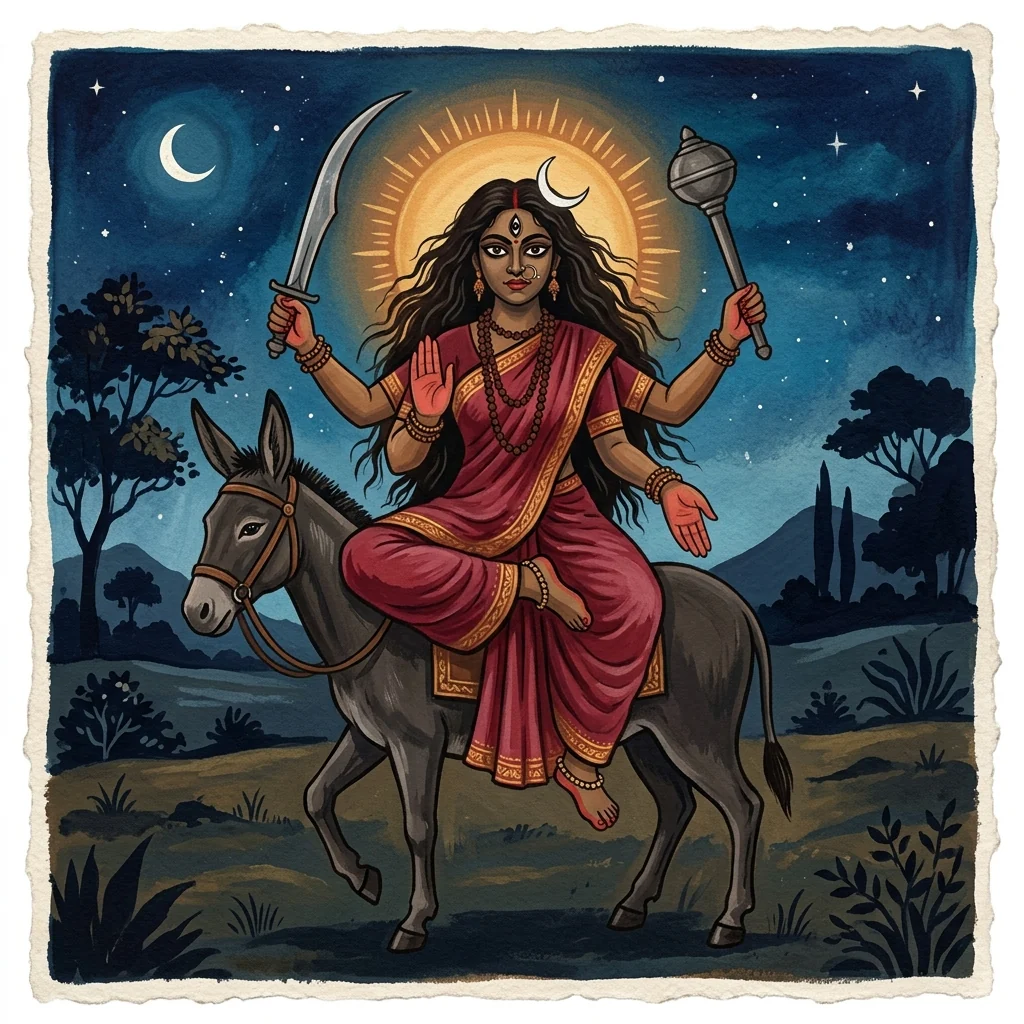
कालरात्रि — Kālarātri
Dark night; the name can also evoke time and mortality in theological interpretation.
Customary offering: Jaggery (gur). Offered with prayers for courage, protection, and the overcoming of obstacles.
Devotional salutation
ॐ देवी कालरात्र्यै नमः।
oṃ devī kālarātryai namaḥ
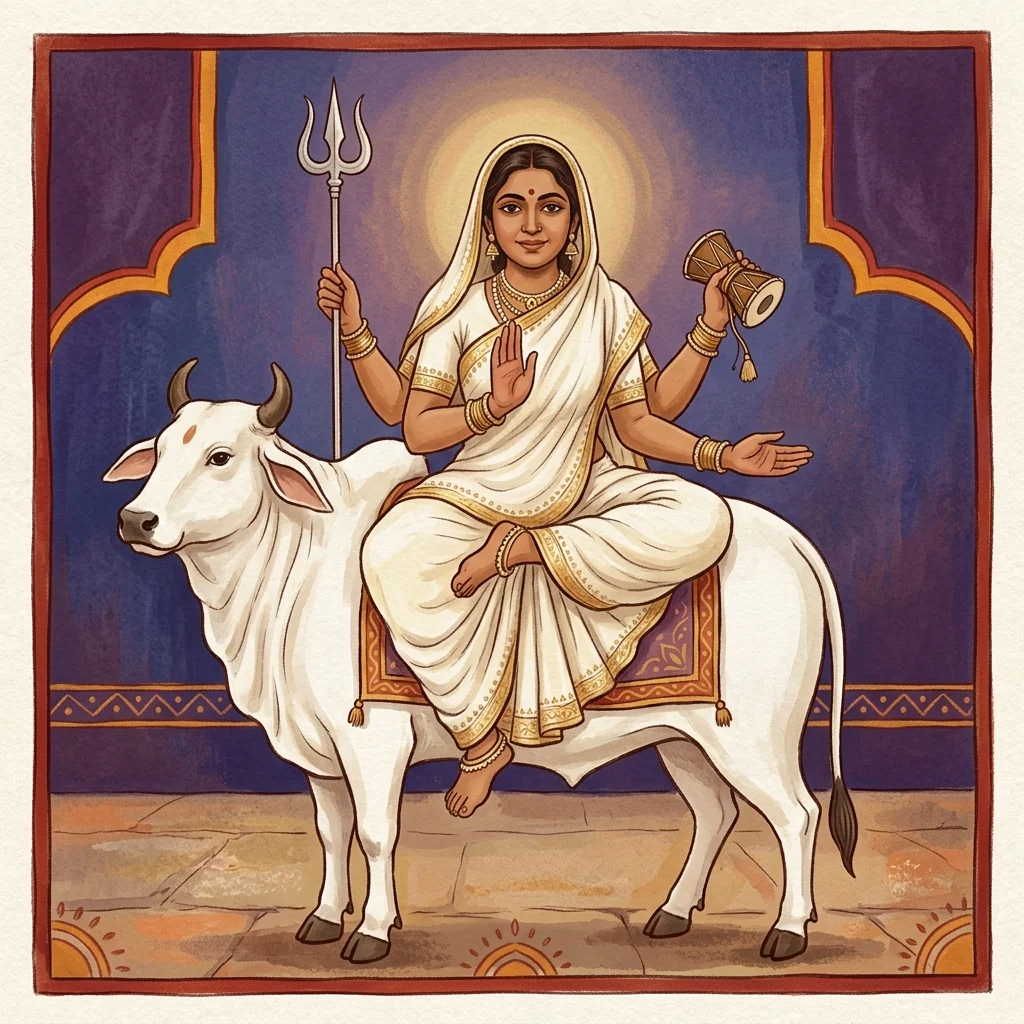
महागौरी — Mahāgaurī
The Great Radiant One; the traditional epithet does not make skin tone a measure of human worth.
Customary offering: Coconut. Symbolizes purity, renewal, and sincere aspirations.
Devotional salutation
ॐ देवी महागौर्यै नमः।
oṃ devī mahāgauryai namaḥ
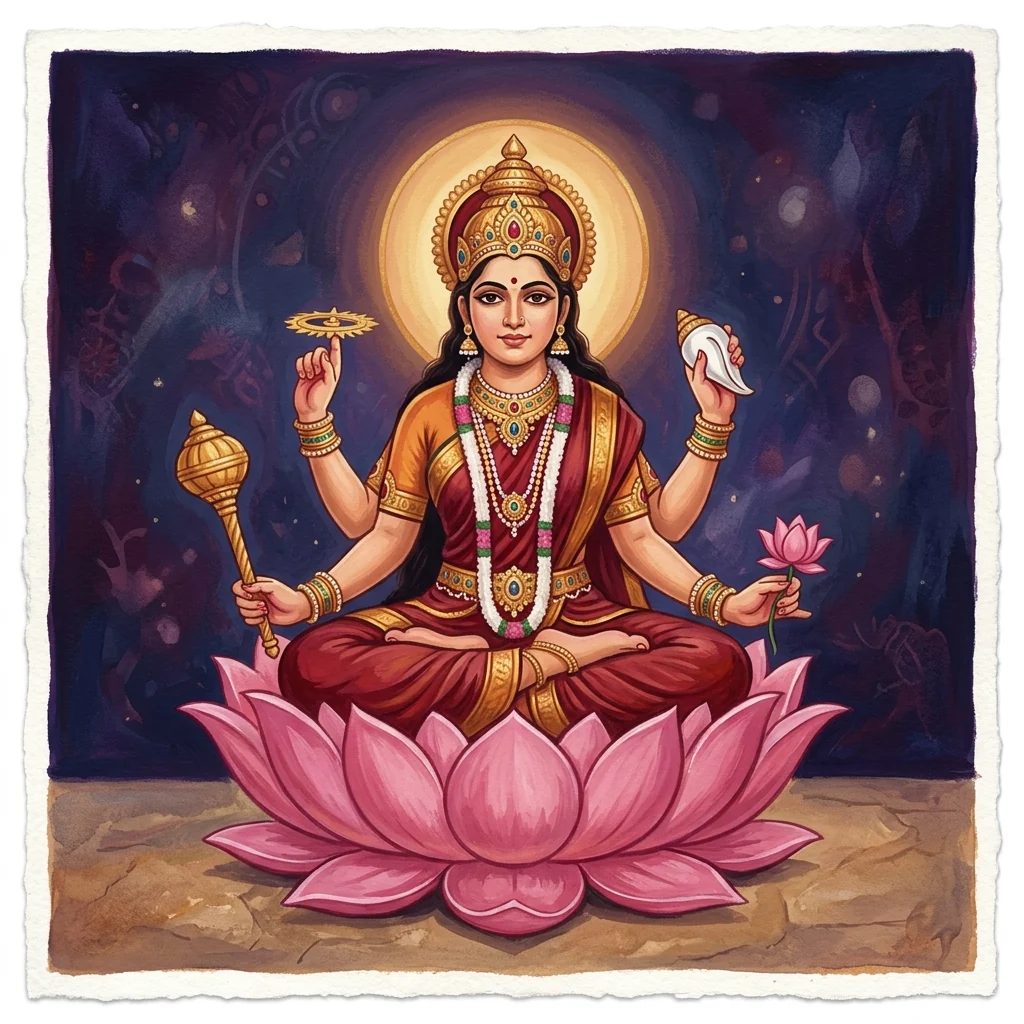
सिद्धिदात्री — Siddhidātrī
Giver of accomplishment, attainment, or perfection.
Customary offering: Sesame seeds (til) or sesame sweets. Associated with spiritual growth and prayers for protection.
Devotional salutation
ॐ देवी सिद्धिदात्र्यै नमः।
oṃ devī siddhidātryai namaḥ
Prasad safety: Use food-grade ingredients and check for dairy, sesame, coconut, and other allergens. Honey should not be given to children under 12 months.
A simple and respectful home practice
Three-minute observance
- Wash your hands and choose a clean, quiet place.
- Light a lamp only if it is safe; a flower or a moment of stillness is enough.
- Read the day’s name and meaning.
- Recite the salutation once or a few times, slowly and respectfully.
- Close with gratitude, personal prayer, or an act of service.
Know what you are reciting
These are public name-salutations. Longer stotra, chapter recitation, bīja-bearing formulas, tantric practice, nyāsa, homa, or teacher-transmitted methods belong to different contexts. This page does not prescribe them or promise worldly results.
If pronunciation is unfamiliar, reading the English meaning reverently is a valid way to begin. Do not assume imperfect pronunciation causes harm.
For a broader starting point, see how to perform puja and how to prepare a home puja space.
Safety and inclusion: Never leave a flame unattended. Fasting is not a test of devotion. Children, older adults, pregnant or nursing people, anyone who is unwell, and people managing diabetes or another condition should follow appropriate clinical advice. Prayer, vegetarian meals, charity, music, study, or community worship can mark the festival without food restriction.
Food, fasting, offerings, and hospitality
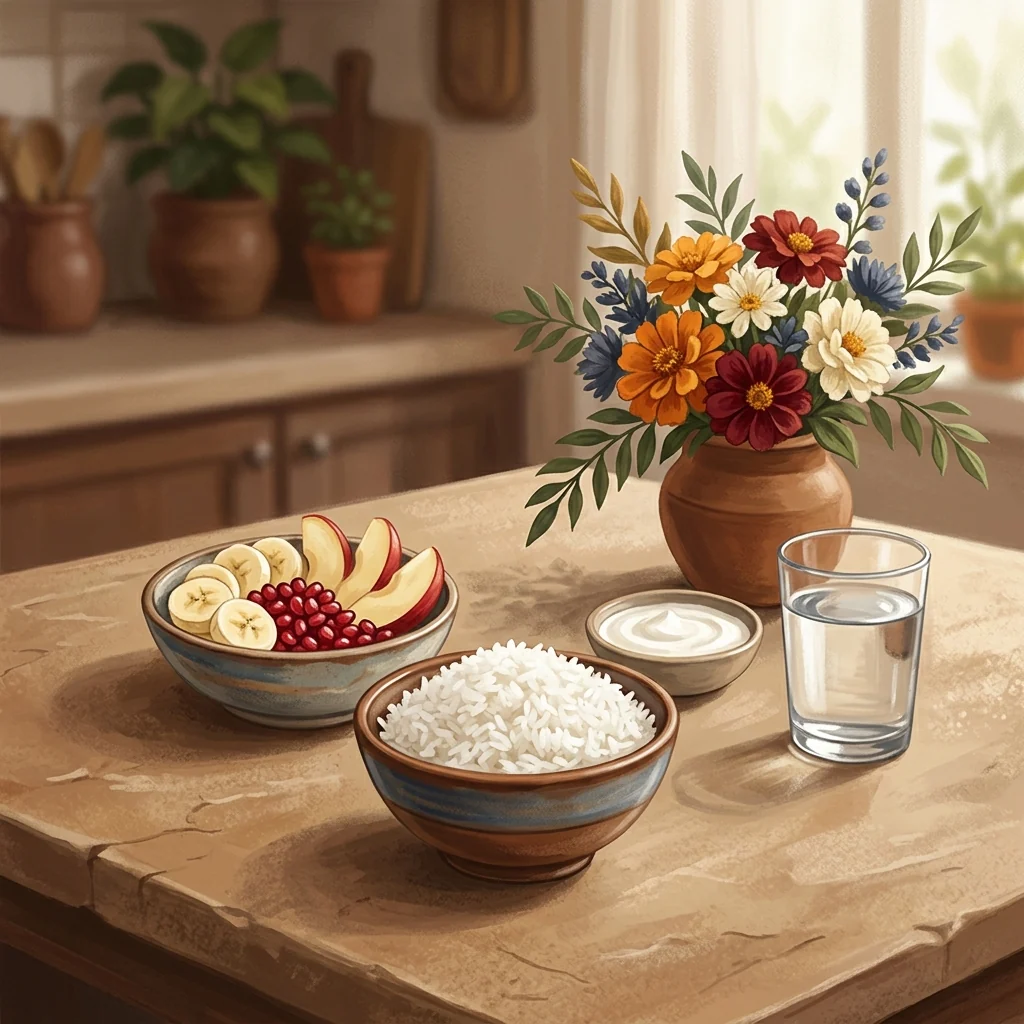
There is no single Navratri menu. Some households use fruit, milk or yoghurt, nuts, sabudana, kuttu, rajgira, potatoes, or other ingredients accepted in their regional fasting practice. Bengal’s Durga Puja bhog, south Indian sundal, temple prasad, and ordinary vegetarian family meals belong to distinct traditions rather than one universal list.
Choose a pattern appropriate to your health, household, and community. Community kitchens should identify allergens, keep food at safe temperatures, provide water, and plan to prevent waste.
Regional and community traditions
Gujarat
Garba and dandiya raas combine devotional circular dance, community, music, and festive dress across the nine nights.
West Bengal and Bengali communities
Durga Puja centers on artistic pandals, formal worship, cultural programs, bhog, and narratives of the Goddess’s homecoming.
South India
Across southern India, doll-display traditions, Saraswati Puja, Ayudha Puja, and Karnataka’s Mysuru Dasara appear in different regional combinations; they should not be treated as one uniform practice.
North India
In many north Indian settings, the season culminates in Rama’s victory over Ravana, dramatized through Ram Lila and observed on Vijayadashami.
Observing in Trinidad and Tobago or the wider diaspora
In Trinidad and Tobago, consult local mandir and cultural-group programmes for the form and schedule of observance, since gatherings may be religious, social, or both.
Frequently asked questions
Are these nine lines from the Devī Kavaca?
The Devī Kavaca supplies the familiar order of the nine names. The complete “oṃ devī … namaḥ” lines shown here are widely published contemporary public name-salutations, not quotations attributed to the scripture.
How many times should I repeat the daily salutation?
No fixed count is required by this guide. Recite it once or a few times with attention, or follow the method taught by your family, temple, sampradāya, or teacher.
Are Sharad and Chaitra Navratri the same?
They share a nine-night Devi pattern but occur in different seasons and carry different regional emphases. Read the Chaitra Navratri guide for that observance.
Why can Navratri span eight, nine, or ten civil dates?
Lunar tithis do not align exactly with civil days. A tithi may begin or end between sunrises, so a location-specific panchanga is essential.
Is garba only entertainment?
Garba has devotional symbolism centered on the lamp or Devi, although contemporary events may also function socially and commercially.
What is Vijayadashami?
It is the concluding victory day, associated with Durga, Rama, learning, tools, and new beginnings in different regions.
Sources and further reading
The sources below support the calendar, Navadurga sequence, Sanskrit grammar, and regional overview. They are provided for verification and further reading; linking does not imply endorsement.
- Devī Māhātmya Sanskrit text.
- Devī Kavaca Sanskrit text — verses 3–5 list the nine names in order.
- Drik Panchang — Navadurga — overview of the nine forms; the public salutations appear on individual form pages, such as the Skandamata example linked below.
- Drik Panchang — Skandamata — an individual form page showing a public salutation; see the corresponding individual pages for the other forms.
- UBC Sanskrit — r-stem nouns — grammatical support for mātṛ → mātre.
- Encyclopaedia Britannica — Navratri — overview of regional traditions.
- UNESCO — Durga Puja in Kolkata — cultural-heritage context.
- Hindu American Foundation — Navaratri — community-facing explanation.
Editorial and rights note: The sources above support the calendar, Navadurga sequence, Sanskrit grammar, and regional overview. The new Navadurga and food artwork comprises original symbolic editorial vector illustrations created for HinduClarity, not photographs, deity portraits, or historically exact images. The existing hero remains an AI-generated editorial illustration. Calendar dates are localized to Port of Spain. Practice varies by region, household, temple, and sampradāya; this page does not replace guidance from a qualified teacher or licensed health professional.
Continue exploring
Festivals calendar
Plan the Hindu festival year with localized dates and practical guides.
Chaitra Navratri
Compare the spring Navratri season and its regional emphases.
Diwali
Continue to the festival of lamps, its meanings, dates, and observances.