Hindu festival guide
Makar Sankranti
A complete guide to the Sun-centered harvest season: verified 2026–2027 dates, solar meaning, regional traditions, diaspora observance, and practical safety.
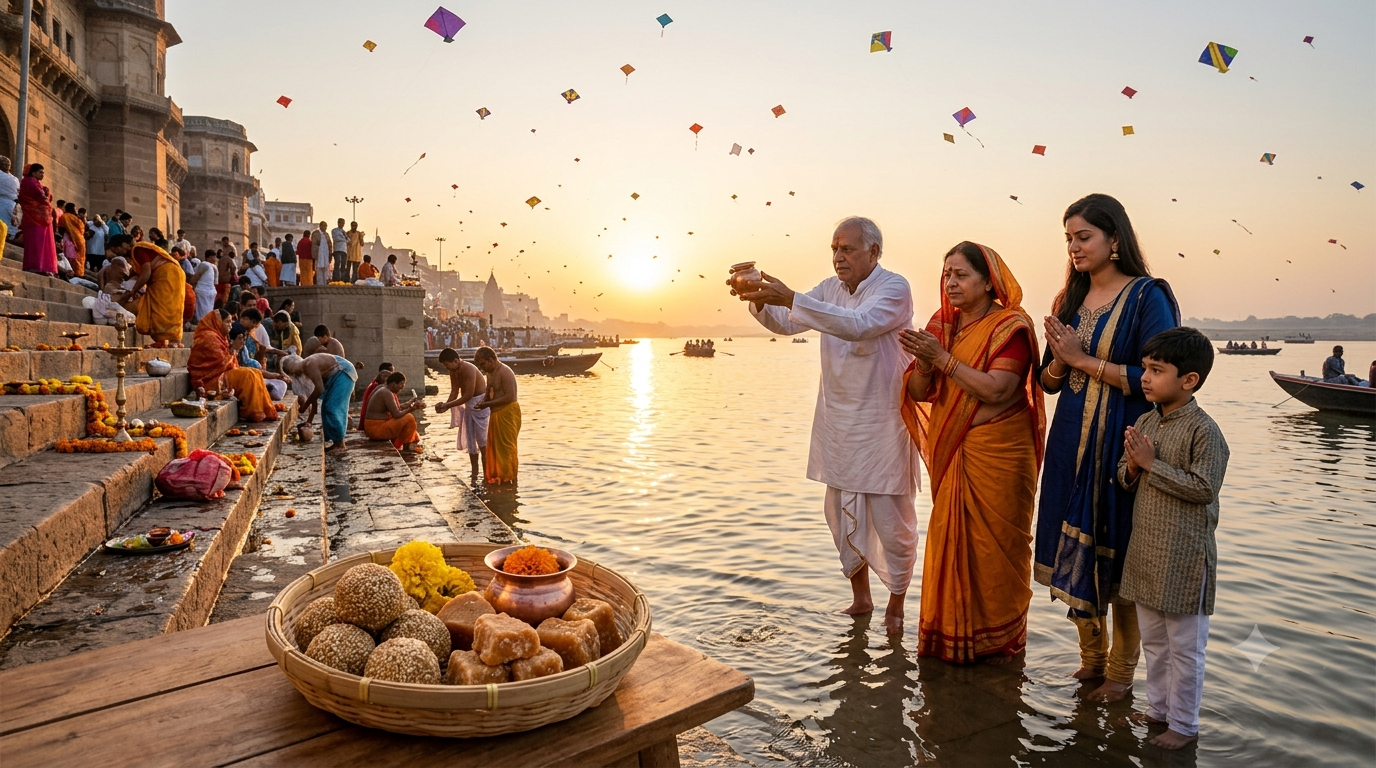
Makar Sankranti dates for 2026 and 2027
| Year | Port of Spain date | Planning note |
|---|---|---|
| 2026 | Wednesday, January 14, 2026 | Pongal falls on the same date in the verified local calendar. |
| 2027 | Thursday, January 14, 2027 | A January 15 regional variation is possible; confirm the schedule used by your family or temple. |
Location and calendar note: These dates are verified for Port of Spain, Trinidad and Tobago. Sankranti is calculated from a solar transition, and calendar methods, location, the transition time, and local custom can shift the civil-day observance. For 2027 especially, some communities may observe on Friday, January 15. Check a trusted local panchanga and temple notice before arranging a puja or public event.
What is Makar Sankranti?
Makar Sankranti marks the transition of Surya, the Sun, into Makara, the sidereal zodiac sign commonly identified with Capricorn. Unlike many Hindu festivals set by a lunar tithi, it is a solar observance and therefore usually occurs on January 14, with occasional variation around January 15.
The festival is associated with Uttarayana, the Sun’s northward course, longer Northern Hemisphere daylight, the winter harvest, and auspicious renewal. Because of precession, the December solstice and Makara transition no longer coincide; devotional language about Uttarayana remains meaningful without treating the dates as identical.
Makar Sankranti is best understood as a family of related observances rather than one uniform festival. Worship of Surya, ritual bathing, charity, sesame and jaggery foods, harvest thanksgiving, cattle care, bonfires, fairs, and kite flying receive different emphasis by region.
Light and disciplined action
Surya represents the visible source of warmth, time, growth, and energy. Morning prayer turns attention toward clarity, steadiness, and responsible work.
Harvest gratitude
Seasonal foods acknowledge soil, rain, farmers, animals, transport, cooks, and everyone whose labor brings nourishment to the table.
Generosity and relationship
Dana, shared meals, and gifts of sesame sweets connect prosperity with service, reconciliation, and care for neighbors.
Sacred significance and living tradition
Surya is honored in the Vedas and across later Hindu traditions as a life-giving presence and witness to human conduct. Devotees may greet the morning Sun with water, mantra, folded hands, or Surya Namaskar. Readers new to this devotional setting can explore HinduClarity’s overview of the Devas and the guide to Surya.
The Mahabharata’s account of Bhishma awaiting Uttarayana is often recalled as a sign of the season’s auspiciousness. Winter crops, rice, sugarcane, sesame, and cattle also connect cosmic order with sustaining life.
Important distinction: Makar Sankranti and Pongal overlap in solar season and may share a date, but they are not interchangeable names everywhere. Pongal is a distinctive Tamil multi-day harvest festival with Bhogi, Surya Pongal, Mattu Pongal, and Kaanum Pongal.
How Makar Sankranti is observed
No single checklist applies to every household. A common day may include an early bath, clean clothing, a lamp, prayer to Surya, a simple offering, charity, seasonal food, and time with relatives or community. Intention and care matter more than an elaborate display.
- At sunrise: face the morning light from a safe place and offer clean water from a small vessel, if this is part of your tradition. Never stare directly at the Sun.
- Prayer: recite a family prayer or a Surya mantra, or spend a quiet moment expressing gratitude for light, food, health, and the labor of others.
- Offering: present fruit, flowers, cooked food, sesame, or jaggery according to household custom. Keep offerings hygienic and avoid leaving food or plastic outdoors.
- Charity: donate food, clothing, school supplies, or funds to a reputable local organization. Give useful items respectfully rather than treating recipients as part of a ritual display.
- Hospitality: share til-gud or other sweets and a nourishing meal. In parts of India, sesame and jaggery signify warmth and cordial speech during the cool season.
- Reflection: choose one practical commitment—reducing food waste, supporting farmers, repairing a relationship, or serving a neighbor—to carry the festival’s values forward.
Food and seasonal hospitality
Menus vary widely: sesame-jaggery sweets, tilgul, gajak, rewri, khichdi, sugarcane, peanuts, new rice, and regional preparations may appear. Ask about allergies, offer non-dairy or low-sugar alternatives where needed, and avoid presenting any one recipe as mandatory.
Regional names and practices
Gujarat: Uttarayan
Terraces and open grounds fill with kites, while families share undhiyu, jalebi, and sesame sweets. Public excitement should be balanced with safe line, protected birds, and careful rooftop access.
Punjab: Lohri and Maghi
Lohri is observed on the preceding evening in many communities with songs, fire, and seasonal foods; Maghi follows with bathing, worship, fairs, and meals. They are related seasonal traditions, not identical in every setting.
Assam: Magh Bihu
Community feasts, temporary meji structures, rice foods, games, and harvest fellowship characterize the season. Fire customs require local permission and responsible cleanup.
Uttar Pradesh and Bihar
Names such as Khichdi Sankranti emphasize bathing, dana, fairs, and the sharing of khichdi or sesame foods. River pilgrimage is important for some devotees but is not required for meaningful observance.
Maharashtra and Karnataka
Sesame-jaggery gifts, visits, rangoli, decorated offerings, and courteous words strengthen social bonds. Women’s gatherings such as haldi-kumkum are significant in some communities.
Tamil, Telugu, and other traditions
Pongal in Tamil communities and Sankranti celebrations in Andhra Pradesh and Telangana include harvest foods, rangoli or muggu, family visits, and gratitude for cattle, with distinct multi-day forms.
Trinidad and Tobago and diaspora adaptation
Families in Trinidad and Tobago may follow a temple calendar, an ancestral regional custom, or a home observance fitted around work and school. Sunrise prayer can take place in a clean yard, veranda, or indoor prayer space; sacred meaning does not depend on an Indian river or winter field.
Use local produce, support farmers and food charities, invite elders to share family memories, and involve children in sweets, rangoli, music, or a gratitude table. A mandir can combine Surya prayer, storytelling, food, and supervised kite flying while naming each custom’s region.
Local laws, weather, wildlife, fire rules, food availability, and the multicultural Caribbean setting should shape responsible celebration. Families can preserve differences without reducing them to one “correct” ritual.
Kite, fire, animal, and environmental safety
- Kites: use plain cotton line rather than glass-coated, metallic, or synthetic fighting string. Fly in an open authorized area far from power lines, roads, airports, roofs without barriers, and nesting birds. Children need close adult supervision.
- Wildlife: retrieve cut line and damaged kites promptly. Never pull entangled line from a live wire or tall tree; contact the utility, property manager, or wildlife rescue service.
- Fire: choose a permitted community fire over an improvised household bonfire. Keep water or an extinguisher nearby, establish a child-free perimeter, supervise until fully cold, and never burn plastic, treated wood, painted furniture, or mixed rubbish.
- Animals: honor cattle and other animals through calm, humane care. Avoid toxic paint, forced costumes, loud noise, overcrowding, frightening processions, or feeding unsuitable sweets.
- Water and offerings: do not enter unsafe currents or polluted water. Keep lamps, plastic, flowers, food, foil, and string out of rivers, drains, beaches, and public land.
Good practice: Festival enthusiasm does not override public safety, animal welfare, environmental responsibility, or local law. A smaller observance that protects life and place is more respectful than a dramatic but harmful display.
A respectful home observance
- Clean the prayer area and prepare a lamp, water, flowers or fruit, and a simple meal.
- At sunrise, offer a brief prayer to Surya from a safe position; water a plant afterward rather than wasting the water.
- Read or discuss the festival’s solar and harvest meaning, noting your family’s regional tradition.
- Share sesame-jaggery food or another seasonal dish, accommodating health needs and allergies.
- Make a useful donation, call elders or relatives, and complete one act of environmental care.
This suits beginners and mixed-tradition households. A priest is not required for modest home gratitude, although families should follow their sampradaya, teacher, or mandir for prescribed rites.
Frequently asked questions
When is Makar Sankranti in 2026?
For Port of Spain, it is Wednesday, January 14, 2026. The verified local calendar also places Pongal’s main day on January 14.
When is Makar Sankranti in 2027?
For Port of Spain, it is Thursday, January 14, 2027. Some regional calendars or communities may use Friday, January 15, so confirm locally.
Why is Makar Sankranti usually on the same date?
It follows a solar transition rather than a lunar tithi. That keeps it near January 14, although transition timing and calendar conventions can produce a January 15 observance.
Is Makar Sankranti the same as Pongal?
No. They overlap seasonally and can share a date, but Pongal has its own Tamil names, foods, four-day structure, and cultural history.
Is kite flying a religious requirement?
No. It is a popular regional celebration, especially during Gujarat’s Uttarayan. Prayer, charity, food, gratitude, and service are meaningful without kites.
Can someone observe without a river bath or temple visit?
Yes. A safe bath at home, a short Surya prayer, charity, seasonal food, and gratitude can form a respectful observance. Never enter dangerous water for ritual reasons.
Sources and further reading
- Encyclopaedia Britannica — Makar Sankranti — General overview of the festival and its regional forms.
- Drik Panchang — Makar Sankranti — Location-sensitive solar transition and observance dates.
- Hindu American Foundation — Hindu holidays guide — Community educational context for Hindu observances.
- Encyclopaedia Britannica — Surya — Background on the Hindu solar deity.
- Encyclopaedia Britannica — Pongal — Context for the distinct Tamil harvest festival.
Editorial and rights note: This independently written guide uses the project’s verified Port of Spain dates; external calendars may default elsewhere. Citation does not imply endorsement. The hero is an AI-generated editorial illustration created for HinduClarity, not a historical photograph or documentary record. Practices vary by family, region, sampradaya, and calendar; consult your temple or teacher for tradition-specific guidance.
Back to the complete Hindu Festivals Calendar for 2026–2027
Continue with the Pongal guide, explore the Devas, or learn more about Surya.