Hindu festival guide
Ganesh Chaturthi 2026–2027: Dates, Meaning and Traditions
Ganesh Chaturthi honors Lord Ganesha as a source of wisdom, discernment, and auspicious beginnings. This guide explains the verified 2026 and 2027 dates, major narratives and symbols, home and community observance, festival foods, and environmentally responsible visarjan.
Port of Spain date reference • reviewed July 2026
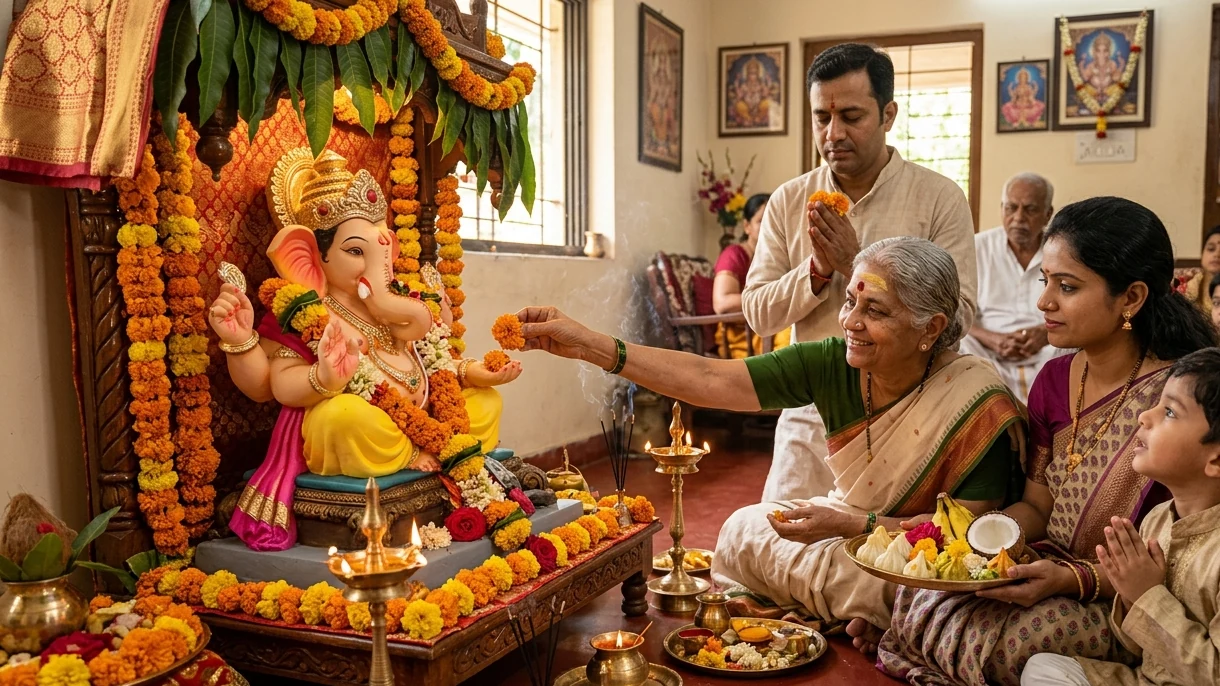
Ganesh Chaturthi dates for 2026 and 2027
| Year | Ganesh Chaturthi | Anant Chaturdashi / principal visarjan day |
|---|---|---|
| 2026 | Monday, September 14 | Friday, September 25 |
| 2027 | Friday, September 3 | Tuesday, September 14 |
Household observances do not all last until Anant Chaturdashi. Families may conclude after one and a half, three, five, seven, or ten days according to regional and family practice. A one-day observance can also be sincere and complete.
What Ganesh Chaturthi celebrates
Ganesh Chaturthi celebrates Lord Ganesha, widely invoked before worship, study, travel, business, and other important beginnings. His familiar title Vighnaharta, remover of obstacles, does not mean that devotion guarantees an effortless life. Ganesha also represents the judgment needed to recognize an obstacle, learn from it, and act responsibly.
The festival is especially prominent in Maharashtra, Goa, Karnataka, Andhra Pradesh, Telangana, and Tamil Nadu, while Hindu communities around the world observe it at home, in temples, and through cultural organizations. Public forms can be large and celebratory; household practice may center on a small murti or an existing image.
The birth narratives of Ganesha
In a widely told Puranic tradition, Parvati creates a child and appoints him to guard her privacy. When Shiva returns and the boy refuses him entry, a conflict ends with the child’s beheading. Parvati’s grief and power compel restoration, and the child receives an elephant’s head and an honored place among the gods.
Texts and regional retellings differ on how the child is created, who obtains the elephant head, and how Ganesha receives leadership of Shiva’s attendants. The narrative is often interpreted through themes of boundaries, identity, transformation, parental responsibility, and reconciliation. These interpretations are devotional readings rather than one mandatory explanation.
What Ganesha’s form symbolizes
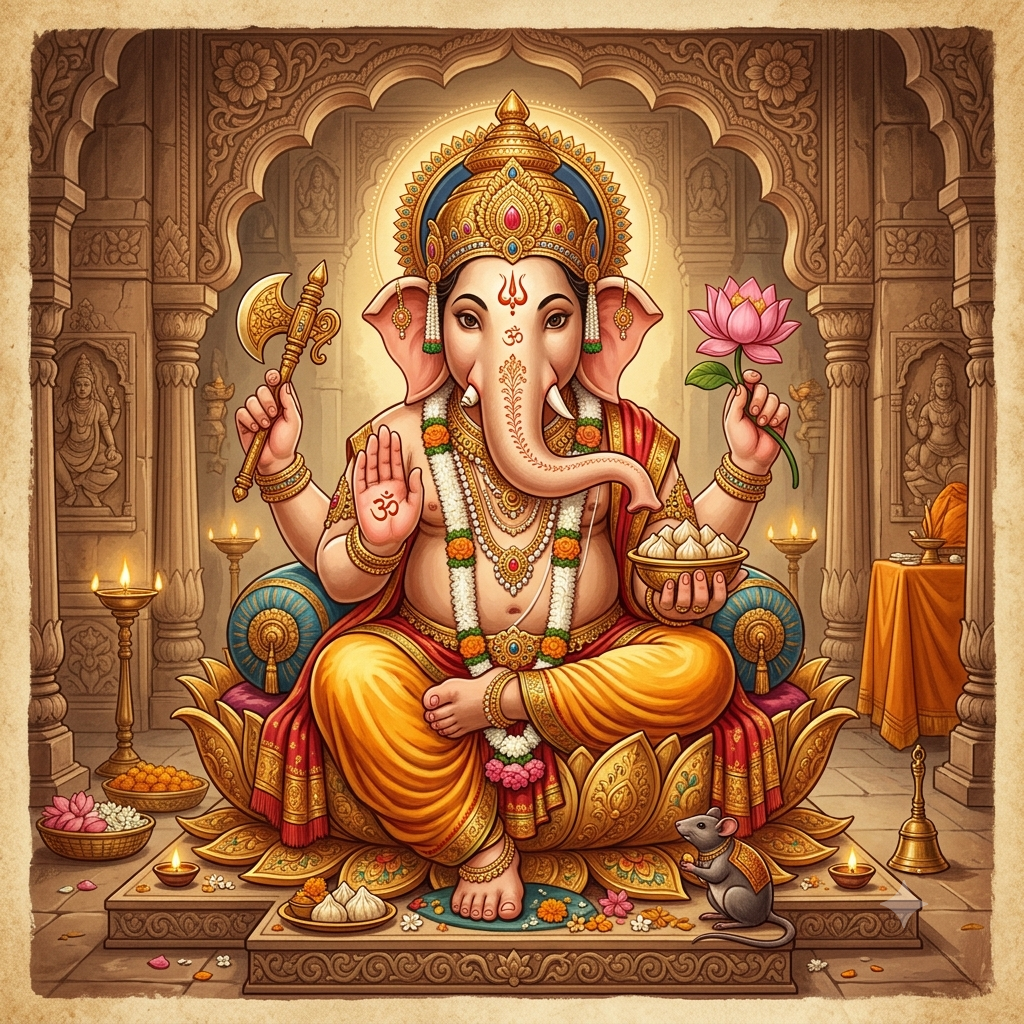
- Elephant head: broad intelligence, strength, memory, and attentive awareness.
- Large ears: the discipline of listening before deciding.
- Curved trunk: strength joined with adaptability and precision.
- Single tusk or Ekadanta: perseverance, sacrifice, and movement beyond divided thinking in many devotional interpretations.
- Large belly: the capacity to contain varied experience without losing balance.
- Mouse vehicle: restless desire brought under wise direction; interpretations differ.
Images may show two, four, or more arms and different objects, including a noose, goad, broken tusk, rosary, bowl of sweets, or gestures of blessing. Iconography varies by form and artistic lineage.
A simple Ganesh Chaturthi observance at home
- Clean the worship area and choose a Ganesha image, an existing household murti, or a small responsibly made natural-clay form.
- Place the image securely on a clean cloth, away from unstable shelves, open walkways, and unattended flames.
- Offer water, flowers, fruit, or freshly prepared vegetarian food according to household custom. Durva grass is traditional in many communities where it is available and safely identified.
- Light a diya safely and recite a familiar prayer or name of Ganesha. A commonly used public invocation is Om Shri Ganeshaya Namah.
- Offer modak, laddu, or another family sweet as prasad, then conclude with aarti if this is part of your practice.
- Share the food respectfully and carry the festival’s themes into study, work, service, or a practical new beginning.
Formal prana pratishtha, extended mantra disciplines, and multi-day ritual commitments should follow family lineage or qualified temple guidance. A newcomer does not need to imitate rites they have not been taught.
Modak, offerings, and festival food
Modak is closely associated with Ganesha and may be steamed, fried, filled with coconut and jaggery, or adapted to local ingredients. Other offerings include laddu, fruit, coconut preparations, and regional vegetarian meals. No single menu is compulsory. Consider allergies, diabetes, food safety, and household dietary practice when preparing or sharing sweets.
Offerings should be fresh, manageable, and free from waste. Devotion is not measured by the size of a display or by purchasing items a household cannot afford.
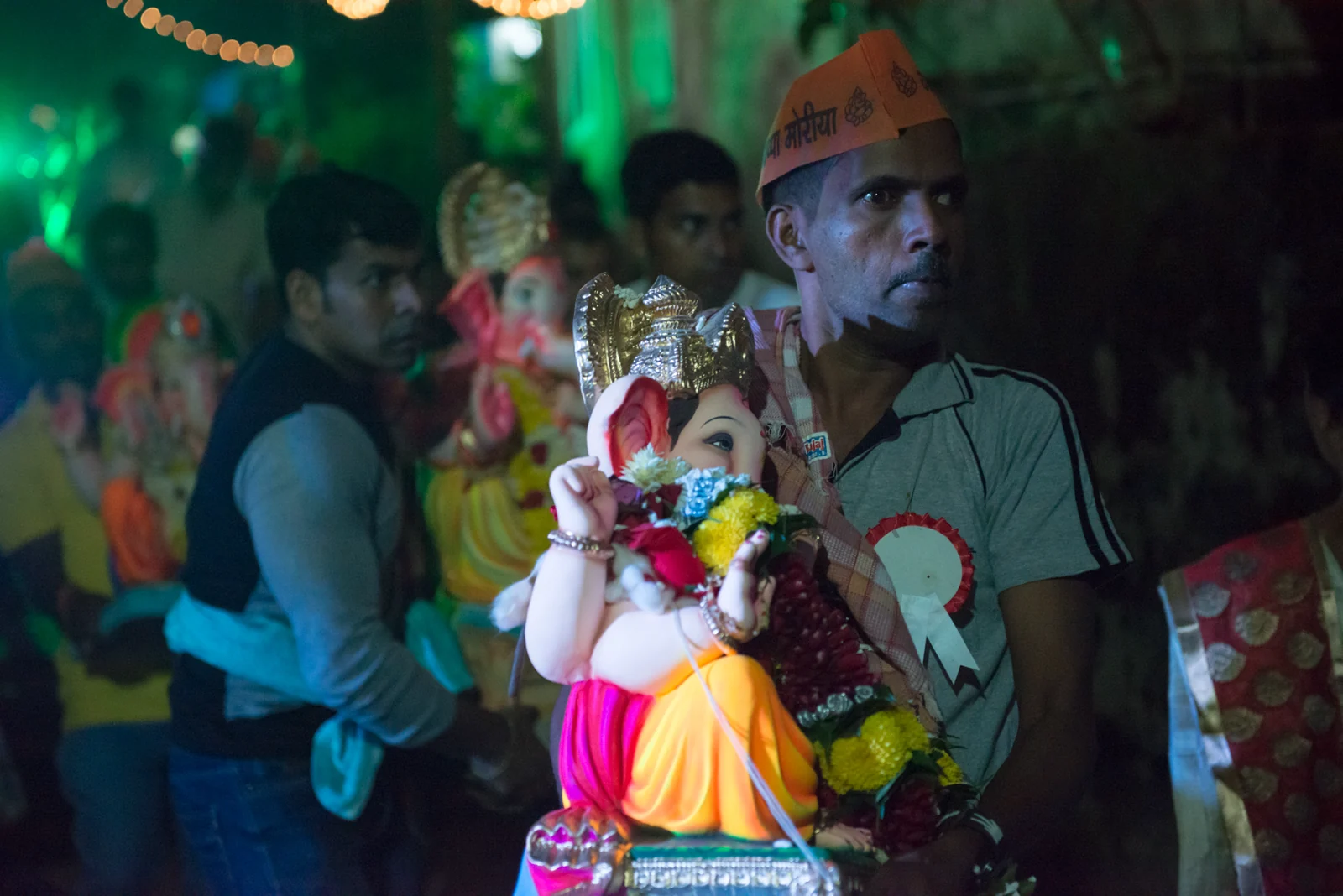
Community celebrations and diaspora practice
Public Ganeshotsav developed into an important community form in Maharashtra and now includes neighborhood mandals, temple worship, music, arts, educational events, charitable work, and processions. Public celebration is not identical everywhere, and crowd size should not be treated as a measure of spiritual value.
In Trinidad and Tobago and across the wider diaspora, observance may be organized through temples, cultural associations, or individual homes. Available clay, flowers, foods, water access, and environmental rules differ from India. Families can preserve the devotional core while adapting responsibly to local conditions. Temple announcements should be checked for timing and immersion arrangements.
Visarjan and the philosophy of return
Visarjan is the ceremonial farewell to a temporary festival murti. It can express gratitude for Ganesha’s presence and recognition that sacred reality is not confined to one material form. The cycle of shaping, welcoming, worshipping, and respectfully returning the murti also invites reflection on impermanence.
Environmental care is part of responsible practice. Prefer natural, unpainted clay; avoid plaster of Paris, toxic paint, glitter, plastic garlands, and objects that can harm waterways or wildlife. Follow local laws and temple instructions. Where public immersion is inappropriate, a small natural-clay murti may be immersed in a household container and the settled clay returned to soil when local guidance permits. An existing permanent household murti or framed image should not be immersed.
Planning a first home observance
Decide the length of the observance before bringing home a temporary murti. A household should be able to maintain a clean worship space, make simple daily offerings, and conclude respectfully on the chosen day. Work schedules, mobility, food preparation, and safe access to a suitable immersion method all matter. It is better to plan a modest one-day observance than to assume a multi-day commitment that becomes unsafe or burdensome.
If visiting a temple or community mandal, check dress, footwear, photography, queue, food, and accessibility guidance in advance. Do not touch a murti, altar, or offerings unless invited. At crowded events, keep children close, protect elders from heat and pressure, and follow organizers rather than pushing toward the shrine. Respectful participation depends on attention and consideration, not familiarity with every custom.
Frequently asked questions
Is Ganesh Chaturthi the same as Anant Chaturdashi?
No. Ganesh Chaturthi begins the festival. Anant Chaturdashi is a later observance and is widely used as the principal final visarjan day for public celebrations.
How long does Ganesh Chaturthi last?
Public celebrations often continue for ten days, but households may observe for one and a half, three, five, seven, or ten days. A one-day home observance is also common.
Is a large murti required at home?
No. A picture, an existing household murti, or a small natural-clay form can support sincere worship. Avoid assuming ritual commitments your household cannot respectfully maintain.
Why is Ganesha worshipped first?
Many Hindu traditions invoke Ganesha before important work or worship because he is associated with auspicious beginnings, discernment, and the removal of obstacles.
What does “Ganpati Bappa Morya” mean?
It is a beloved devotional acclamation praising Ganesha and expressing affection and hope for his return. Popular tradition often connects “Morya” with the devotee Morya Gosavi, though public explanations vary.
Related HinduClarity guides
Sources and editorial note
- Encyclopaedia Britannica: Ganesha
- Wikimedia Commons: Ganesh Chaturthi procession photograph and license record
- 2026–2027 dates: HinduClarity’s Port of Spain-localized Drik Panchang verification dataset, reviewed July 2026.

Accounts, iconography, festival length, and ritual practice vary by region, sampradaya, temple, and family. This guide is educational and does not replace lineage-specific ritual instruction.