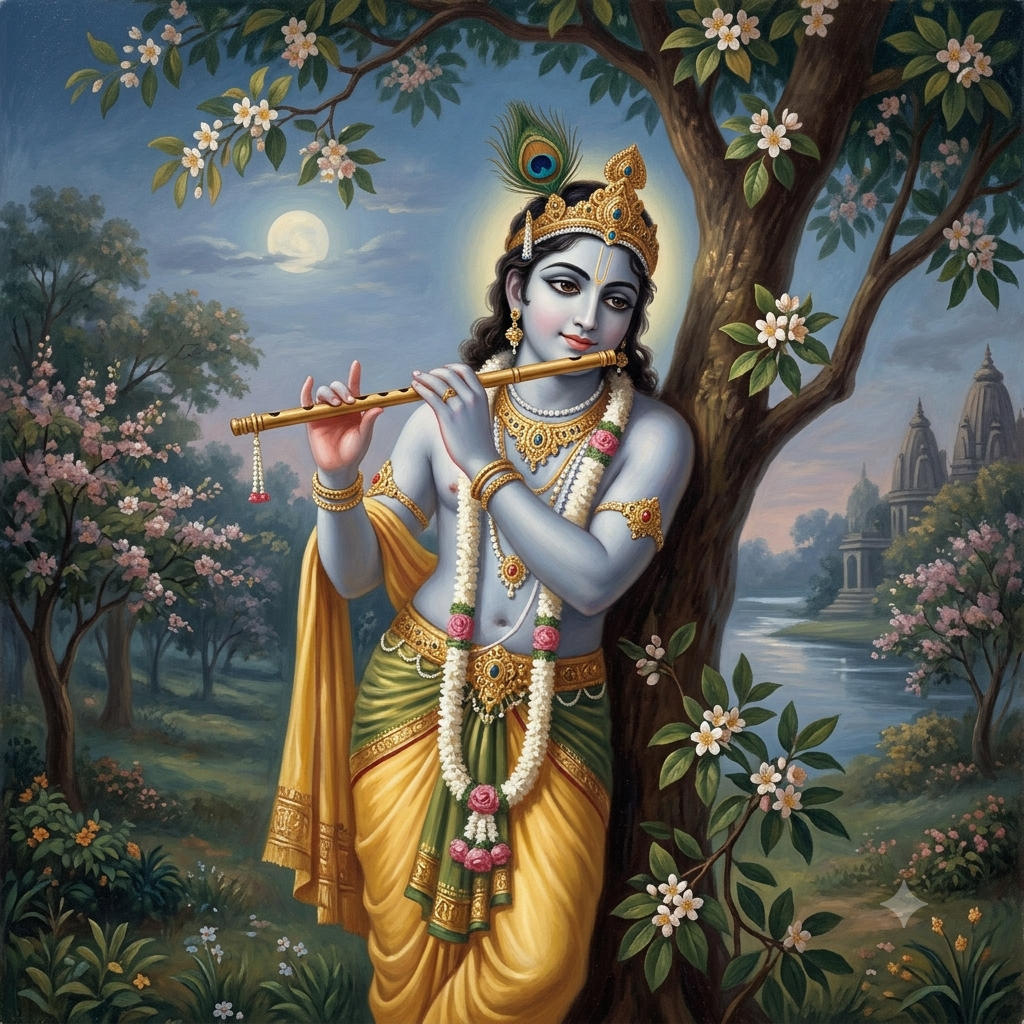
Lord Krishna is one of Hinduism’s most beloved deities, worshiped as an avatar of Lord Vishnu, a divine teacher, a playful child, a compassionate friend, and the speaker of the Bhagavad Gita.
Who Is Lord Krishna?
Krishna appears in many forms across Hindu devotion: the child of Gokul, the cowherd of Vrindavan, the beloved of the gopis, the guide of Arjuna, and the Supreme Lord in many Vaishnava traditions.
His life unites sweetness and wisdom. He is playful and loving, yet also a profound teacher of dharma, devotion, and spiritual freedom.
Krishna in the Bhagavad Gita
The Bhagavad Gita presents Krishna as the divine guide of Arjuna on the battlefield of Kurukshetra. His teaching addresses duty, devotion, self-knowledge, disciplined action, and surrender to the Divine.
Krishna teaches that one should act responsibly without selfish attachment to results. He also teaches bhakti, loving devotion, as a direct path to spiritual realization.
Symbols and Iconography
Krishna is often shown with a flute, peacock feather, yellow garments, and a blue or dark complexion. The flute symbolizes divine music that calls the soul toward love and truth.
Cows, Vrindavan forests, and the Yamuna River are common in Krishna imagery, reflecting his childhood and pastoral lilas.
Krishna Janmashtami and Worship
Janmashtami celebrates Krishna’s birth. Devotees may fast, sing bhajans, read scripture, decorate temples, and remember Krishna’s stories with devotion.
Krishna worship can include chanting names such as “Hare Krishna,” offering food, reading the Bhagavata Purana and Bhagavad Gita, and practicing loving service.
Lessons from Lord Krishna
Krishna teaches that spiritual life includes love, wisdom, courage, and surrender. His message is practical: do your duty, remember the Divine, and act with a pure heart.
He reminds devotees that God can be approached as teacher, child, friend, beloved, and inner guide.
Frequently Asked Questions
Note: Hindu traditions are diverse. Details can vary by region, sampradaya, scripture, temple practice, and family custom. This guide is written for respectful learning and general clarity.
Mantras
The following mantras are traditionally associated with Lord Krishna. Pronunciation and ritual details can vary by lineage, so formal or intensive practice is best learned from a qualified teacher. The stated uses describe devotional intentions, not guaranteed medical, financial, romantic, or supernatural outcomes.
1. Hare Krishna Mahamantra
Transliteration: Hare Krishna, Hare Krishna, Krishna Krishna, Hare Hare; Hare Rama, Hare Rama, Rama Rama, Hare Hare.
Meaning: A devotional invocation of the divine names Hare, Krishna, and Rama, asking to be engaged in loving remembrance and service.
Traditional use: Used in kirtan and personal japa to cultivate bhakti, joy, concentration, and continual remembrance of God.
2. Om Namo Bhagavate Vasudevaya
Transliteration: Om Namo Bhagavate Vasudevaya.
Meaning: Salutations to Bhagavan Vasudeva—the indwelling divine Lord associated with Krishna.
Traditional use: Traditionally repeated for devotion to Krishna/Vasudeva, inner steadiness, surrender, and contemplation of the Divine present within all beings.
Practice note: Begin with a calm, respectful intention. A small, consistent number of repetitions is generally better than rushing. If you follow a family, temple, or guru tradition, use the pronunciation, count, and procedure taught in that lineage.
Sources and Further Reading
Source note: Childhood narratives, Bhagavad Gita theology, rasa traditions, iconographic symbolism, mantra claims, and universalized devotional interpretations need source matching.
- Metropolitan Museum of Art — Krishna Holds Up Mount Govardhan — Supports historical reception of the Govardhan narrative and Krishna identification in manuscript art.
- Bhagavata Purana Sanskrit e-text — GRETIL, University of Gottingen — Supports text-level checking of Krishna, Dhruva, Prahlada, Gajendra, Vamana, and other Bhagavata narratives.