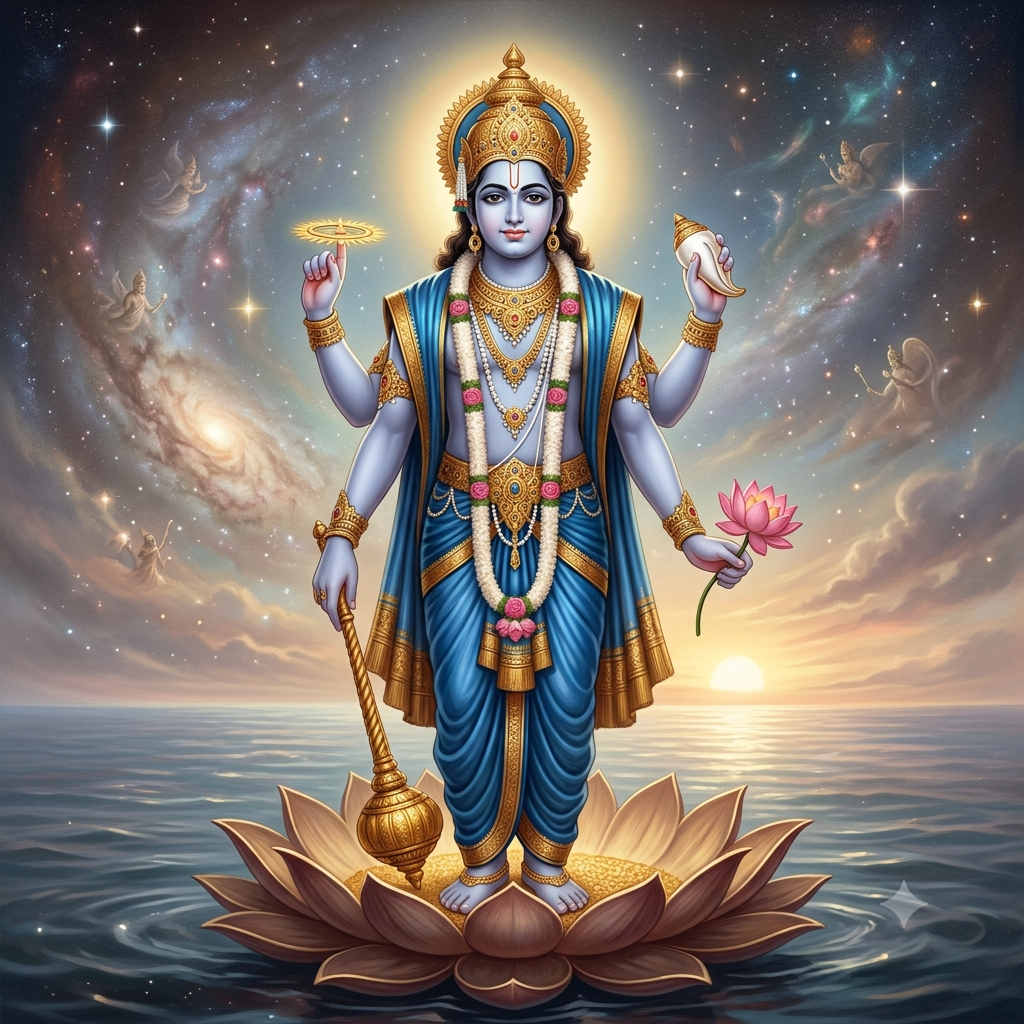
Lord Vishnu is one of the principal deities of Hinduism, revered as the preserver and protector of the universe who restores balance whenever dharma is threatened.
Who Is Lord Vishnu?
Lord Vishnu is widely worshiped as the sustainer of cosmic order. In many Hindu traditions, he protects creation, preserves dharma, and descends in different forms whenever balance is disturbed.
Vishnu is central to Vaishnavism, one of the major devotional traditions of Hinduism. Devotees honor him as the Supreme Being, the source of compassion, protection, and liberation.
The Role of Preserver
In the broad Hindu understanding of cosmic functions, Brahma is associated with creation, Vishnu with preservation, and Shiva with transformation or dissolution. These roles are not simplistic divisions but symbolic ways of understanding divine activity.
Vishnu’s preserving role means he protects life, restores moral order, and supports the continuity of the universe. His presence is often connected with stability, mercy, and the protection of devotees.
Vishnu’s Four Symbols
Lord Vishnu is commonly shown with four arms holding the conch, discus, mace, and lotus. These symbols carry deep spiritual meaning.
The conch, or shankha, is associated with sacred sound and the call to righteousness. The discus, or chakra, represents divine order and the power to cut through adharma. The mace, or gada, suggests strength and protection. The lotus, or padma, represents purity and spiritual unfolding.
Avatars of Lord Vishnu
Vishnu is famous for his avatars, divine descents that restore balance in different ages. The Dashavatara, or ten principal avatars, are especially well known.
These include Matsya, Kurma, Varaha, Narasimha, Vamana, Parashurama, Ram, Krishna, Buddha in many lists, and Kalki. Different traditions may present the list in different ways, but the central idea is that the Divine responds when dharma declines.
Lord Vishnu, Lakshmi, and Vaikuntha
Vishnu is often worshiped with Goddess Lakshmi, who represents prosperity, auspiciousness, beauty, and grace. Together they symbolize protection and abundance guided by dharma.
Vaikuntha is described in devotional traditions as Vishnu’s divine abode, a realm of peace beyond ordinary suffering. Vishnu is also depicted reclining on the cosmic serpent Shesha, suggesting cosmic rest and timelessness.
Vishnu Mantras and Worship
A widely known mantra is “Om Namo Narayanaya,” a devotional invocation of Lord Narayana, a name of Vishnu. Another common prayer is the Vishnu Sahasranama, the thousand names of Vishnu.
Devotees worship Vishnu through puja, chanting, temple visits, fasting on Ekadashi, reading sacred texts, and practicing compassion, truthfulness, and devotion.
Lessons from Lord Vishnu
Lord Vishnu teaches that preservation is an active, compassionate force. Protecting dharma requires patience, wisdom, and readiness to act when balance is threatened.
For modern life, Vishnu’s symbolism points toward stability, responsibility, protection, and hope. His avatars remind devotees that divine help appears in forms suited to the needs of the age.
Frequently Asked Questions
Note: Hindu traditions are diverse. Details can vary by region, sampradaya, scripture, temple practice, and family custom. This guide is written for respectful learning and general clarity.
Mantras
The following mantras are traditionally associated with Lord Vishnu. Pronunciation and ritual details can vary by lineage, so formal or intensive practice is best learned from a qualified teacher. The stated uses describe devotional intentions, not guaranteed medical, financial, romantic, or supernatural outcomes.
1. Ashtakshara Mantra
Transliteration: Om Namo Narayanaya.
Meaning: Salutations to Narayana, the all-pervading Lord and refuge of all beings.
Traditional use: Traditionally used in Vaishnava japa for surrender, devotion, inner steadiness, and contemplation of Vishnu as the preserver and indwelling divine presence.
2. Dwadasakshara Mantra
Transliteration: Om Namo Bhagavate Vasudevaya.
Meaning: Salutations to Bhagavan Vasudeva, the Supreme Lord who dwells within all beings.
Traditional use: Used for devotion to Vishnu and his avatars, purification of intention, spiritual concentration, and remembrance of the Divine in oneself and others.
Practice note: Begin with a calm, respectful intention. A small, consistent number of repetitions is generally better than rushing. If you follow a family, temple, or guru tradition, use the pronunciation, count, and procedure taught in that lineage.
Sources and Further Reading
Source note: Avatar lists, cosmic-ocean iconography, four attributes, Lakshmi relationship, sectarian theology, and mantra claims need text- and tradition-specific attribution.
- Metropolitan Museum of Art — Vishnu — Supports historical Vishnu identification and iconography; individual object details should not be made universal.
- Vishnu Purana Sanskrit e-text — GRETIL, University of Gottingen — Supports checking Vishnu Purana cosmology, avatar, genealogy, Krishna, and liberation claims in the represented text.