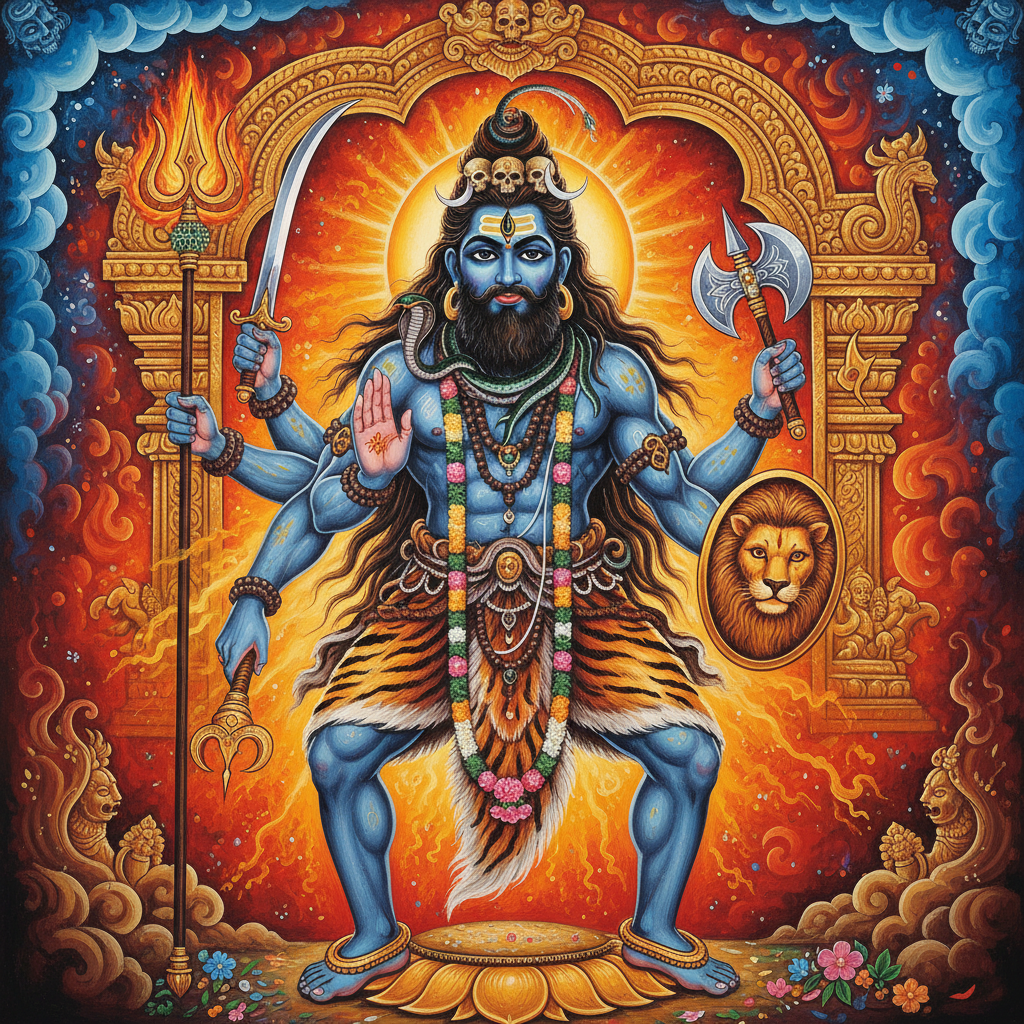
The Divine Form of Munesh Prem Baba
Who is Munesh Prem Veerabhadra Baba?
Munesh Prem Veerabhadra Baba is a powerful manifestation of Lord Shiva, often revered as a combination of a saintly ascetic (Muni) and the fierce warrior deity Veerabhadra. In many traditions, he is seen as a guardian deity who balances supreme spiritual wisdom with the protective strength required to uphold righteousness. He is considered an “Ishta Devata” (personal deity) by many who seek both inner peace and outward protection.
What does he represent?
He represents the dual nature of the Divine: the calm, meditative aspect of Shiva as a Muni and the fierce, transformative energy of Veerabhadra. Collectively, he symbolizes the destruction of ego, the protection of the innocent, and the enforcement of Dharma (divine law). He is the embodiment of discipline, courage, and the unwavering pursuit of spiritual truth.
Why worship Munesh Prem Baba?
Devotees worship Munesh Prem Baba to seek protection from negative influences, obstacles, and spiritual stagnation. As a “Kula Devata” or guardian, he is believed to watch over families and communities, providing guidance through life’s challenges. His worship is also central to those seeking to overcome their internal “enemies”—such as anger, greed, and attachment—through his fierce grace.
What do his weapons represent?
- Trishula (Trident): Represents the three Gunas (Sattva, Rajas, and Tamas) and the mastery over the past, present, and future.
- Sword (Khadga): Symbolizes the “Jnana” (knowledge) that cuts through the veil of ignorance (Avidya) and the ego.
- Shield: Represents the divine protection offered to the devotee, acting as a barrier against spiritual and physical harm.
- Mace (Gada): Symbolizes the power of concentration and the grounding of spiritual energy.
What role did he play in the Shiva Purana?
In the Shiva Purana, the aspect of Veerabhadra is central to the story of Daksha Yajna. When Goddess Sati immolated herself due to the insults hurled at Lord Shiva by her father, King Daksha, Shiva’s wrath manifested as Veerabhadra. Created from a lock of Shiva’s hair (Jata), Veerabhadra led an army to destroy Daksha’s sacrifice, decapitate Daksha, and restore the honor of the Divine Mother. This story highlights his role as the ultimate instrument of divine justice.
Mantras
The following mantras are traditionally associated with Veerabhadra. Pronunciation and ritual details can vary by lineage, so formal or intensive practice is best learned from a qualified teacher. The stated uses describe devotional intentions, not guaranteed medical, financial, romantic, or supernatural outcomes.
1. Veerabhadra Nama Mantra
Transliteration: Om Veerabhadraya Namah.
Meaning: Salutations to Veerabhadra, the fierce warrior form brought forth through Shiva's power.
Traditional use: Traditionally recited for courage, disciplined strength, protection, and the resolve to confront injustice without allowing anger to become cruelty.
2. Veerabhadra Gayatri
Transliteration: Om Mahakopaya Vidmahe Rudra Murtaye Dhimahi; Tanno Veerabhadrah Prachodayat.
Meaning: May we know the one of great righteous force and meditate upon the form of Rudra; may Veerabhadra inspire and guide us.
Traditional use: Used for meditation on controlled power, fearlessness, and the transformation of anger into principled action. Wording can vary by lineage.
Practice note: Begin with a calm, respectful intention. A small, consistent number of repetitions is generally better than rushing. If you follow a family, temple, or guru tradition, use the pronunciation, count, and procedure taught in that lineage.
Sources and Further Reading
Source note: Daksha narrative variants, iconography, relation to Shiva, regional worship, and the unsupported identification with Munesh Prem Veerabhadra Baba require correction.
- T. A. Gopinatha Rao, Elements of Hindu Iconography, vol. 2 part 2 — Supports historical iconographic treatment of Virabhadra and related forms; use with date-aware caution.
- J. L. Shastri (ed.), The Shiva Purana, Part 2 — Supports edition-specific later Rudra-samhita narratives including Ganesha, Skanda, battles, and related Shaiva traditions.