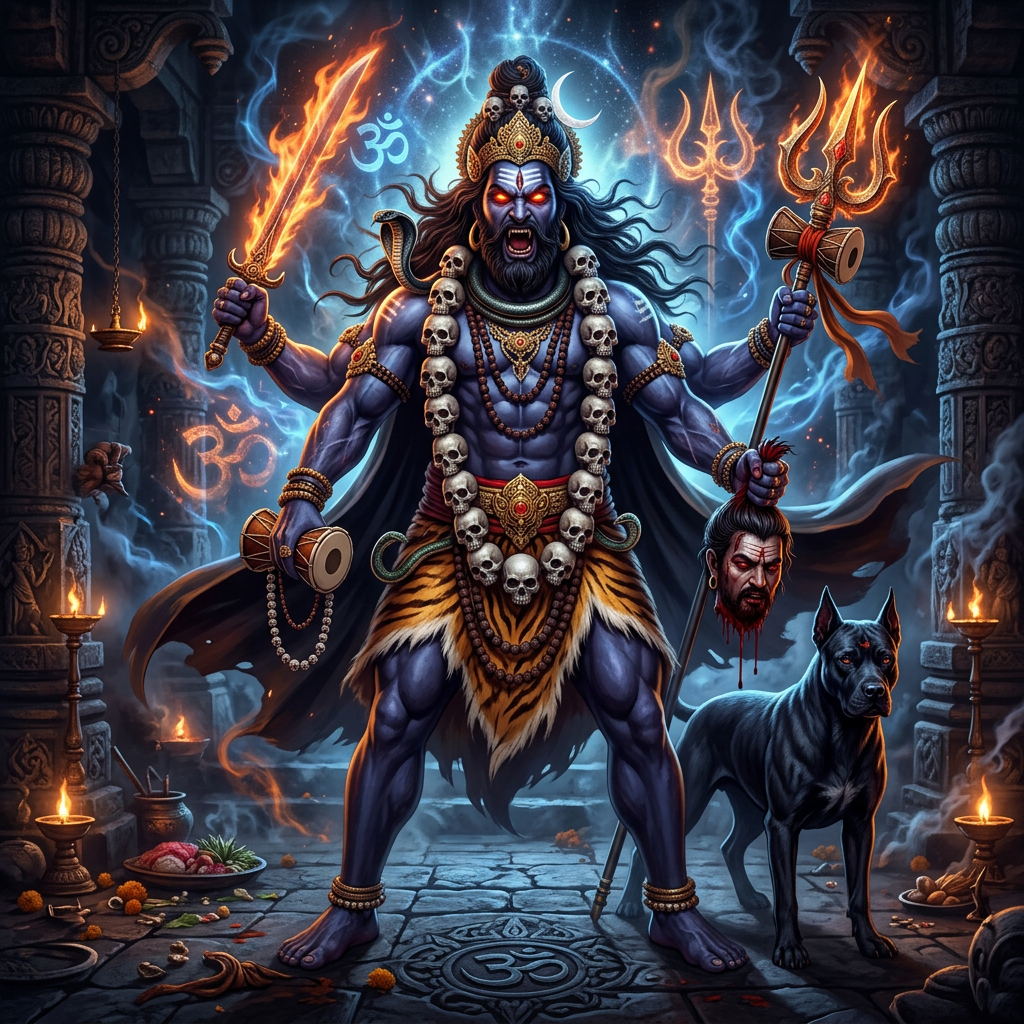
Kaal Bhairava is a fierce guardian form of Lord Shiva, associated with time, sacred boundaries, moral accountability, and the destruction of fear and arrogance. His intense iconography is not a celebration of cruelty. It reminds devotees that time cannot be controlled and that spiritual discipline requires honesty.
Who Is Kaal Bhairava?
Kala can mean time or death, while Bhairava is often understood as the formidable or awe-inspiring one. Bhairava traditions are diverse: texts and temples speak of eight Bhairavas, sixty-four Bhairavas, local guardian forms, and Kaal Bhairava as protector of Kashi. Shaiva and Shakta traditions may explain his status and worship differently.
At Varanasi, Kaal Bhairava is popularly revered as the sacred city’s kotwal, or guardian magistrate. This title conveys vigilance and protection; it should not be turned into promises of instant punishment against personal enemies.
The Story of Brahma’s Fifth Head
Several Shaiva Purāṇic accounts tell that Brahma becomes proud and speaks disrespectfully of Shiva. Bhairava manifests and severs Brahma’s fifth head. Because the act incurs the grave burden of brahmahatya, Bhairava wanders as a beggar carrying the skull until the burden falls away at Kashi.
Versions differ in the Shiva Purana, Kurma Purana, and other sources. The narrative is often interpreted as the cutting down of pride and as a teaching that even tremendous divine power is represented within moral consequence. It is sacred mythology, not permission for violence.
Iconography and Symbols
- Dark, radiant form: the mystery of time, dissolution, and awareness beyond ordinary comfort.
- Trident, drum, sword, or noose: divine authority and the cutting of ignorance; attributes differ by image.
- Skull bowl or garland: mortality and the impermanence of bodily identity.
- Dog vahana: vigilance, loyalty, and Bhairava’s presence at social and sacred boundaries.
- Flames or dishevelled hair: fierce transformative energy.
Bhairava may appear unclothed or ornamented with bones in some traditional images. These features carry ascetic and tantric meanings. They should be described respectfully, without sensationalizing the deity as “dark magic.”
Why Devotees Worship Kaal Bhairava
Devotees may seek courage, self-control, safe passage, protection of a sacred place, and freedom from paralyzing fear. Bhairava worship can also be a meditation on using time well. In some traditions, the eighth lunar day and especially Kala Bhairava Ashtami are important.
Tantric Bhairava practices may involve initiation, specialised mantras, and strict ritual rules. They should not be improvised from social media. A household devotee can honour Shiva simply and safely without adopting rites outside their lineage.
A Simple, Respectful Home Practice
- Clean the altar and place a Shiva or Kaal Bhairava image securely.
- Offer water, flowers, fruit, and a safely supervised diya.
- Recite Om Kaalabhairavaya Namah or the familiar Om Namah Shivaya.
- Reflect on one concrete discipline: keeping a promise, correcting a wrong, arriving on time, or protecting someone vulnerable.
- Consider feeding or supporting dogs through a reputable shelter rather than approaching unfamiliar animals unsafely.
In Trinidad and Tobago, follow the practice of a trusted mandir, pandit, or family tradition. Do not use animal harm, intoxicants, weapons, cemetery rituals, or coercive claims in unsupervised worship. Prayer is not a guarantee against crime, illness, legal problems, or supposed occult attack; seek qualified practical help when needed.
Time, Fear, and Ethical Reflection
Kaal Bhairava’s link with time offers a practical meditation. Every delay, habit, and broken promise has consequences, while every day also permits a more truthful choice. A devotee might keep a written commitment, repair harm, or set aside regular time for prayer and service. This turns fierce symbolism inward rather than directing hostility toward another person.
Fear can alert us to danger, but chronic fear may need professional support. Bhairava devotion can accompany counselling, medical care, a police report, or a safety plan; it should never be used to discourage them.
Frequently Asked Questions
Is Kaal Bhairava the same as Kali?
No. Kaal Bhairava is a fierce form of Shiva. Kali is a form of the Divine Mother, though Bhairava and Bhairavi are closely related in some Shakta and tantric traditions.
Is Bhairava worship dangerous?
Simple devotional worship is not inherently dangerous. Specialised tantric rites require qualified guidance, and fear-based or harmful instructions should be rejected.
Sources and Further Reading
Source note: Fierce iconography, time/guardian theology, Kashi claims, dog-vahana symbolism, mantra use, and promised ritual outcomes need source-specific qualification.
- Metropolitan Museum of Art — Bhairava — Identifies Bhairava as a fearsome form of Shiva and supports bounded historical iconography claims.
- J. L. Shastri (ed.), The Shiva Purana, Part 1 — Supports edition-specific Shaiva narratives and theology; claims must be tied to this received recension.
Continue exploring: Read the Devas guide and HinduClarity’s introduction to Lord Shiva.