Hindu festival guide
Diwali 2026–2027: Dates, Meaning and Traditions
Diwali—also called Deepavali or Divali—is a season of lamps, prayer, hospitality, and renewed ethical purpose. This guide explains the locally verified 2026 and 2027 dates, the five-day sequence, major regional traditions, and practical ways to celebrate respectfully at home or in community.
Port of Spain date reference • reviewed July 2026
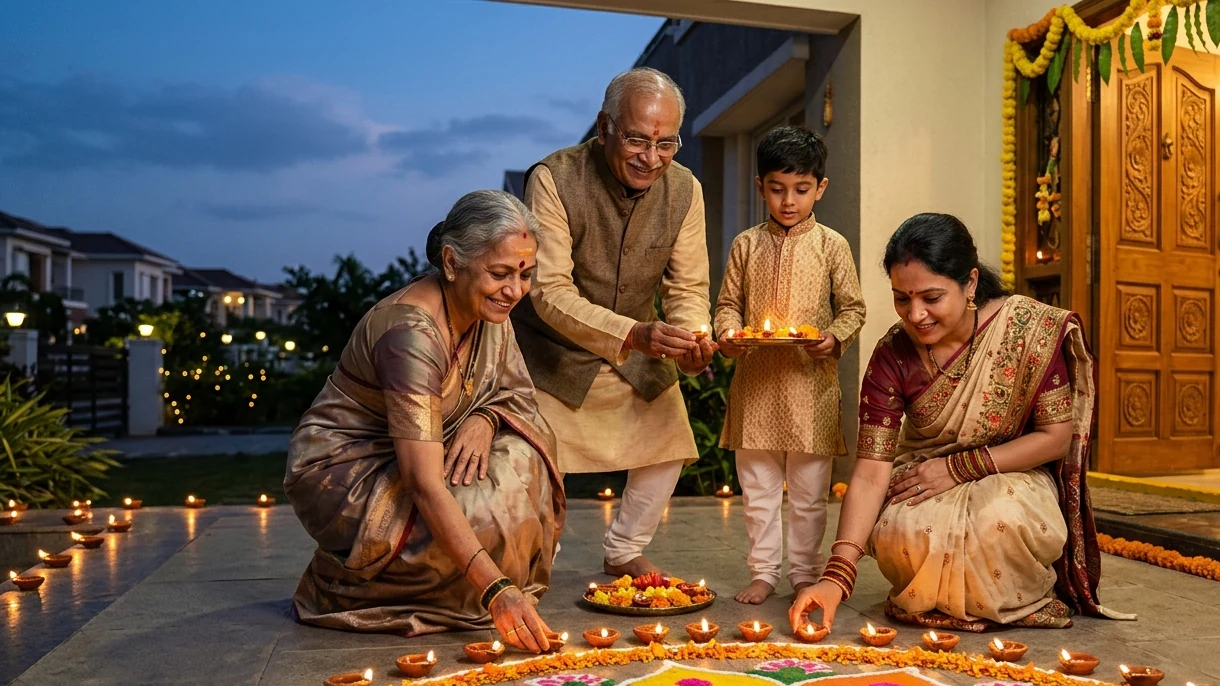
Diwali dates for 2026 and 2027
| Observance | 2026 | 2027 |
|---|---|---|
| Dhanteras | Friday, November 6 | Tuesday, October 26 |
| Main Diwali / Lakshmi Puja | Sunday, November 8 | Thursday, October 28 |
| Govardhan Puja | Monday, November 9 | Friday, October 29 |
| Bhai Dooj | Tuesday, November 10 | Confirm locally; regional sequence varies |
What Diwali means
The Sanskrit name Deepavali is commonly understood as a “row of lamps.” The lamps are both festive and contemplative: they can represent clarity amid confusion, knowledge amid ignorance, and the responsibility to choose right action when circumstances are difficult. Diwali is therefore more than a decorative event. Cleaning the home, settling obligations, sharing food, offering prayer, and giving to others can all become part of moral and spiritual renewal.
There is no single Diwali story or identical ritual sequence for every Hindu community. In much of North India, the festival is associated with the return of Rama, Sita, and Lakshmana to Ayodhya after exile. In parts of South India, Deepavali traditions emphasize Krishna’s defeat of Narakasura. Many households center Mother Lakshmi and Lord Ganesha; in Bengal, Kali Puja is prominent. Jains and Sikhs also mark observances in this season with meanings specific to their own traditions.
How Diwali traditions differ across regions
Diwali’s public image often emphasizes lamps and Lakshmi Puja, but the season has a much wider regional texture. In Tamil households, Deepavali may begin before sunrise with an oil bath, new clothes, and foods prepared for family visits. In parts of Karnataka, Andhra Pradesh, and Telangana, the Narakasura narrative is especially prominent. Gujarati communities may connect the season with the close of an accounting year and the opening of new books, while Nepal’s Tihar includes days that honor crows, dogs, cows, Lakshmi, and sibling bonds. In Bengal and some eastern communities, Kali Puja shapes the main night’s devotional focus.
These examples are not a checklist for every devotee. Even within one region, temple calendars, family lineages, and local histories can produce different sequences. Diaspora households may preserve inherited customs while adapting food, work schedules, ingredients, and community gatherings to their present country. Respectful explanation names those differences without ranking one version as the only authentic Diwali.
The five days of Diwali
1. Dhanteras
Dhanteras opens the wider festival sequence in many regions. Homes and business spaces may be cleaned, lamps lit, and useful metal items or utensils purchased. The day is associated in different contexts with prosperity, Dhanvantari, and prayers for health. Buying something expensive is not a spiritual requirement; a modest lamp, a clean space, or an act of generosity can carry the day’s intention.
2. Naraka Chaturdashi or Chhoti Diwali
This observance is linked in several traditions with Krishna’s victory over Narakasura. Regional practice can include an early oil bath, household preparations, remembrance of ancestors, and the first major lighting of lamps. Names and timing vary.
3. Lakshmi Puja and the main Diwali night
The central evening commonly includes diyas, rangoli or kolam, flowers, fruit, sweets, and worship of Lakshmi and Ganesha. Devotees may open doors and windows as a sign of welcome, gather for prayer, and reflect on the kind of prosperity that supports family, community, and ethical life.
4. Govardhan Puja or Annakut
Govardhan Puja recalls Krishna lifting Govardhan Hill to protect the people of Braj. In some communities, an annakut—a “mountain of food”—is offered. The narrative can invite gratitude for land, water, animals, food producers, and collective care.
5. Bhai Dooj
Bhai Dooj celebrates affection, protection, and responsibility among siblings. Related names and customs include Bhau Beej, Bhai Phonta, and Yama Dwitiya. The exact sequence may shift when tithis overlap.
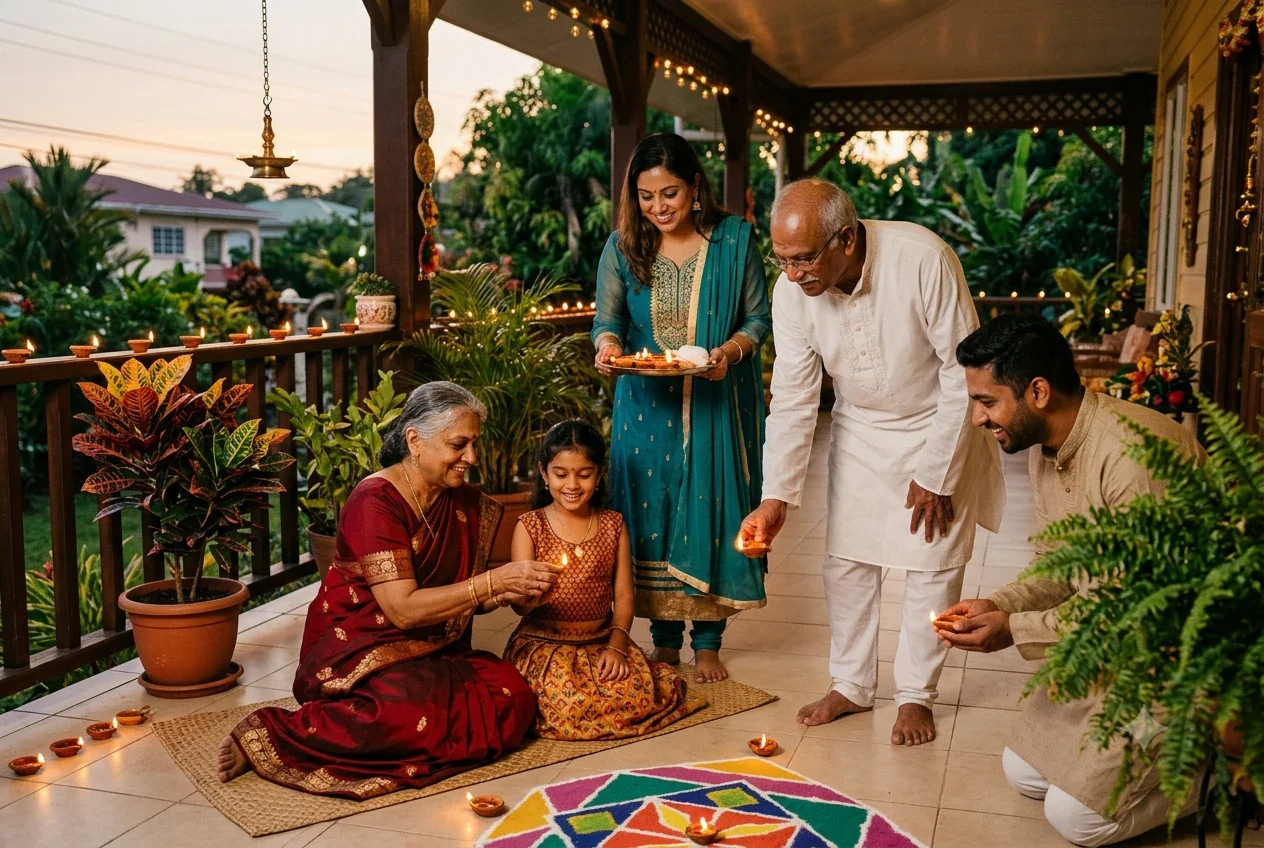
A simple, respectful Diwali observance at home
- Clean the worship and gathering area without turning the festival into a competition over perfection.
- Place diyas on stable, heat-resistant surfaces away from fabric, children, pets, and walkways.
- Arrange flowers, water, fruit, or sweets according to your household custom.
- Offer familiar prayers or spend quiet time reflecting on gratitude, honesty, generosity, and right action.
- Share prasad and a meal, contact relatives or neighbors, and include someone who might otherwise be alone.
- Support a charitable cause or offer practical help without making the recipient part of a display.
Formal Lakshmi Puja procedures and location-specific muhurta should follow family tradition or qualified temple guidance. A newcomer can participate sincerely without copying restricted rites or claiming initiations they have not received.
Fireworks, lamps, and responsible celebration
- Use stable holders and never leave an open flame unattended.
- Check electrical lights for damaged wires and avoid overloaded sockets.
- Follow Trinidad and Tobago laws and local safety directions for fireworks.
- Consider quieter choices for elders, infants, animals, people with sensory sensitivities, and neighbors.
- Use reusable decorations and avoid releasing plastic, foil, or lanterns into the environment.
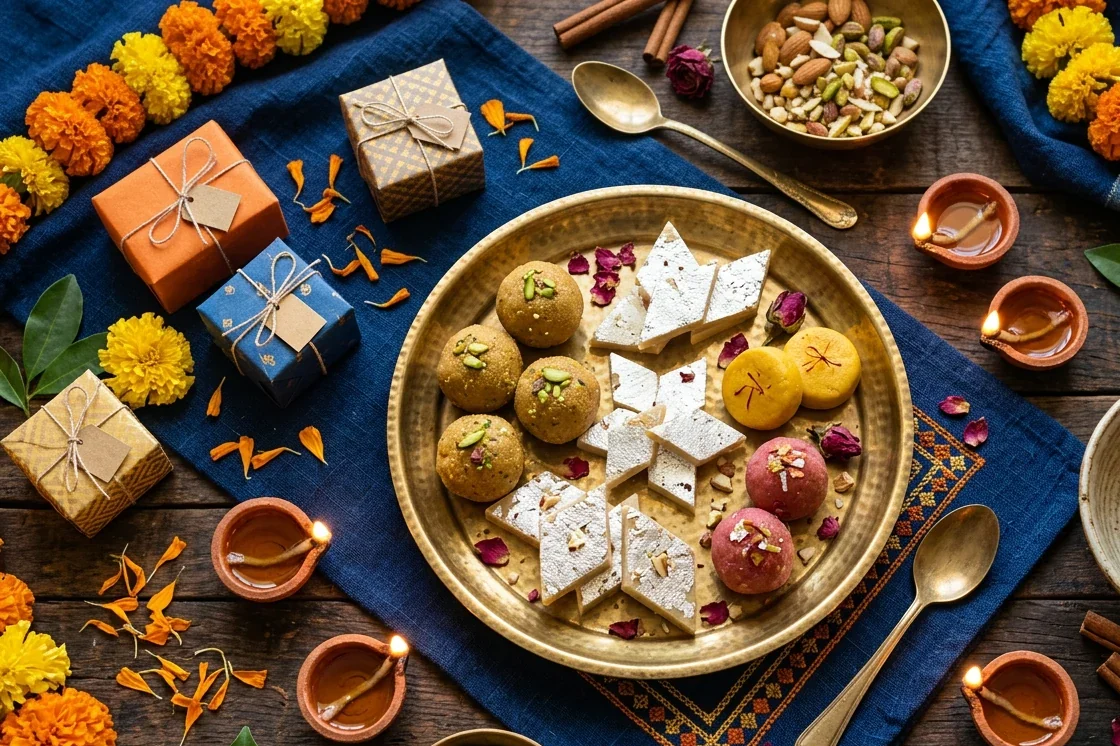
Food, hospitality, and giving
Mithai such as laddu, barfi, peda, and regional specialties are often exchanged with relatives, friends, and neighbors. Savory foods and family meals are equally important. Because recipes and dietary rules differ, hosts should label common allergens and offer practical alternatives where possible. The deeper measure of hospitality is not extravagance but whether people are welcomed and cared for.
Diwali’s language of abundance can also be expressed through restraint: reducing food waste, reusing decorations, purchasing thoughtfully, and sharing resources. Hindu traditions do not require a household to incur debt or make unrealistic promises of wealth in order to celebrate sincerely.
Divali in Trinidad and Tobago
In Trinidad and Tobago, the spelling Divali is widely used, and the festival is a national public holiday. Celebrations are rooted in Indo-Trinidadian Hindu life while also shaping the country’s broader cultural calendar. Homes, temples, schools, and community spaces may display rows of deyas; families prepare food, visit relatives, attend worship, and welcome guests.
Public participation should not erase the festival’s religious meaning. Visitors can show respect by following the host’s guidance, dressing appropriately for a temple, asking before photographing worship, and avoiding language that treats sacred objects as props. Regional practice differs across mandirs and family lineages, including the timing and form of Lakshmi Puja.
Frequently asked questions
Is Diwali the same as Deepavali or Divali?
They refer to the same broad festival season. “Deepavali” is common in South India, while “Divali” is widely used in Trinidad and Tobago. Ritual details and associated narratives vary by region and community.
Is Diwali one day or five days?
The main Diwali or Lakshmi Puja night is one central observance within a wider sequence commonly described as five days. Some communities emphasize fewer or additional days, and local tithi timing can shift the civil dates.
Which deities are worshipped at Diwali?
Lakshmi and Ganesha are central in many households. Other traditions emphasize Rama and Sita, Krishna, Kali, Dhanvantari, or regional forms of worship. No single list represents every Hindu community.
Can non-Hindus attend a Diwali celebration?
Yes, when invited or when the event is public. Follow the host’s or temple’s guidance, ask before taking photographs, and approach worship with genuine respect.
Do I need fireworks to celebrate?
No. Lamps, prayer, family meals, giving, and quiet reflection are meaningful without fireworks. Where fireworks are used, local law, fire safety, noise, animals, and vulnerable neighbors should be considered.
Related HinduClarity guides
Sources and editorial note
- Encyclopaedia Britannica: Diwali
- National Library and Information System Authority of Trinidad and Tobago: Divali subject guide
- 2026–2027 dates: HinduClarity’s Port of Spain-localized Drik Panchang verification dataset, reviewed July 2026.
Accounts and practices vary by region, sampradaya, temple, and family. This guide is educational and does not replace lineage-specific ritual instruction.