Hindu festival guide
Maha Shivaratri
A respectful guide to the Great Night of Shiva, its layered meanings, night vigil, linga worship, fasting traditions, and responsible home observance.
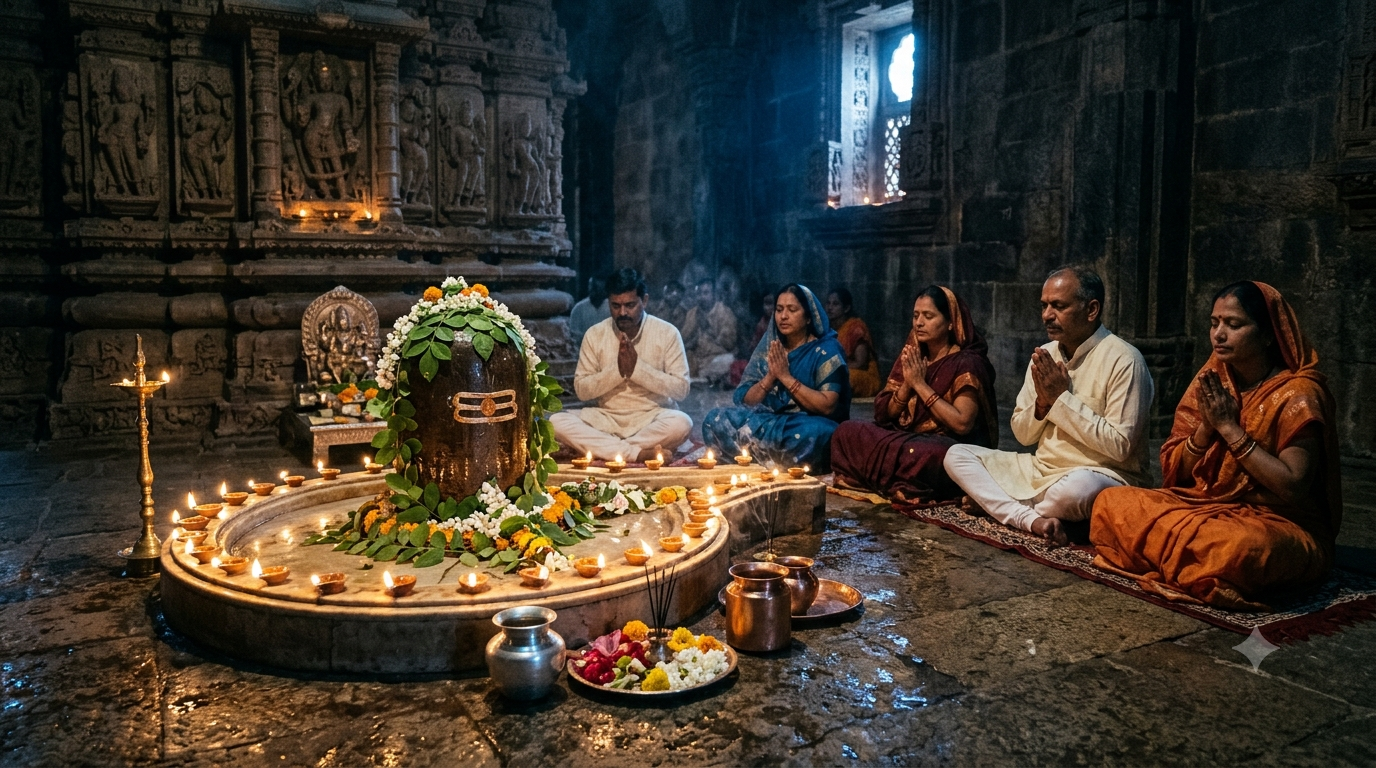
Maha Shivaratri dates for 2026 and 2027
| Year | Observed date | Planning note |
|---|---|---|
| 2026 | Sunday, February 15 | Nishita kala and four night watches depend on local sunrise, sunset, and tithi. |
| 2027 | Saturday, March 6 | Nishita kala and four night watches depend on local sunrise, sunset, and tithi. |
Calendar note: Maha Shivaratri is observed on the fourteenth lunar day of the dark half of Phalguna in many North Indian calendars. Temple schedules and the preferred night period should be confirmed locally.
What Maha Shivaratri means
Maha Shivaratri, the Great Night of Shiva, is a major occasion for prayer, self-discipline, meditation, temple worship, and the remembrance of Shiva as boundless consciousness, compassionate lord, ascetic, householder, and transformer.
Devotees may fast, keep vigil, chant Om Namah Shivaya, read sacred narratives, and offer water, milk, flowers, or bilva leaves to a Shiva linga. The outer observance points toward alertness, restraint, humility, and the release of harmful habits.
There are several traditional explanations for the night: Shiva’s marriage to Parvati, the appearance of the infinite linga of light, the drinking of poison during the churning of the ocean, and the spiritual importance of worship through the night. Traditions emphasize them differently.
Awake awareness
The vigil symbolizes remaining conscious rather than being ruled by habit, distraction, or spiritual sleep.
Transformation
Shiva’s destructive aspect is the removal of ignorance and limitation so renewal becomes possible.
Grace and simplicity
A sincere leaf or water offering can carry more meaning than display, expense, or competition.
Sacred story and historical setting
The Linga Purana and related traditions tell of Brahma and Vishnu encountering an endless column of light, revealing the immeasurable nature of Shiva. The story warns against pride and against confining the divine to ordinary limits.
Another beloved account remembers Shiva holding the halahala poison produced by the churning of the cosmic ocean, protecting creation. The story inspires reflection on courage, restraint, and service, but it must never be imitated through consuming harmful substances.
Maha Shivaratri is not a license for intoxication. Cannabis associations in some ascetic or regional settings do not make drug use a universal devotional requirement, and illegal or unsafe substances should never be promoted.
How the festival is observed
Temple practice may include four rounds of abhisheka across the night. At home, a shorter and calmer observance is entirely appropriate.
- Bathe and wear clean, modest clothing before worship.
- Prepare a stable linga or Shiva image and a tray that can contain water without creating a slip hazard.
- Offer clean water, flowers, fruit, and unbroken bilva leaves where available; follow temple guidance before using milk or other substances.
- Chant Om Namah Shivaya or another mantra received responsibly, and read a Shiva narrative or hymn.
- Keep vigil through prayer, meditation, music, or service according to health and family responsibilities.
- End a fast safely at the proper time with water and simple food; do not compete over austerity.
Food, offerings, and hospitality
Fasting rules vary from a full fast to fruit, milk, roots, or one simple vegetarian meal. Health, age, pregnancy, medication, and demanding work must be taken seriously.
Prasad may include fruit, nuts, or regional fasting foods. Food purity should include avoiding waste and ensuring offerings remain safe to consume.
Regional and community traditions
North Indian temples
Large crowds, abhisheka, bilva offerings, bhajans, and all-night lines are common; each temple may control what devotees can pour or bring.
South Indian Shaiva traditions
Temple liturgy, lamps, hymns, and regional calendar conventions shape the night, sometimes under the name Shivaratri or Maha Shivaratri.
Nepal, Mauritius, and the diaspora
Pilgrimage, kanwar-style water offerings in some communities, temple vigils, and cultural programs express the festival in local forms.
Observing in Trinidad and Tobago or the wider diaspora
In Trinidad and Tobago, many mandirs hold evening or all-night services. Confirm parking, arrival windows, permitted offerings, fasting guidance, and whether children can rest safely.
Caroni River or water-based customs should never override public safety or environmental responsibility. Home worship and temple-approved symbolic offerings are valid alternatives.
A respectful home observance
- Clean a quiet prayer area and place the linga or image on a waterproof tray.
- Light a lamp safely and offer water, bilva leaves, flowers, and fruit.
- Chant slowly, read a short passage, and sit in silent meditation.
- Choose one harmful habit to reduce and one compassionate action to begin.
- If keeping vigil, plan rest, transportation, medication, and child care responsibly.
Good practice: Fasting and sleep deprivation can be dangerous. Children, older adults, pregnant people, and anyone with a medical condition should follow professional advice. Never consume intoxicants or pour large quantities of food into drains or natural waterways.
Frequently asked questions
What is the difference between Shivaratri and Maha Shivaratri?
A Shivaratri occurs monthly, while Maha Shivaratri is the major annual observance associated with the dark half of Phalguna.
Must I stay awake all night?
No. The vigil is important in many traditions, but sincere evening worship or a partial vigil is appropriate when health and duties require rest.
Can milk used in abhisheka be consumed?
Only if temple or household handling keeps it hygienic. Never consume liquid that has contacted unsafe surfaces or been mixed with non-food materials.
Why are bilva leaves offered?
The three-part leaf is beloved in Shiva worship and receives several symbolic interpretations. Use clean leaves responsibly and do not strip or damage trees.
Sources and further reading
- Encyclopaedia Britannica – Maha-shivaratri – Overview of the festival and major practices.
- Drik Panchang – Maha Shivaratri – Location-sensitive date and night timing.
- BAPS Swaminarayan Sanstha – Hindu festival and devotional education.
- Hindu American Foundation – Shiva – Accessible theological context.
Editorial and rights note: This educational overview is independently written from cross-checked facts and does not reproduce source text. External sources are cited for verification and further reading; citation does not imply endorsement. The hero is an illustrative AI-generated image created for HinduClarity, not a historical photograph or documentary record. This page is not a substitute for guidance from your temple, family tradition, qualified teacher, or licensed professional. Hindu calendars and practices vary by sampradaya, region, and location.
Back to the complete Hindu Festivals Calendar for 2026-2027
Continue with the Diwali guide or the Ganesh Chaturthi guide.