Hindu festival guide
Holi
A complete guide to Holika Dahan and the festival of colors, with sacred stories, regional traditions, inclusive etiquette, and practical safety.
Holi dates for 2026 and 2027
| Year | Observed date | Planning note |
|---|---|---|
| 2026 | Tuesday, March 3; Holika Dahan on March 2 | The bonfire and color day follow different tithi windows; check local scheduling. |
| 2027 | Monday, March 22; Holika Dahan on March 21 | The bonfire and color day follow different tithi windows; check local scheduling. |
Calendar note: Holi is associated with the full moon of Phalguna. Holika Dahan is observed on the preceding evening in many communities, while color celebrations follow the next day.
What Holi means
Holi welcomes spring with fire, color, music, food, worship, and social renewal. It remembers the protection of Prahlada, the defeat of Holika’s harmful intent, and, in Krishna traditions, the playful love of Radha and Krishna.
The festival’s color should express joy and fellowship, never harassment. Consent, eye safety, respect for clothing and property, and care for animals are essential to a dharmic celebration.
Holi is highly regional. Braj celebrations can span many days, Bengal observes Dol or Basanta Utsav, and diaspora communities may combine temple worship with controlled outdoor color events.
Faith and courage
Prahlada’s devotion represents steadiness when power is used unjustly.
Spring and play
Color loosens formality and celebrates life’s renewal when joy is bounded by respect.
Repairing relationships
The season invites apology, forgiveness, and shared food, but no one is required to overlook harm or unsafe behavior.
Sacred story and historical setting
The Prahlada story tells of a devoted child threatened by his father Hiranyakashipu. Holika enters a fire with Prahlada, expecting her protection to save her, but the harmful plan fails and Prahlada survives. The bonfire symbolizes the defeat of arrogance and malicious power, not violence against women or outsiders.
In Braj and Vaishnava traditions, Krishna’s playful coloring of Radha and the gopis inspires music, temple ritual, and joyful exchange. These sacred stories do not excuse touching, chasing, or coloring another person without consent.
Popular slogans such as ‘Bura na mano, Holi hai’ must never be used to dismiss consent, bullying, intoxication, caste abuse, gendered harassment, or property damage.
How the festival is observed
Many communities begin with prayer and Holika Dahan, then gather the next day for controlled play with dry colors, music, meals, and visits.
- Attend a supervised Holika Dahan at a permitted site; do not light an unauthorized bonfire.
- Offer prayer for the burning away of arrogance, cruelty, and resentment.
- Use small amounts of skin-safe, clearly labeled color and ask before applying it.
- Protect eyes, mouths, phones, vehicles, and sacred spaces; keep powder away from anyone who declines.
- Wear practical modest clothing and arrange safe water, shade, cleanup, and transportation.
- Share gujiya, malpua, fruit, or regional foods and make space for children, elders, and people with sensory needs.
Food, offerings, and hospitality
Gujiya, malpua, dahi vada, puran poli, thandai, fruit, and savory snacks appear in different regions. Non-intoxicating drinks are appropriate for all-ages and temple events.
Bhang is not a universal requirement and may be illegal, unsafe, or incompatible with medication. Never serve any psychoactive ingredient without informed consent.
Regional and community traditions
Braj: Mathura and Vrindavan
Temple-centered events recall Radha and Krishna through flowers, color, song, procession, and distinctive forms such as Lathmar Holi.
Bengal and Odisha
Dol Yatra and Basanta Utsav emphasize Krishna, spring, music, dance, and colored powder in regional styles.
Caribbean and global diaspora
Phagwa celebrations feature chowtal singing, abir, tassa or local musical expression, temple gatherings, and Indo-Caribbean community history.
Observing in Trinidad and Tobago or the wider diaspora
In Trinidad and Tobago, Holi is widely known as Phagwa. Chowtal singing, pichakaree traditions, temple programs, and community grounds connect the festival with Indo-Caribbean creativity and ancestral memory.
Organizers should publish consent rules, use non-toxic abir, provide wash stations and first aid, and ensure the event remains welcoming rather than rowdy or alcohol-centered.
A respectful home observance
- Begin with a short prayer or reading about Prahlada and courageous devotion.
- Set clear household consent rules before opening color packets.
- Use a small outdoor area with washable surfaces, safe powder, eye protection, and water.
- Sing, share food, and invite a genuine act of reconciliation where it is safe.
- Clean the space fully and prevent color from entering drains, gardens, or animal areas.
Good practice: Use only cosmetic-grade color from a trusted source. Avoid industrial dyes, glitter, smoke, forceful water jets, and color near eyes or airways. Do not color animals. Never combine driving, crowds, fire, or celebration with intoxication.
Frequently asked questions
What is Holika Dahan?
It is the ritual bonfire on the eve of Holi, associated with the Prahlada narrative and the symbolic removal of harmful tendencies.
Is consent really necessary during Holi?
Yes. Sacred joy cannot be built on humiliation or unwanted contact. Ask before applying color and accept no immediately.
What is the difference between Holi and Phagwa?
Phagwa is a common Caribbean name linked to the month of Phalguna. It carries the same festival heritage while expressing distinct Indo-Caribbean music and community traditions.
Can Holi be celebrated without throwing color?
Yes. Prayer, songs, flowers, art, service, spring foods, and a small symbolic mark of color are meaningful alternatives.
Sources and further reading
- Encyclopaedia Britannica – Holi – Overview of stories, practices, and regional forms.
- Smithsonian Folklife – Holi – Cultural and community context.
- Drik Panchang – Holi – Location-sensitive date reference.
- Hindu American Foundation – Holi – Community explanation and contemporary context.
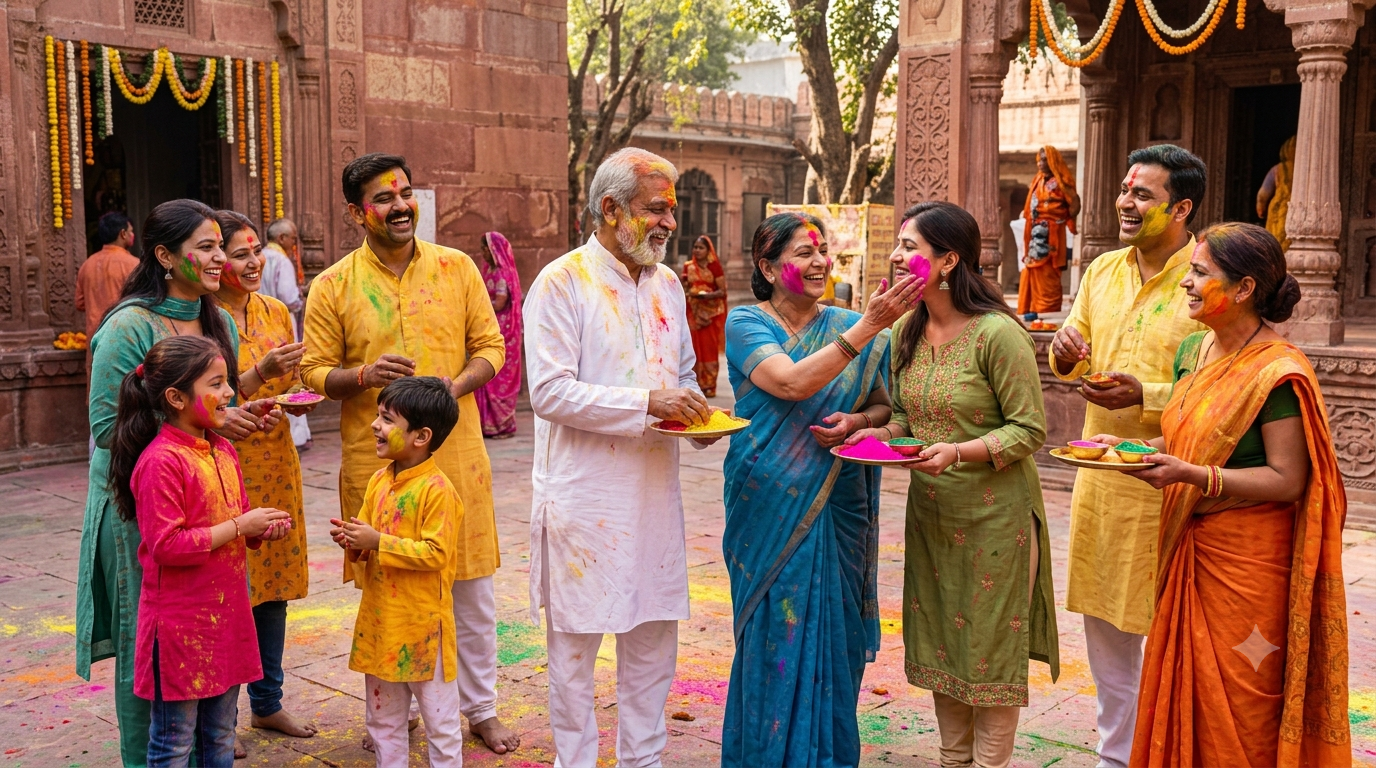
Editorial and rights note: This educational overview is independently written from cross-checked facts and does not reproduce source text. External sources are cited for verification and further reading; citation does not imply endorsement. The hero is an illustrative AI-generated image created for HinduClarity, not a historical photograph or documentary record. This page is not a substitute for guidance from your temple, family tradition, qualified teacher, or licensed professional. Hindu calendars and practices vary by sampradaya, region, and location.
Back to the complete Hindu Festivals Calendar for 2026-2027
Continue with the Diwali guide or the Ganesh Chaturthi guide.