Hindu festival guide
Raksha Bandhan
A detailed guide to the rakhi bond, sacred stories, regional customs, inclusive family practice, gifts, and respectful celebration.
Raksha Bandhan dates for 2026 and 2027
| Year | Observed date | Planning note |
|---|---|---|
| 2026 | Thursday, August 27 | Preferred tying time may exclude Bhadra; use a location-aware panchanga. |
| 2027 | Monday, August 16 | Preferred tying time may exclude Bhadra; use a location-aware panchanga. |
Calendar note: Raksha Bandhan is observed on the full moon of Shravana. The timing of Bhadra and the full-moon tithi can affect the preferred muhurta in some traditions.
What Raksha Bandhan means
Raksha Bandhan celebrates a bond of care expressed through the tying of a rakhi, a sacred thread or bracelet. It is most commonly associated with sisters and brothers, but practice can include cousins, chosen siblings, priests and patrons, or broader relationships of mutual responsibility.
The ritual should not imply that women are helpless or that protection flows only in one direction. A mature interpretation emphasizes reciprocal care, respect, safety, and accountability.
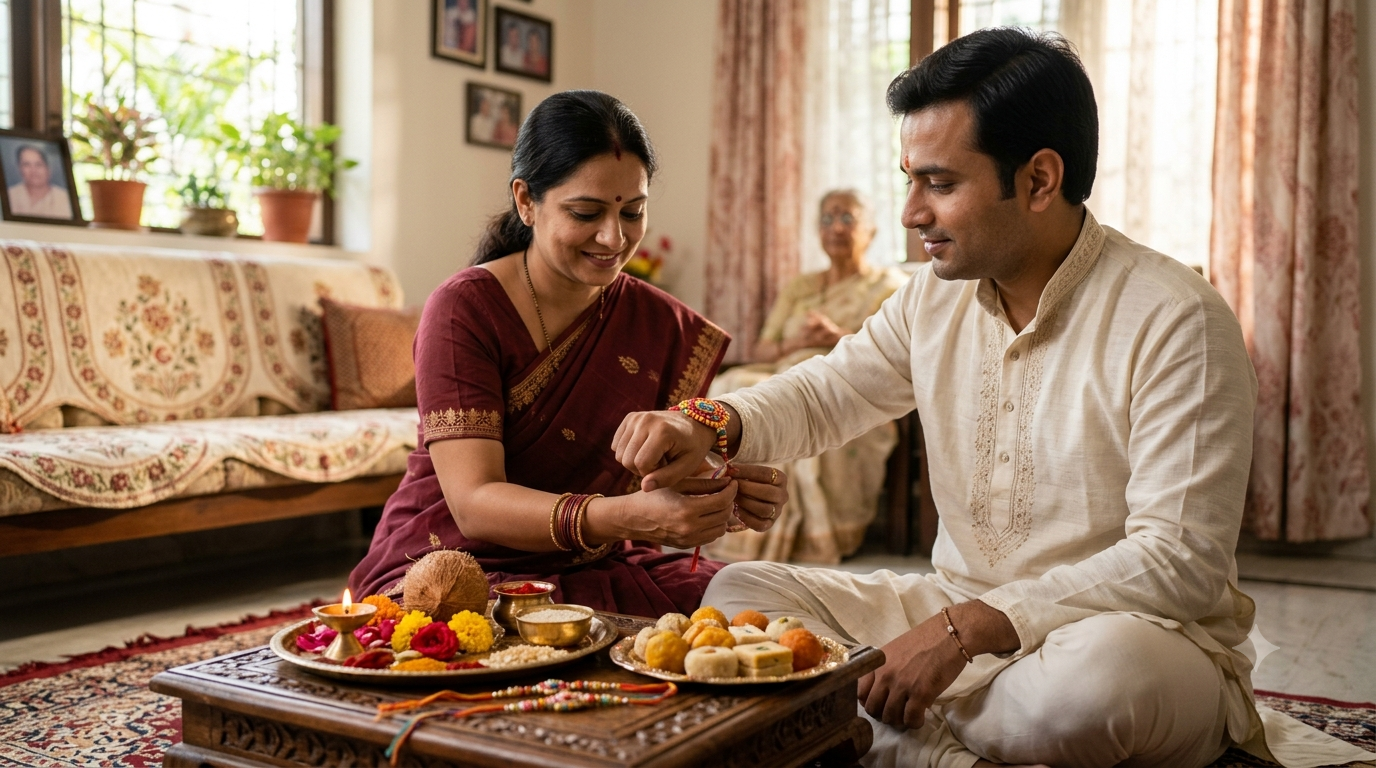
Families gather for aarti or prayer, tying the rakhi, sweets, gifts, blessings, and shared memories. Distance celebrations may use mailed rakhis and video calls.
Sacred bond
The thread makes a relationship visible and renews commitments of care.
Reciprocity
Protection includes listening, respecting boundaries, opposing abuse, and supporting each other’s growth.
Belonging
Rakhi can affirm siblings by birth or choice without erasing the festival’s inherited traditions.
Sacred story and historical setting
Several stories are associated with Raksha Bandhan. Traditions remember Indra and Indrani, Krishna and Draupadi, Yama and Yamuna, and later historical narratives about queens and rulers. These accounts come from different periods and should not be blended into one alleged origin.
The Krishna-Draupadi story, in popular retelling, connects a strip of cloth offered in care with Krishna’s protection. Historians debate some widely circulated royal rakhi stories, so they should be presented as later tradition rather than certain political fact.
A rakhi does not create ownership or excuse controlling behavior. Gifts, marriage pressure, financial demands, or compulsory physical affection should never be imposed in the name of family tradition.
How the festival is observed
The common household sequence is simple and can be adapted respectfully to age, distance, disability, and family structure.
- Prepare a clean tray with rakhi, lamp, kumkum or sandal paste, rice, sweets, and optional flowers.
- Offer a brief prayer and apply tilak only with the recipient’s consent.
- Tie the rakhi comfortably, leaving circulation free and checking for allergies.
- Exchange blessings, sweets, and a gift within each person’s means.
- Name one practical promise of mutual support rather than relying on symbolism alone.
- Dispose of plastic-heavy rakhis responsibly or choose cotton, thread, seed, or reusable designs.
Food, offerings, and hospitality
Barfi, laddus, kheer, regional sweets, fruit, and a family meal are common. The first sweet is often fed after the rakhi, but anyone may choose to serve themselves.
For diabetes, allergies, or dietary restrictions, use suitable alternatives. Hospitality should not become pressure to eat.
Regional and community traditions
North and western India
Sibling rituals, family visits, gifts, and temple blessings are widespread, with local variations in the puja tray and meal.
Priestly and community rakhis
In some traditions priests tie protective threads to patrons, and communities use the day to affirm social responsibility.
Diaspora families
Postal rakhis, online gatherings, school programs, and inclusive sibling language help families maintain connection across distance.
Observing in Trinidad and Tobago or the wider diaspora
In Trinidad and Tobago, Raksha Bandhan can bring together extended Indo-Caribbean families, mandirs, and youth groups. Explain the Sanskrit and Hindi terms and invite elders to share migration stories.
Keep the event inclusive of only children, estranged families, adoptees, and chosen family. Participation should be voluntary and emotionally safe.
A respectful home observance
- Call or gather siblings and agree on a comfortable, simple ritual.
- Offer prayer, tie the rakhi, and speak one quality you appreciate in each other.
- Exchange a practical commitment, such as regular check-ins or help with a shared responsibility.
- Share food and record a family story with consent.
- Choose a charity that supports family safety, education, or children’s well-being.
Good practice: Avoid tight bracelets, allergenic metal, open flame near children, forced feeding, and social-media posting without consent. If a family relationship is abusive, a festival never requires contact or reconciliation without safety.
Frequently asked questions
Can a sister tie rakhi to another sister?
Many families and communities now use rakhi to honor reciprocal sibling or chosen-family bonds. Practice varies, so explain the relationship respectfully.
Must the brother give money?
No. Gifts are customary but should be voluntary and affordable; a letter, book, service, or shared time can be meaningful.
What is Bhadra?
It is a calendrical period that some traditions avoid for tying rakhi. A location-aware panchanga gives the relevant timing.
What should I do with an old rakhi?
Remove non-biodegradable pieces and dispose of or recycle them responsibly. Do not release plastic or metal into rivers.
Sources and further reading
- Encyclopaedia Britannica – Raksha Bandhan – Overview of the festival and rakhi custom.
- Drik Panchang – Raksha Bandhan – Location-sensitive date and Bhadra timing.
- Hindu American Foundation – Hindu holidays – Community educational context.
- Sahapedia – Indian cultural-history essays and regional context.
Editorial and rights note: This educational overview is independently written from cross-checked facts and does not reproduce source text. External sources are cited for verification and further reading; citation does not imply endorsement. The hero is an illustrative AI-generated image created for HinduClarity, not a historical photograph or documentary record. This page is not a substitute for guidance from your temple, family tradition, qualified teacher, or licensed professional. Hindu calendars and practices vary by sampradaya, region, and location.
Back to the complete Hindu Festivals Calendar for 2026-2027
Continue with the Diwali guide or the Ganesh Chaturthi guide.