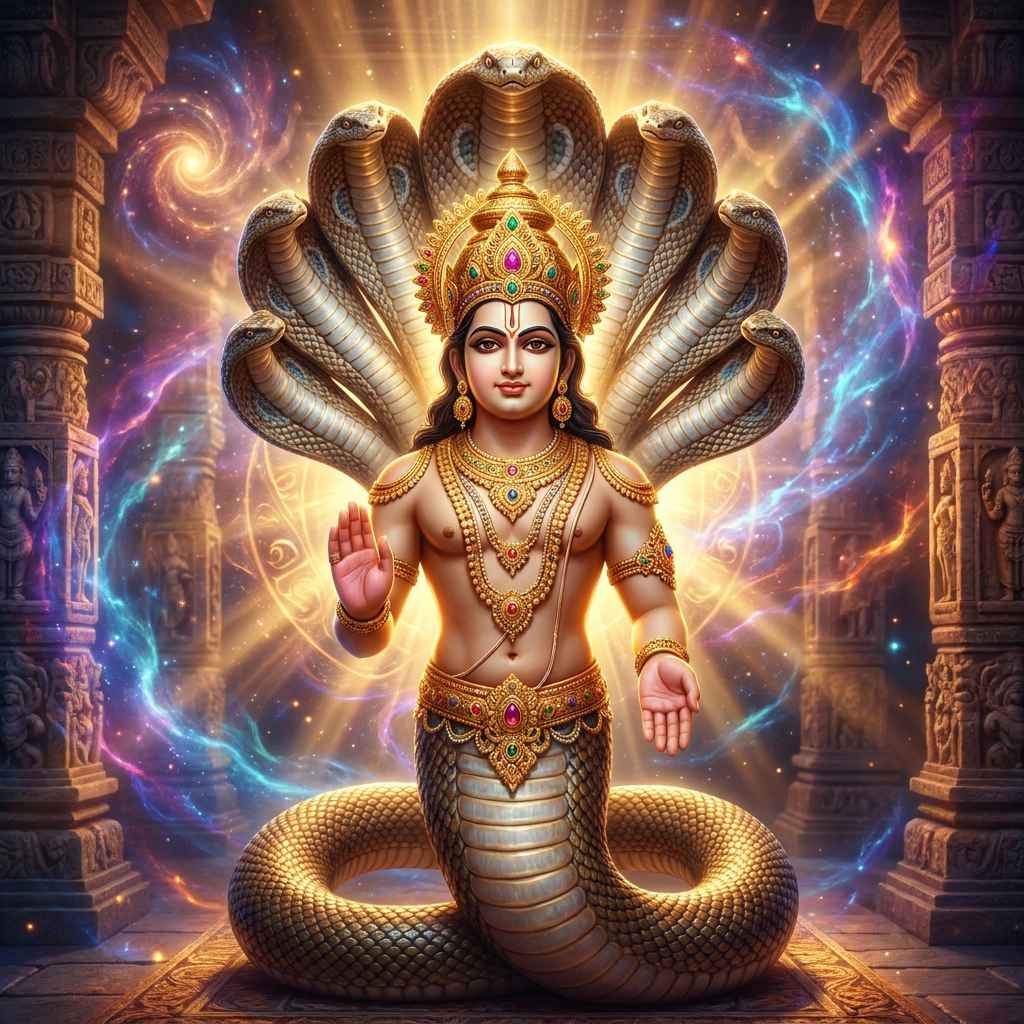
Nag Devta or Naga Devata is not always one single male deity. The name can refer collectively to sacred serpent beings, to a local serpent guardian, or to a particular Naga such as Ananta Shesha, Vasuki, or Takshaka. These traditions connect reverence for divinity with water, fertility, ancestry, protection, and respectful coexistence with nature.
Wildlife safety: Never try to feed milk to a snake, handle one, block its escape, or pour offerings into an occupied burrow. Snakes do not naturally drink milk, and forced feeding can injure or kill them. If a snake enters a home or yard in Trinidad and Tobago, keep people and pets away and contact an appropriate wildlife or animal-control professional.
Who Are the Nagas?
Hindu epics and Purāṇas portray Nagas as powerful serpent or serpent-human beings. They may dwell in subterranean realms called Naga-loka or Patala and are frequently associated with rivers, lakes, rain, treasures, and fertile land. Their stories are complex: some Nagas protect devotees and sacred places, while others appear in conflict. “Naga” therefore should not be reduced to either a demon or a single universal god.
Ananta Shesha supports Vishnu and represents endlessness; Vasuki serves as the churning rope in the Samudra Manthan and is associated with Shiva; Takshaka plays an important role in the Mahabharata. The sage Astika stops King Janamejaya’s serpent sacrifice, preserving the Naga race. Manasa Devi is a major snake goddess especially in eastern Indian traditions, but she should not be described as the wife of a collective “Nag Devta.”
Meaning and Iconography
- Cobra hood: protection, alertness, and sacred power; multiple hoods often indicate an exalted Naga king.
- Water and earth: the life-supporting environments with which many Naga traditions are connected.
- Coiled form: continuity and latent energy. Some modern explanations connect snakes with kundalini, although specific Naga worship and yogic kundalini teachings are not identical.
- Association with Shiva and Vishnu: Vasuki appears at Shiva’s neck, while Ananta Shesha forms Vishnu’s cosmic couch.
Images and meanings differ by temple, region, and lineage. A stone serpent pair beneath a sacred tree, a many-hooded canopy over a deity, and a local village guardian may belong to related but distinct practices.
Naga Panchami and Regional Traditions
Naga Panchami is observed in many communities during the lunar month of Shravana, though calendars and customs vary. Devotees may worship a Naga image, draw serpent forms, visit a temple, hear sacred stories, or offer flowers, turmeric, water, fruit, and prayer. Some traditions use milk in ritual bathing of a stone or metal image; that is different from giving milk to a living snake.
Across India and Nepal, Naga traditions vary greatly. In a Trinidad and Tobago mandir or home, practices may reflect family roots, a pandit’s teaching, or local Indo-Caribbean custom. Ask respectfully rather than assuming every Hindu family observes the festival in the same way.
A Safe Home Observance
- Clean the prayer area and place a Naga image or printed picture on a stable surface.
- Offer clean water, flowers, fruit, or a small diya. Keep flames supervised.
- Recite Om Sarpebhyo Namah, a salutation to the serpents, or use the prayer taught in your tradition.
- Express devotion through conservation: protect waterways, avoid harming snakes, and keep surroundings free of litter.
- For astrology concerns such as Kala Sarpa Dosha, consult a trusted, ethical practitioner. Interpretations differ, and no ritual guarantees wealth, marriage, health, or immunity from hardship.
If a snake is seen outdoors, observe only from a safe distance and allow it an escape route. Learning which species occur locally, securing food waste, and reducing rodent shelter are safer forms of coexistence than attempting ritual contact with wildlife. Humane caution is itself a form of respect.
Frequently Asked Questions
Is Nag Devta one god?
Not necessarily. The phrase may name sacred serpents collectively, a particular Naga, or a local guardian deity.
Should devotees give milk to live snakes?
No. It is unsafe and harmful. If milk is part of a family ritual, offer it only to a suitable murti or symbolic image and dispose of it responsibly.
Are all snakes considered Nagas?
Mythic Nagas and biological snakes are not simply the same category. Reverence for Naga traditions can still encourage humane treatment of living wildlife.
Sources and Further Reading
Source note: Naga identities, genealogies, Shesha/Vasuki/Kaliya narratives, fertility/water/protection associations, and Nag Panchami practices vary by text and region.
- J. Ph. Vogel, Indian Serpent-Lore — Documents naga traditions, iconography, narratives, and regional variation without reducing nagas to ordinary snakes.
- Metropolitan Museum of Art — Naga Spout from a Holy-Water Vessel — Supports historical naga imagery and water association in South Asian material culture.
- Bhagavata Purana Sanskrit e-text — GRETIL, University of Gottingen — Supports text-level checking of Krishna, Dhruva, Prahlada, Gajendra, Vamana, and other Bhagavata narratives.
Continue exploring: See HinduClarity’s Devas guide, Lord Shiva guide, and Lord Krishna guide.