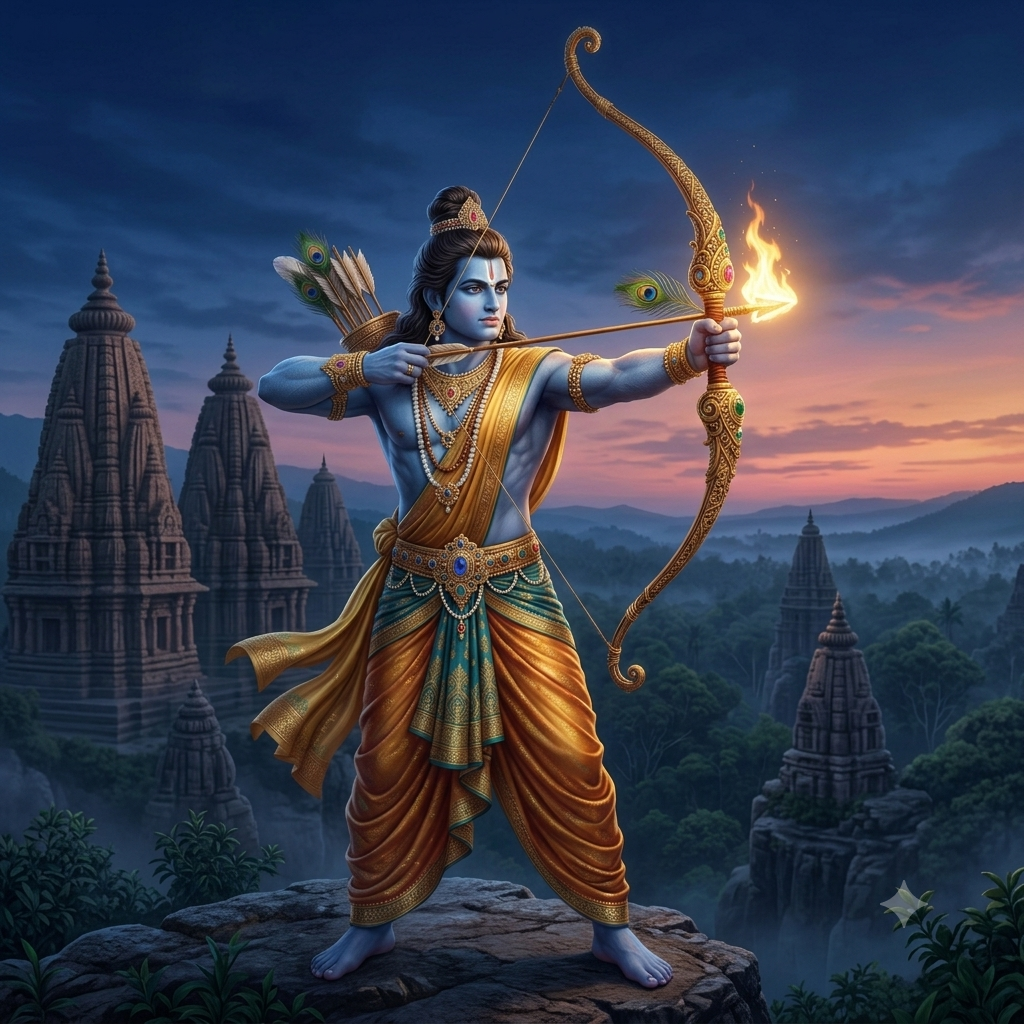
Lord Ram, also known as Sri Rama, is revered as an avatar of Lord Vishnu and as Maryada Purushottam, the ideal person who upholds dharma with courage, compassion, and self-control.
Who Is Lord Ram?
Lord Ram is one of the most revered deities in Hinduism and the central figure of the Ramayana. He is traditionally understood as the seventh avatar of Lord Vishnu, born to restore dharma and demonstrate righteous living.
Ram is known as Maryada Purushottam, often understood as the supreme example of ethical conduct. His life is remembered for duty, restraint, loyalty, compassion, and commitment to truth even under great hardship.
Lord Ram in the Ramayana
The Ramayana tells the story of Ram’s birth in Ayodhya, his marriage to Sita, his exile to the forest, Sita’s abduction by Ravana, and the eventual victory of dharma over adharma.
Along the way, Ram is joined by Lakshman, Hanuman, and many allies. The story is not only an epic adventure; it is also a guide to values such as courage, devotion, justice, and the difficult choices involved in living by dharma.
What Dharma Means in Ram’s Life
Dharma in Ram’s story is not presented as convenience or personal preference. It is a commitment to righteousness, duty, and harmony even when the path is painful.
Ram’s decisions are discussed, interpreted, and debated across Hindu traditions. This diversity of interpretation shows the depth of the Ramayana and its continuing importance as a text for moral reflection.
Symbols and Iconography of Lord Ram
Lord Ram is often shown holding a bow and arrow, symbolizing readiness to protect righteousness and defeat injustice. His calm posture reflects self-control and inner balance.
His blue or dark complexion in devotional art suggests divine depth and transcendence. He is frequently shown with Sita, Lakshman, and Hanuman, emphasizing family, loyalty, devotion, and service.
Ram Navami and Devotional Practice
Ram Navami celebrates the birth of Lord Ram and is observed with prayers, readings from the Ramayana, bhajans, temple worship, and acts of charity.
Many devotees chant “Sri Ram Jai Ram Jai Jai Ram” or simply repeat Ram Naam. The name of Ram is honored in many bhakti traditions as a source of peace, devotion, and spiritual focus.
Lord Ram and Leadership
Ram is remembered as an ideal king because his leadership is rooted in duty rather than personal luxury. The phrase “Ram Rajya” is often used to describe a just and harmonious society.
For modern readers, Ram’s example raises important questions: How should power be used? How can leaders balance compassion and responsibility? How can one remain truthful during pressure and loss?
Lessons from Lord Ram
Lord Ram’s life teaches that dharma requires patience, courage, restraint, and devotion to what is right. His greatness lies not only in victory but in the dignity with which he faces hardship.
To remember Ram is to remember the effort to live truthfully, act responsibly, protect the vulnerable, and keep the mind anchored in righteousness.
Frequently Asked Questions
Note: Hindu traditions are diverse. Details can vary by region, sampradaya, scripture, temple practice, and family custom. This guide is written for respectful learning and general clarity.
Mantras
The following mantras are traditionally associated with Lord Ram. Pronunciation and ritual details can vary by lineage, so formal or intensive practice is best learned from a qualified teacher. The stated uses describe devotional intentions, not guaranteed medical, financial, romantic, or supernatural outcomes.
1. Rama Nama Mantra
Transliteration: Om Shri Ramaya Namah.
Meaning: Salutations to Shri Rama, revered as an embodiment of dharma, courage, compassion, and righteous conduct.
Traditional use: Used in daily japa and Rama worship to cultivate devotion, self-discipline, moral clarity, patience, and remembrance of dharma.
2. Shri Ram Jai Ram
Transliteration: Shri Ram Jai Ram Jai Jai Ram.
Meaning: Glory to Shri Rama; victory and praise to Rama.
Traditional use: A widely sung and repeated nama mantra used in bhajan, kirtan, pilgrimage, and personal prayer for steady remembrance, courage, and a peaceful devotional mind.
Practice note: Begin with a calm, respectful intention. A small, consistent number of repetitions is generally better than rushing. If you follow a family, temple, or guru tradition, use the pronunciation, count, and procedure taught in that lineage.
Sources and Further Reading
Source note: Ramayana narrative, dharma/ideal-king interpretation, iconography, mantra practice, and later devotional reception need distinct sources.
- Metropolitan Museum of Art — Vibhishana in the Camp of Rama — Supports historical Ramayana reception and Rama narrative context in manuscript art.
- The Ramayana of Valmiki, Part 3, trans. Ralph T. H. Griffith — Supports named Ramayana narrative checking; wording and book context must be cited rather than blended with later retellings.